Will a £5,000 desktop machine actually save you money when a single failed print stalls a £50,000 engineering contract? Many UK firms assume that owning a 3d printer uk allows for total control, yet the hidden costs of calibration and technical downtime often result in missed deadlines. You understand the frustration of watching a 48-hour print fail in its final hour or struggling to achieve the precision required for high-performance components. These delays don’t just cost money; they kill momentum and compromise your reputation for reliability.
This guide settles the hardware versus service debate for 2026. You will discover whether investing in your own hardware or partnering with a UK-based service bureau is the fastest, most cost-effective route for your project. We’ll compare the long-term ROI of industrial ownership against the zero-maintenance reliability of professional SLS and FDM production. We are breaking down the technical requirements and delivery speeds you need to keep your production line moving. It is time to stop troubleshooting machines and start delivering high-precision parts with a guaranteed 24-hour turnaround. Don’t let equipment maintenance slow you down when you can beat the clock today.
Key Takeaways
- Analyze the 2026 UK landscape to understand why additive manufacturing has shifted from hobbyist tinkering to high-performance, industrial-grade prototyping.
- Compare the output of a standard desktop 3d printer uk users often buy against £50,000 industrial machines to determine which quality level your project demands.
- Identify the hidden financial drains of hardware ownership, including maintenance, calibration, and the high cost of downtime that stalls your development.
- Apply a strategic decision framework to calculate exactly when batch production becomes more cost-effective via a professional service bureau than in-house.
- Discover how to bypass equipment delays with ultra-fast, 24-hour turnaround services that deliver precision engineering components directly to your UK site.
The 3D Printing Landscape in the UK for 2026
2026 marks a definitive turning point for additive manufacturing in Britain. The domestic market grew by 14% in 2025, driven by an urgent need for localized supply chains and reduced lead times. While the early 2020s were characterized by hobbyist experimentation, the current landscape focuses on industrial-grade performance. Searching for a 3d printer uk today is less about buying a desktop gadget and more about securing a reliable production partner. The distinction between consumer-level machines and professional systems is now absolute. Professional-grade printing delivers repeatable accuracy within microns, whereas entry-level hardware often fails to meet the rigorous mechanical requirements of modern UK engineering.
Many firms find that the hidden costs of hardware ownership—maintenance, calibration, and material waste—outweigh the benefits of in-house production. This realization has shifted the market toward service partnerships. You don’t just need a machine; you need a result. Protomolecule provides that bridge, offering 3D printing solutions that prioritize speed and technical precision. Stop worrying about nozzle clogs and start focusing on your product’s time-to-market. Our 24-hour turnaround ensures your project stays on track, regardless of complexity.
The Evolution of UK Manufacturing Standards
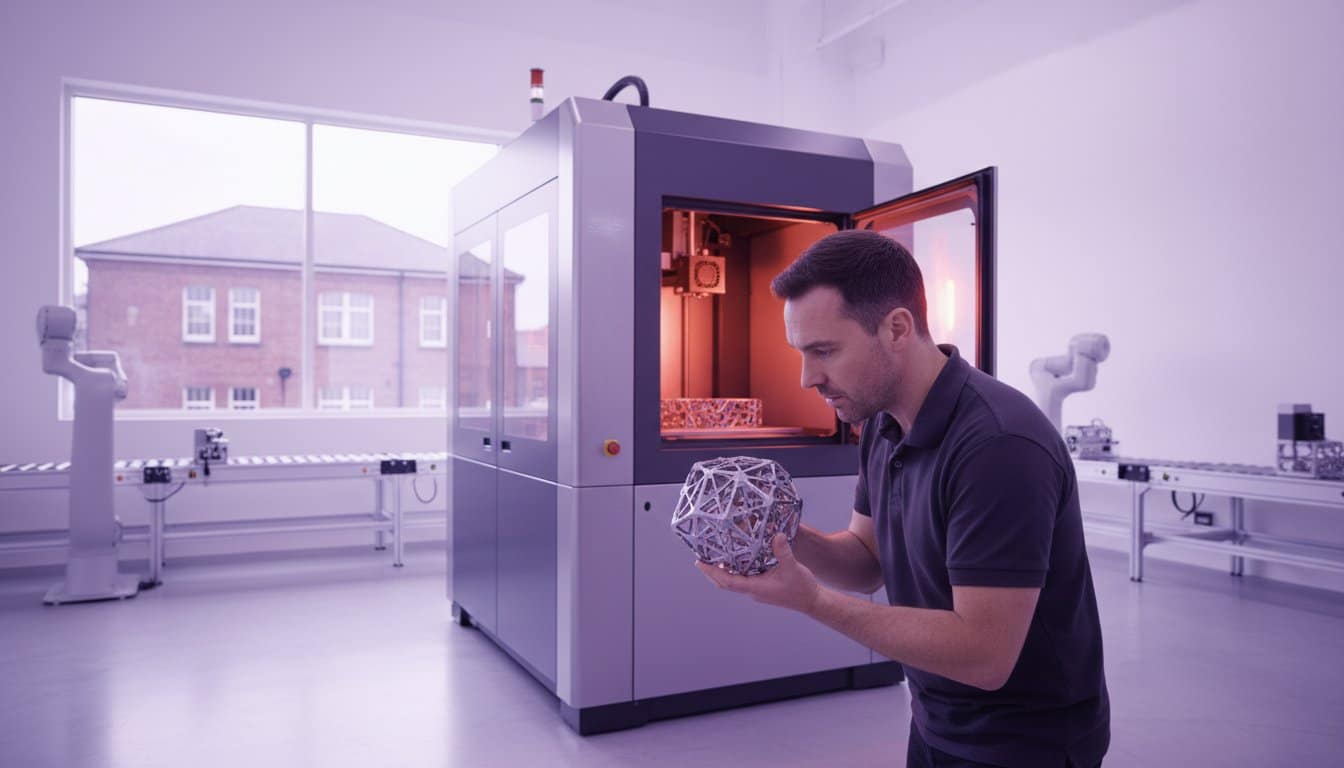
UK manufacturing standards have tightened significantly over the last two years. Engineering sectors now demand full traceability and material certification for every component. By 2026, the technological gap has widened so much that consumer machines cannot legally produce parts for regulated industries like aerospace or medical devices. Professional systems utilize controlled thermal environments and high-performance polymers that desktop units simply cannot process. You need UK-based technical expertise to navigate these compliance hurdles. Our team in Nottingham and Mansfield provides the localized support necessary to ensure your parts meet every UK safety and quality benchmark. Zero compromise on quality is the only way to compete in the current industrial climate.
Common 3D Printing Technologies in the UK
Selecting the right 3D printing technology is the difference between a functional prototype and a failed experiment. The UK market currently relies on three core processes to drive innovation:
- FDM (Fused Deposition Modeling): Essential for large-format, durable parts. We use this for everything from 80s JDM wheel centre caps to heavy-duty industrial jigs.
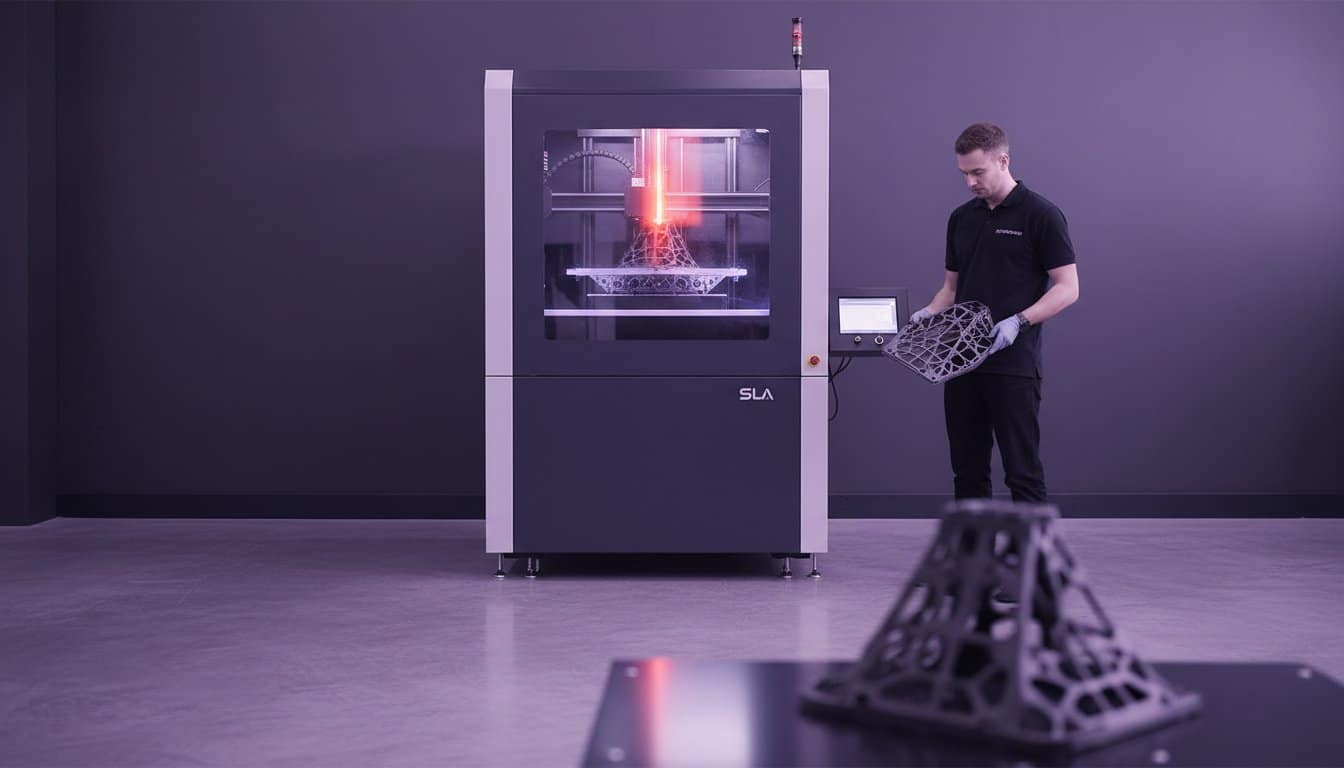
- SLA (Stereolithography): The go-to for ultra-high resolution and smooth surface finishes. It’s perfect for intricate 3D design verification and jewelry masters.
- SLS (Selective Laser Sintering): Best for batch production. It creates tough, functional nylon parts with complex geometries that require no support structures.
Whether you are developing passenger train seat arms or bespoke automotive components, matching the technology to the application is vital. Don’t let technical limitations slow you down. Get a 3d printer uk solution that delivers lightning-fast results without the overhead of machine maintenance. Beat the clock and get your project moving today.
Desktop 3D Printers vs. Industrial-Grade Services
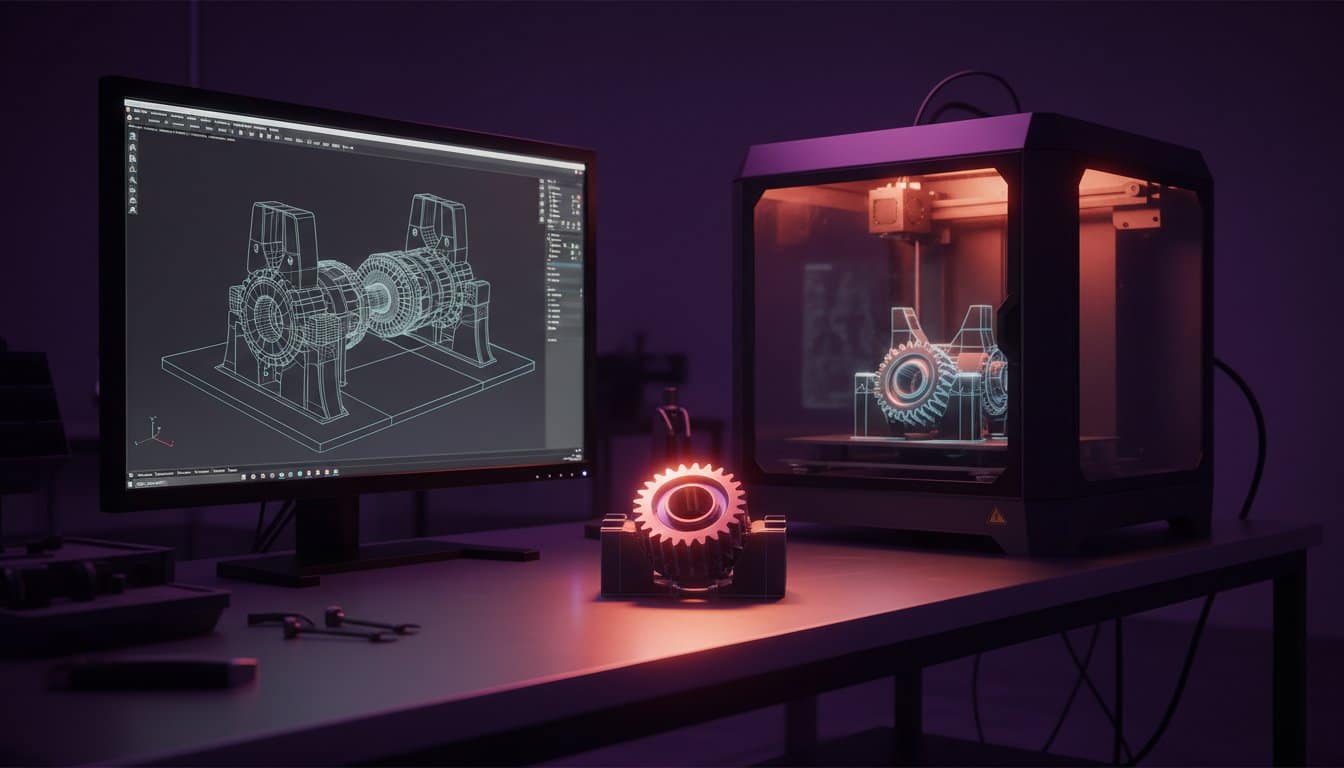
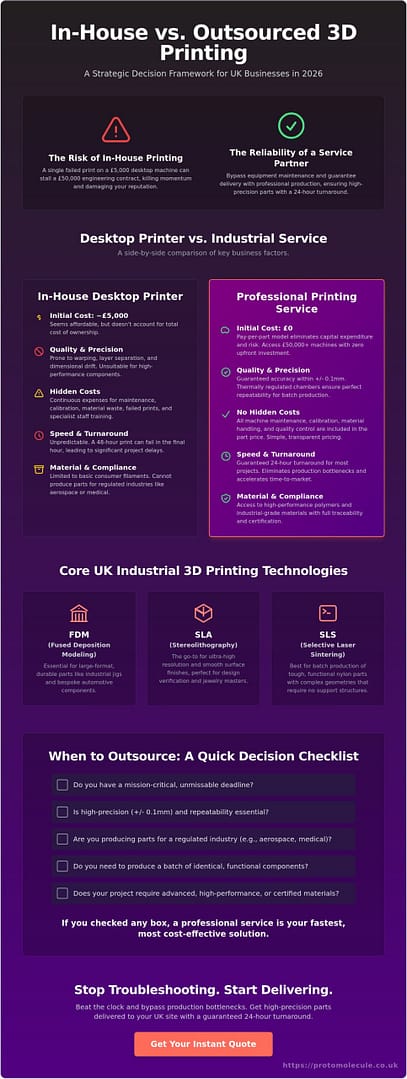
Owning a desktop 3d printer uk enthusiasts often buy for under £500 provides a great entry point for hobbyist projects. However, a significant gap exists between these consumer units and the £50,000+ industrial systems housed in professional facilities. Desktop machines typically use open-frame designs that struggle with heat retention, leading to warping and layer separation. In contrast, industrial machines utilize fully enclosed, thermally regulated chambers. This environmental control ensures that every layer cools at a uniform rate, which is vital for maintaining structural integrity in large-scale parts.
Repeatability is where the professional service wins every time. If you need a batch of 50 identical components, a desktop printer will likely show dimensional drift as the motors heat up or the filament tension fluctuates. Industrial-grade hardware uses high-torque servo motors and optical encoders to maintain accuracy within +/- 0.1mm across every single unit in a production run. This level of precision is non-negotiable for engineers working on mission-critical applications.
Material Diversity and Performance
Desktop extruders usually reach a maximum temperature of 260°C, which limits your options to basic plastics like PLA or PETG. These materials lack the thermal and mechanical properties required for heavy-duty engineering. When you utilize professional 3d printing services, you gain immediate access to high-performance polymers like PEEK, Ultem, and carbon-fibre reinforced nylon.
Advanced engineering filaments often require extrusion temperatures exceeding 400°C and specialized nozzles to prevent abrasion. Desktop setups frequently fail when attempting to process these materials, resulting in jammed extruders and wasted filament. Professional bureaus also stock ESD-safe materials for electronics housing and flame-retardant resins that meet strict safety certifications. Using a service allows you to test these advanced materials without a massive upfront investment in hardware.
Precision and Post-Processing
The quality of a finished part isn’t just about the print; it’s about the post-processing. While a desktop user might spend hours manually sanding a part, industrial bureaus use automated finishing techniques like chemical vapour smoothing and media blasting. These processes remove layer lines and create a surface finish that mimics injection-moulded plastic.
UK government research on 3d printing emphasizes the importance of these industrial standards for maintaining the UK’s competitive edge in high-tech manufacturing. Achieving the tight tolerances required for aerospace or military projects is nearly impossible on consumer-grade gear. Professional machines are calibrated daily to ensure they meet these rigorous demands. If your project requires zero compromise on quality, you can get a quote
The Hidden Costs of Owning a 3D Printer in the UK
Buying a 3d printer uk often feels like a milestone for an engineering firm, but the initial purchase price is deceptive. You’re trading liquid capital for a depreciating asset that demands constant attention. Beyond the £2,000 to £15,000 price tag for industrial-grade hardware, you must account for the relentless cost of downtime. Every hour spent on bed leveling, nozzle cleaning, or firmware updates is an hour your team isn’t innovating. Professional-grade results require professional-grade maintenance. If a machine fails mid-print on a Tuesday, your project timeline is already compromised by Wednesday.
Staffing costs represent the most significant drain on resources. An expert operator’s time is your most expensive asset. When you task a senior engineer with troubleshooting a jammed extruder, you aren’t just paying for the repair; you’re losing their high-value design input. Protomolecule eliminates this friction. We absorb the technical risks and the maintenance schedules, allowing your team to stay focused on the engineering challenges that actually drive your business forward. We deliver precision without the internal distractions.
Total Cost of Ownership (TCO) Analysis
Calculate your real cost per part over a 12-month cycle to see the true picture. It’s rarely just the price of the filament. You have to factor in a 15% to 25% failure rate for complex geometries, which doubles your material spend instantly. Software licenses for high-end slicers or CAD optimization can add another £500 annually. UK Government research on 3D printing highlights how industrial adoption is often slowed by these administrative and technical hurdles. Waste management also carries a price, as disposing of support structures and failed iterations requires dedicated time and adherence to UK environmental regulations. Outsourcing turns these unpredictable variables into a fixed, manageable cost.
Space and Infrastructure Requirements
Operating a 3d printer uk in a standard office isn’t just difficult; it’s often a breach of safety protocols. UK workshops must adhere to strict ventilation standards to manage VOC emissions from materials like ABS or Nylon. Dedicated power circuits are essential to prevent surges during 48-hour print jobs, and climate-controlled storage is mandatory to keep filaments from absorbing moisture in the damp UK climate.
Scaling up to meet demand means losing valuable floor space to multiple machines. This is why many firms find it more efficient to hire a batch production specialist. You eliminate the overhead of facility upgrades and skip the logistics of managing a micro-factory. Protomolecule handles the infrastructure so you can focus on the results. We provide the heavy-duty capacity you need without the permanent footprint in your facility. Beat the clock by utilizing our established workshop instead of building your own.
When to Outsource: A Decision Framework for UK Businesses
Deciding whether to invest in a 3d printer uk or partner with a professional studio depends on your project’s technical ceiling. While desktop machines handle basic geometric shapes, industrial requirements often exceed the capabilities of entry-level hardware. If your part requires 10-micron accuracy or specific mechanical properties like high heat resistance, professional services are the logical choice. Use this framework to evaluate your next move:
- Volume Thresholds: Batch production becomes more efficient via an external service once you exceed 25 units. A single desktop printer might take 15 hours per unit; a professional hub scales this instantly, delivering 500 units in the time you’d finish five.
- Complexity Check: Does the part require 5-axis scanning or reverse engineering? Professional bureaus use industrial-grade sensors to capture data that consumer-grade hardware misses.
- Speed Requirements: DIY printing involves setup, calibration, and post-processing. A professional service delivers a 24-hour turnaround, moving from file to finished part while you focus on other tasks.
Don’t let equipment limitations slow your momentum. If you’re managing a project where failure isn’t an option, outsourcing removes the technical risk from your balance sheet. You gain access to £100,000+ machines without the capital expenditure or maintenance overheads.
The Need for Professional Design and Scanning
Success starts before the first layer is laid. When your “idea to print” workflow hits a wall, expert 3D design services bridge the gap between a rough concept and a production-ready file. This is vital for UK industrial maintenance, where legacy components often lack digital blueprints. We use high-precision 3D scanning to digitize physical parts, from 80s JDM wheel centre caps to passenger train seat arms, ensuring every replacement part fits perfectly. We turn physical reality into digital precision with zero compromise on quality.
Time-to-Market and Agile Prototyping
Speed is the primary currency in UK manufacturing. Rapid prototyping services accelerate the product launch cycle by allowing for multiple design iterations in a single week. This “Zero Compromise” approach is essential for deadline-driven engineering projects where missing a window costs thousands in lost revenue. You can scale from a single functional prototype to a batch production run of 1,000+ units without the risk of machine downtime or material waste. We help you beat the clock and get your product to market before the competition even finishes their first print.
Ready to accelerate your production cycle? Get an instant quote today and see how our 24-hour turnaround keeps your project on track.
Protomolecule: Your Agile 3D Printing Partner in the UK
Choosing to outsource your manufacturing instead of managing a dedicated 3d printer uk in-house is a strategic decision for 2026. Protomolecule acts as your direct engineering extension, removing the burden of hardware maintenance and technical troubleshooting. We provide an ultra-fast, 24-hour turnaround for UK-wide delivery, keeping your development cycle moving without friction. Our workflow covers the entire lifecycle of a part, from the first CAD design iteration to final batch production. We’ve built a reputation for excellence across the military, space, and commercial sectors by delivering components that meet exact specifications every time. Whether you are based in London or local to our roots in Nottingham and Mansfield, our national reach ensures your parts arrive exactly when you need them.
Why Protomolecule Leads the UK Market
Protomolecule stands apart because we provide direct access to engineering experts rather than just machine operators. This distinction is vital when your project requires more than just a basic plastic model. We utilize high-resolution industrial hardware capable of large-format FDM, allowing us to tackle projects that consumer-grade machines simply can’t handle. Our technical team understands the nuances of material performance in harsh environments. This expertise makes us a preferred partner for aerospace and defense applications where failure isn’t an option.
We focus on reliable, lightning-fast manufacturing for time-sensitive projects. If you need a part by tomorrow morning, we have the capacity and the logistics to make it happen. There’s zero compromise on quality. Every component undergoes rigorous inspection before it leaves our facility. Our portfolio is diverse, ranging from complex passenger train seat arms to custom 80s JDM wheel centre caps. We apply the same level of precision to every job, regardless of the sector. We don’t just print parts; we solve engineering bottlenecks that would otherwise stall your production line.
Get Your Project Moving Today
We’ve streamlined our engagement process to be as efficient as our printing. Our quoting system is transparent and built for the speed of modern UK enterprise. We prioritize the secure handling of your sensitive design data, ensuring your intellectual property remains protected throughout the manufacturing process. Don’t let equipment downtime or the learning curve of a new 3d printer uk stall your progress. We handle the technical complexity so you can focus on your core business goals.
Whether you’re developing a new medical device or a custom automotive component, we provide the precision you demand. Our team is ready to transition your project from a digital file to a physical reality with no delays. Beat the clock and stay ahead of your competitors by leveraging our industrial-grade studio. Get an instant quote for your 3D printing project and experience the difference that professional, agile manufacturing brings to your supply chain.
Accelerate Your Production Timeline in 2026
The UK manufacturing landscape in 2026 demands more than just basic equipment. While desktop units seem affordable, the hidden costs of maintenance and material waste often exceed initial budgets. UK businesses that pivot to industrial-grade FDM, SLA, and SLS technology avoid the technical debt of hardware ownership. You don’t need to manage a complex workshop to access precision engineering. Partnering with an agile service provider eliminates lead times and ensures zero compromise on quality. Choosing the right 3d printer uk strategy is about balancing your capital expenditure against the need for lightning-fast iteration. We provide the expert 3D design and reverse engineering support required to move from concept to functional part without the usual friction. Don’t let equipment downtime dictate your project deadlines. Focus on your core business and let us handle the technical execution. Our team is ready to help you beat the clock and stay ahead of the competition.
Turn your ideas into reality with our 24-hour 3D printing service
Frequently Asked Questions
Is it cheaper to buy a 3D printer or use a service in the UK?
Buying a professional-grade 3d printer uk setup in 2026 costs between £3,500 and £50,000 depending on the technology. For one-off prototypes or low-volume runs, hiring a professional service is significantly more cost-effective because it eliminates overheads like maintenance, material waste, and power consumption. You also avoid the 15% to 20% annual depreciation costs associated with high-end industrial hardware.
How long does a 3D printing service in the UK typically take?
Professional services deliver parts in 24 to 72 hours. We offer a 24-hour turnaround for rapid prototyping to help you beat the clock on tight project deadlines. Shipping across the UK usually adds one business day via tracked couriers. This workflow is often 40% faster than in-house production which requires manual setup and post-processing by your own staff.
What is the best 3D printer for professional use in 2026?
The Bambu Lab X1E and the Formlabs Form 4 are the 2026 industry standards for reliability and precision in a studio environment. For heavy industrial applications, the Stratasys F370CR remains a leader for carbon fibre reinforced parts. These machines offer 99.9% uptime and dimensional accuracy within 0.1mm. Choose hardware that matches your specific material requirements to ensure zero compromise on quality.
Can I get a 3D print made from a physical object without a digital file?
Yes, you can use reverse engineering services to convert physical parts into digital CAD files. We use high-precision 3D scanners to capture geometries with 0.02mm accuracy. This process is essential for duplicating legacy components like 80s JDM wheel centre caps or bespoke industrial fittings. Once scanned, we generate the 3D printable file for lightning-fast production.
What materials are available for professional 3D printing in the UK?
You have access to over 50 high-performance materials including PLA, PETG, Nylon (PA12), and Carbon Fibre composites. For industrial projects, we provide specialized resins and metals like 316L Stainless Steel. Each material meets specific UK manufacturing standards for heat resistance and tensile strength. Select the right filament to turn your ideas into reality without technical bottlenecks.
Do I need to know CAD to use a 3D printing service?
No, you don’t need to be a CAD expert to start your 3d printer uk project. While a digital file is required for the printing process, professional studios provide design-for-manufacture (DfM) support. We take your sketches or physical samples and create the necessary technical drawings. This service ensures your part is structurally sound and ready for 24-hour rapid production.
Is 3D printing suitable for large-scale batch production?
Yes, 3D printing is highly efficient for batch production runs of 1 to 1,000 units. It eliminates the £5,000 to £20,000 upfront costs typically required for traditional injection moulding tools. By 2026, high-speed printers have reduced per-unit costs by 30% for complex geometries. This makes it the preferred choice for passenger train seat arms and other specialized industrial components.
How do I ensure my 3D design is optimized for manufacturing?
Follow Design for Additive Manufacturing (DfAM) principles like minimizing overhangs and maintaining a minimum wall thickness of 1.2mm. Use our instant quote tool to identify potential geometry issues before production starts. Proper optimization reduces print time by 25% and cuts material waste. Get a quote today to verify your design meets our high-performance engineering standards.