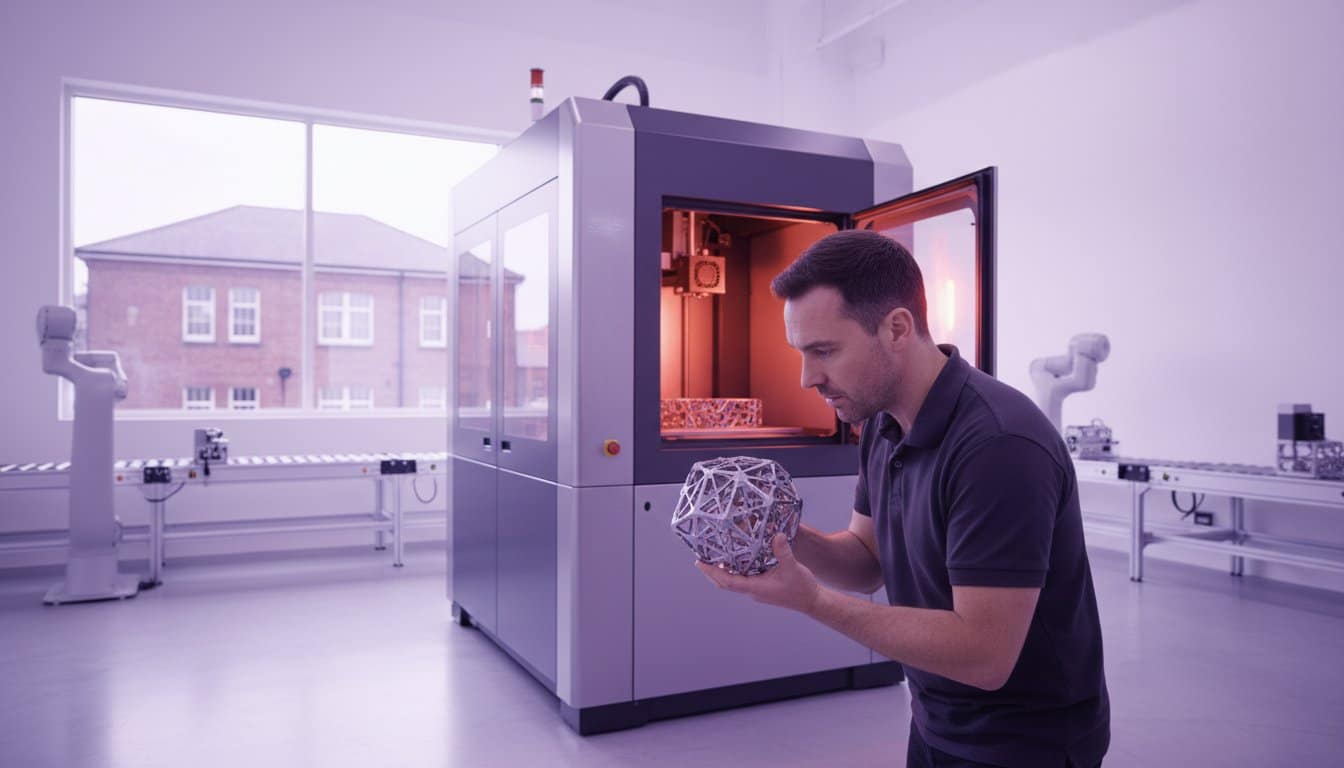

Selecting the most expensive high-performance polymer is often the fastest way to tank your project’s ROI and trigger catastrophic part failure in high-stress environments. You already know that technical specifications are evolving faster than most procurement cycles can track. It’s a common frustration for engineers across the UK to face hidden post-processing costs that can inflate a project budget by 40% overnight. You need precision, not guesswork, when your reputation depends on the success of batch production.
This 3d printing materials guide 2026 serves as your definitive engineering reference to master the complex landscape of modern additive manufacturing. We provide a spec-based comparison of current polymers, composites, and resins to ensure you choose the right material for your specific industrial application. You’ll gain the confidence to select high-performance materials that deliver zero compromise on quality while hitting your 24-hour turnaround targets. This guide breaks down the mechanical properties and cost-efficiencies you must understand to stay ahead of the competition this year.
Key Takeaways
- Leverage this 3d printing materials guide 2026 to navigate the shift from rapid prototyping to high-performance industrial production using polymers that rival traditional manufacturing.
- Categorise your project requirements across thermal and mechanical performance tiers, moving beyond basic PLA to aerospace-grade PEEK and Carbon Fibre composites.
- Deploy high-resolution resins and SLS powders for precision design validation where part strength and dimensional accuracy are non-negotiable.
- Utilise our 4-step decision matrix to overcome the “strength objection” and select the perfect material for your specific operating environment.
- Accelerate your development cycle by accessing Protomolecule’s advanced material library, turning complex engineering specifications into finished parts with zero compromise on quality.
The 2026 3D Printing Material Landscape: Beyond Prototyping
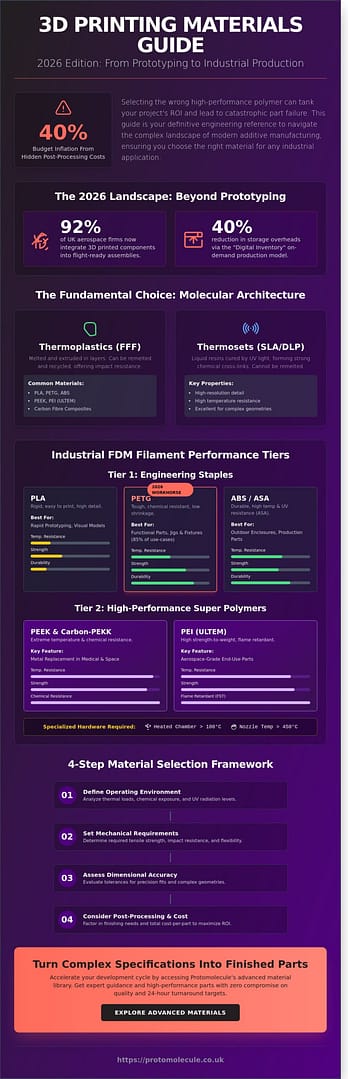
By 2026, additive manufacturing has transitioned from the design studio to the factory floor. This 3d printing materials guide 2026 explores how 92% of UK aerospace firms now integrate 3D printed components into flight-ready assemblies. Modern polymers like Carbon PEKK offer chemical resistance and strength-to-weight ratios that exceed traditional injection-moulded nylon. We’ve moved past simple visual aids. Today, we produce end-use parts for the defence and energy sectors that withstand extreme environments.
This shift enables a “Digital Inventory” model. Instead of storing physical spares in traditional regional warehouses, firms maintain encrypted CAD files. They print parts on demand, which reduces storage overheads by up to 40%. It’s a faster, leaner way to manage supply chains. Don’t let old-fashioned stocking methods slow you down; the future is on-demand batch production using high-spec polymers.
Thermoplastics vs. Thermosets: The Fundamental Choice
The choice between these two depends on your part’s molecular architecture. Thermoplastics rely on Fused Filament Fabrication (FFF), where heat melts the material for layered deposition. These materials, including PEEK and PEI, can be remelted and recycled. Thermosets, used in resin-based SLA or DLP, undergo a chemical cross-linking process during UV curing. You can’t melt them back down once they’re set.
In 2026, we see a surge in hybrid “dual-cure” materials. These combine the impact resistance of thermoplastics with the fine detail of thermosets. If your project faces high UV exposure or temperatures above 150°C, choose high-performance thermosets or specialised FFF filaments like Ultem 1010. We help you select the right chemistry to ensure zero compromise on quality.
The Rise of Composite and Reinforced Materials
Industrial FDM Filaments: From Standard PLA to Aerospace Grade
Industrial FDM materials fall into three performance tiers: commodity, engineering, and high-performance super polymers. This 3d printing materials guide 2026 highlights how the gap between these tiers narrowed as hardware capabilities advanced. Precision is the baseline now. If your filament doesn’t maintain a diameter tolerance of +/- 0.02mm, batch production reliability plummets. Inconsistent extrusion leads to microscopic voids that compromise structural integrity and aesthetic finish.
The environmental impact of these materials is a primary concern for UK manufacturers. While bio-based filaments like PLA are derived from corn starch, they require industrial composting facilities to break down effectively. Petroleum-based filaments like ABS offer higher durability, which often results in a longer part lifecycle and less frequent replacement waste. Choosing the right material requires balancing these lifecycle costs against mechanical requirements.
Engineering Staples: PLA, ABS, and PETG in 2026
PLA remains the fastest option for high-detail visual models and rapid prototyping. It’s rigid and easy to print, but its low heat deflection temperature limits it to indoor, non-mechanical use. For outdoor enclosures, ABS and its UV-resistant sibling, ASA, are the professional choice. These materials withstand the UK’s unpredictable weather without warping or yellowing over time.
PETG has officially claimed the title of the 2026 standard for functional parts. It offers a superior balance of chemical resistance and mechanical toughness. Unlike PLA, it doesn’t shatter under impact. Unlike ABS, it prints with minimal shrinkage. It’s the reliable workhorse for 85% of industrial jigs, fixtures, and assembly aids used in modern workshops.
High-Performance Super Polymers: PEEK, PEI, and ULTEM
When project requirements demand metal-level strength, we turn to super polymers. PEEK is the 2026 standard for metal replacement in medical and space sectors. It handles extreme temperatures and aggressive chemicals that would melt standard plastics. For aerospace applications, ULTEM 9085 and 1010 provide essential flame-retardant properties and high strength-to-weight ratios.
Printing these requires specialized hardware. You need active heated chambers reaching 100°C and nozzles capable of 450°C. Penn State’s materials science research confirms that these polymers act as critical bridge materials, filling the performance gap between traditional plastics and heavy metal alloys.
Flexible and Specialized Filaments
TPU and TPE allow us to hit specific Shore hardness ratings, ranging from soft 60A gaskets to rigid 95A seals. For electronics, conductive and ESD-safe materials prevent static discharge in sensitive housings. Don’t let material limitations stall your development. Access these advanced options through Protomolecule 3D printing services to ensure your parts meet industrial specifications without the overhead of specialized machinery.
If you need a fast solution that balances performance with sustainability, get a quote to see how we optimize material selection for your specific application. We focus on delivering results that beat the clock while maintaining zero compromise on quality.
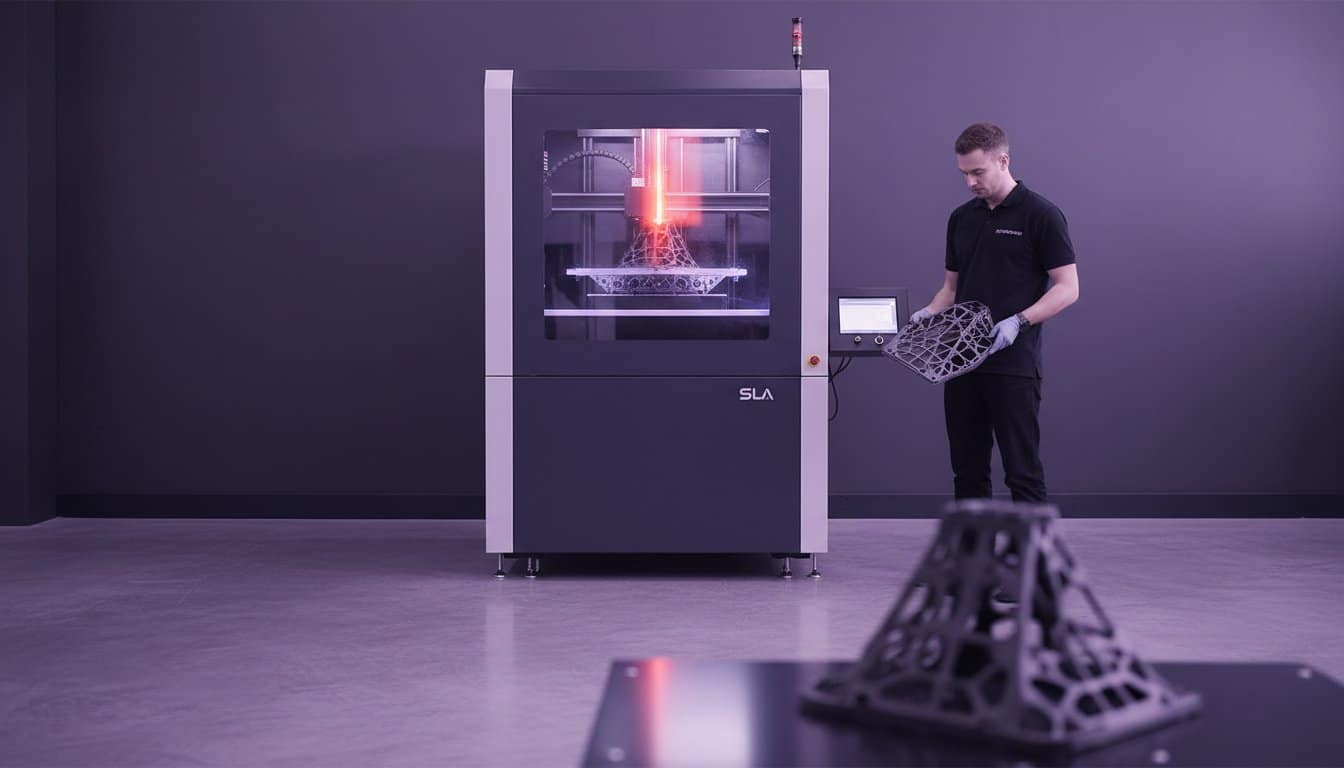
Professional Resins and Powders: Achieving Precision and Strength
The 2026 landscape for professional resins and powders is defined by one word: reliability. Manufacturers no longer view SLA or SLS as experimental phases; they’re core components of a lightning-fast supply chain. This 3d printing materials guide 2026 focuses on the materials that bridge the gap between a digital concept and a physical product ready for the UK market. By 2026, the gap between additive manufacturing and injection moulding has practically vanished, with professional technologies delivering isotropic properties that satisfy the most demanding engineering standards. Speed is now the baseline, and precision is the absolute requirement.
SLA Resins for Engineering and Aesthetics
Stereolithography (SLA) remains the gold standard for high-resolution 3D design validation. Modern tough and durable resins have evolved to offer 15% higher elongation at break compared to 2024 formulations, successfully mimicking the snap-fit capabilities of ABS and the fatigue resistance of polypropylene. These aren’t brittle display pieces. High-temperature resins now withstand 230°C under load, making them ideal for autoclave cycles or short-run injection mould tooling where traditional steel would cost upwards of £10,000. For the medical and dental sectors, clear and biocompatible resins allow for the rapid production of surgical guides and dental appliances with micron-level accuracy. Improved UV stability in 2026 resins also ensures that clear parts don’t yellow over time, maintaining professional aesthetics for long-term use.
SLS Powders: The King of Batch Production
Selective Laser Sintering (SLS) offers a distinct geometric advantage because it requires no support structures. The surrounding unsintered powder acts as a natural scaffold, allowing for complex internal geometries and interlocking parts that are physically impossible to produce via CNC machining. It’s the ultimate tool for design freedom. Nylon 12 (PA12) serves as the industry workhorse, providing a 48 MPa tensile strength that rivals traditional plastics. For projects requiring even higher ductility and impact resistance, Nylon 11 (PA11) provides a robust alternative for high-stress automotive or aerospace environments.
TPU powders are also revolutionising the sector by creating complex lattice structures for impact absorption. These structures can be tuned to specific densities, making them perfect for bespoke protective equipment or ergonomic grips. Efficient batch production leverages these powders to drive down unit costs, making it a viable alternative to tooling for runs of 50 to 5,000 units. Protomolecule uses these advanced materials to ensure your project moves from CAD to completion without delay. We understand that in modern manufacturing, a 24-hour turnaround is a necessity to beat the clock. Zero compromise on quality is our brand promise, ensuring every batch meets your exact specifications.
Whether you need a single high-resolution prototype or a full production run of functional parts, this 3d printing materials guide 2026 shows that the right resin or powder can turn your ideas into reality. Don’t let delays slow you down; choose the material that fits your performance needs and get your project moving today.
The 2026 Selection Framework: Matching Materials to Environment
Choosing the right polymer is the difference between a functional component and a failed project. The primary objection we hear at Protomolecule is that 3D printed parts lack the strength of traditional CNC-machined components. In 2026, this is a myth. High-performance filaments like Carbon-PEEK and reinforced Nylons now achieve 90% of the tensile strength of aluminium 6061-T6. This 3d printing materials guide 2026 provides a logic-based framework to ensure your material choice survives its intended environment.
Part performance depends heavily on print orientation. Because FDM parts are anisotropic, they’re naturally weaker across the layer lines. We mitigate this through strategic slicing and post-processing. Vapour smoothing closes surface porosity to improve chemical resistance; annealing re-crystallises the polymer chains to boost thermal stability. Don’t settle for “good enough” when precision engineering is required.
Step 1: Defining Mechanical and Thermal Stress
Start by calculating your required Heat Deflection Temperature (HDT). If your part operates in an engine bay reaching 120°C, an HDT of 150°C provides a necessary safety margin. You must balance tensile strength for snap-fits against impact resistance for housings. Creep resistance is the material’s capacity to withstand permanent deformation when subjected to constant mechanical stress over extended periods. For load-bearing brackets, choose materials with low creep, such as glass-filled polycarbonates.
Step 2: Environmental and Chemical Compatibility
Assess the exposure profile. Industrial environments in the UK often involve contact with hydraulic fluids, petrol, or cleaning solvents. In 2026, TPU and PP variants offer 100% resistance to most hydrocarbons. For outdoor deployment, ensure the material has integrated UV stabilisers to prevent the brittleness seen in standard PLA after 12 months of exposure. If your project involves food contact or medical tools, verify compliance with UK Food Standards Agency (FSA) or MHRA certification before production begins.
Step 3: Cost-to-Performance Optimization
Efficiency drives profit. We compare the cost per cm3 against the tangible value of weight reduction. A part printed in Ultem 9085 might cost £50 more than one in PETG, but if it reduces assembly weight by 40%, the fuel savings in aerospace applications justify the spend. Use rapid prototyping materials like tough resin or PLA+ to validate geometry before committing to high-cost engineering polymers. This staged approach eliminates waste and accelerates your time-to-market.
Beat the clock and secure your production slot today. Our 24-hour turnaround ensures your high-performance parts are delivered while the competition is still debating material specs. Get an instant quote and put this 3d printing materials guide 2026 into practice.
Scaling Production with Protomolecule’s Advanced Material Library
Theory only goes so far in manufacturing. Bridging the gap between a material data sheet and a finished, functional part requires an industrial environment. Protomolecule acts as your technical partner, translating the complex specifications found in this 3d printing materials guide 2026 into tangible results. We operate an industrial studio designed to handle the volatile requirements of high-performance polymers. Standard materials move through our facility with a 24-hour turnaround, while specialty filaments receive the rigorous calibration they demand.
Using an industrial studio provides a distinct advantage when working with advanced materials. High-performance filaments like PEEK or Carbon Fibre require more than just a heated bed. They demand specialized conditions to reach their full potential:
- Active chamber heating to eliminate internal stresses and prevent warping in large parts.
- Hardened steel or ruby-tipped nozzles to withstand the abrasive nature of carbon-filled polymers.
- Precision thermal management to ensure maximum interlayer bonding for structural integrity.
- Industrial-grade dehumidification to prevent material degradation during the print cycle.
Our quality control protocols ensure that whether you need a single prototype or a short run of 500 units, the mechanical properties remain identical. We don’t just print parts; we deliver engineered solutions that are ready for the field. It’s a level of reliability that desktop setups simply can’t match.
Expert Consultation and Reverse Engineering
Legacy hardware often fails because the original materials weren’t designed for modern stress loads. We use reverse engineering to analyze these components, identifying weaknesses and suggesting material upgrades. Our 3D design services then step in to optimize the geometry. We don’t just replicate; we improve. By adjusting wall thickness or infill patterns based on the chosen filament’s characteristics, we maximize performance while reducing weight. This technical rigor supports our Zero Compromise on Quality promise, ensuring every part delivered across the UK meets the highest standards.
Get Your 2026 Material Quote Today
Speed is our signature. Our Instant Quote process removes the friction from rapid procurement, allowing you to move from a CAD file to a production schedule in minutes. We serve the entire UK from our base in the Midlands, combining local reliability with national reach. Our hardware is ready to process everything from standard PLA to aerospace-grade composites for your most demanding applications. Don’t let manufacturing delays slow your momentum. Get a Quote for Your 2026 Project now and experience the efficiency of a studio that values your deadlines as much as you do.
Accelerate Your Path to Production-Ready Parts
Turn your engineering designs into high-performance parts. Get an instant quote today
Your next breakthrough is only a quote away.
Frequently Asked Questions
What is the strongest 3D printing material available in 2026?
Carbon Fiber PEEK stands as the strongest 3D printing material in 2026. It offers a tensile strength exceeding 100 MPa, allowing it to replace aluminium in high-performance aerospace applications. This material maintains its structural integrity at temperatures up to 250°C. We frequently use it at our Nottingham facility for high-stress components like engine brackets. Use this for your most demanding engineering projects where failure isn’t an option.
Can 3D printed materials be used for food-contact applications?
You can use specific 3D printed materials for food contact if they carry UK-certified food-safe ratings. PETG and Polypropylene are common choices, but the FDM printing process creates microscopic gaps where bacteria can grow. You must seal these parts with a food-safe epoxy resin to ensure long-term safety. Always verify the manufacturer’s technical data sheet before using any printed part for food or drink consumption.
How do I choose between FDM, SLA, and SLS based on material needs?
Select FDM for cost-effective functional prototypes and SLA for parts requiring 25-micron layer heights. SLS is your best choice for complex geometries because it doesn’t require support structures. This 3d printing materials guide 2026 highlights that SLS allows for 100% design freedom. Match the technology to your mechanical requirements to ensure lightning-fast delivery of your components. Don’t let the wrong choice slow your project down.
Which 3D printing material is best for outdoor use in the UK climate?
Are 2026 3D printing materials recyclable?
By 2026, over 40% of industrial filaments are produced from recycled sources. You can recycle rPLA and PETG through dedicated UK closed-loop programmes to reduce your environmental footprint. We prioritise materials that lower waste without sacrificing precision. Look for the ISO 14021 certification on your spool to verify its recycled content. This ensures your project meets modern sustainability standards while maintaining industrial-grade quality for every batch.
What is the difference between PA11 and PA12 Nylon powders?
PA11 is a bio-based polymer derived from castor oil, offering 25% higher impact resistance than PA12. PA12 is a petroleum-based powder known for its 0.1mm dimensional accuracy and superior chemical resistance. Choose PA11 for flexible, durable parts like living hinges. Opt for PA12 when you need rigid, stable components for complex assemblies. Both materials deliver zero compromise on quality for our industrial SLS production runs.
How does moisture sensitivity affect 3D printing material storage?
Hygroscopic materials like Nylon and TPU absorb moisture within 4 hours of exposure to standard UK humidity. This leads to steam bubbles, poor surface finish, and a 30% reduction in part strength. Store your filaments in vacuum-sealed containers with desiccant to keep relative humidity below 15%. We use industrial-grade drying ovens to ensure every gram of material is in peak condition before the printing process starts.
Is it cheaper to print in PLA or PETG for large batches?
PLA remains the most cost-effective option for large batches in this 3d printing materials guide 2026. It typically costs 15% less per kilogram than PETG, saving you significant sums on high-volume runs of 500 units or more. While PETG offers better durability, PLA provides the fastest turnaround for rapid prototyping needs. Beat the clock by choosing PLA for your next mass-production project to keep costs low.