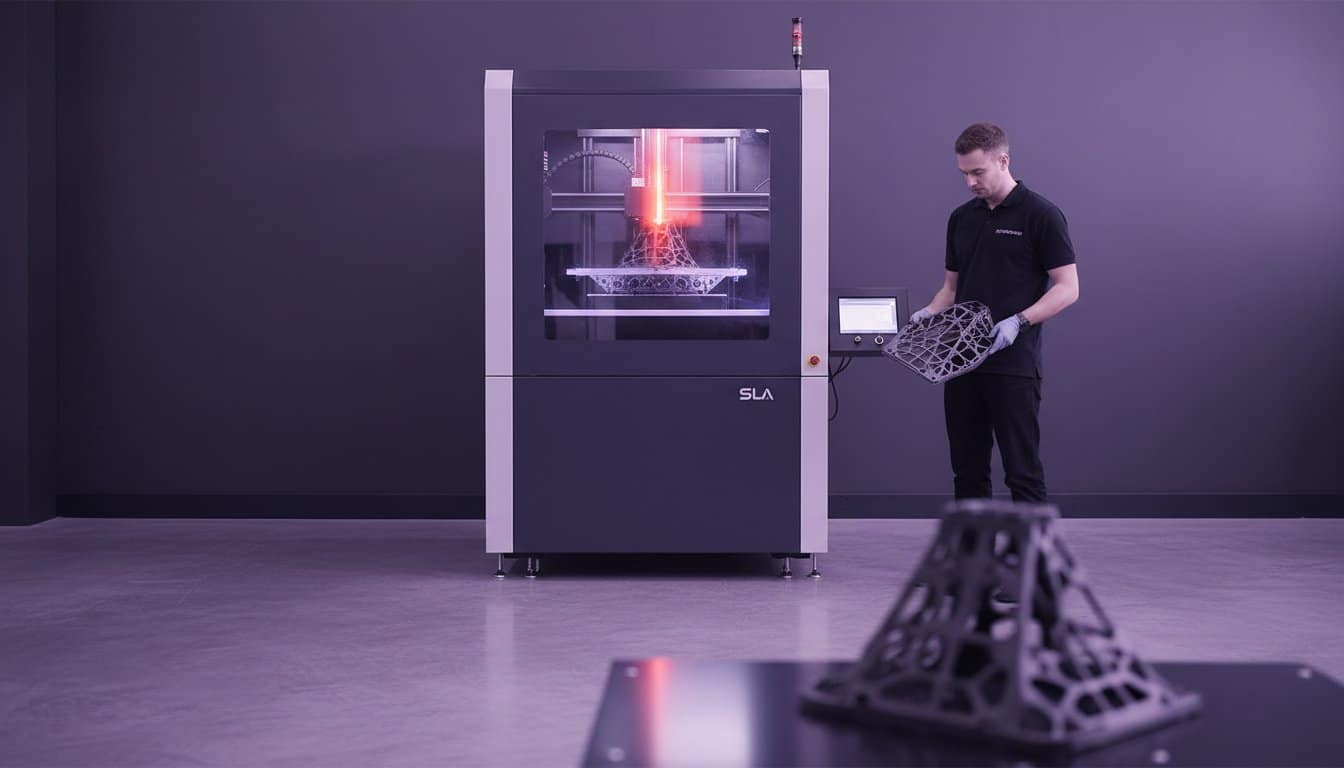
Discover how to navigate the UK’s industrial 3D printing landscape to accelerate your product development with precision and speed. When project deadlines are non-negotiable and component failure is not an option, you need more than just a print button—you need an engineering partner.
Industrial 3D Printing Service: Beyond the Hobbyist Bench
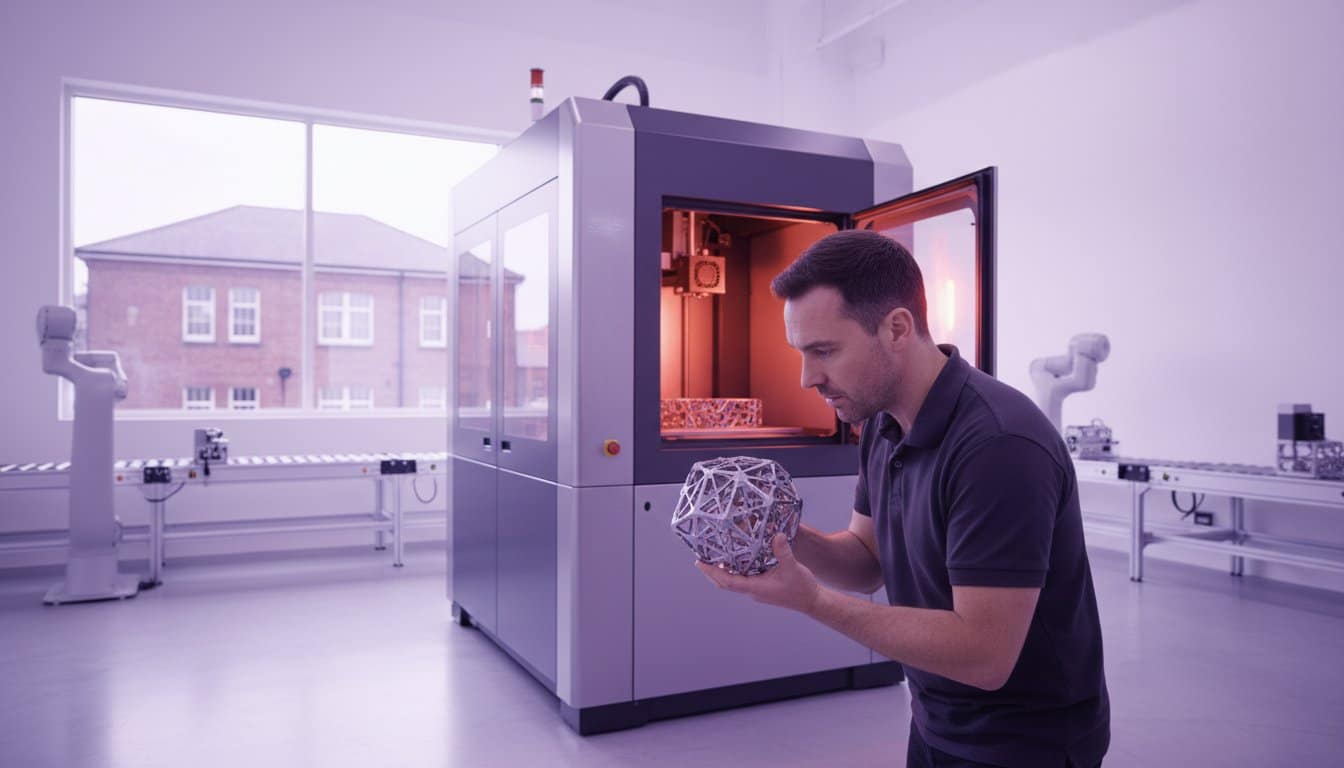
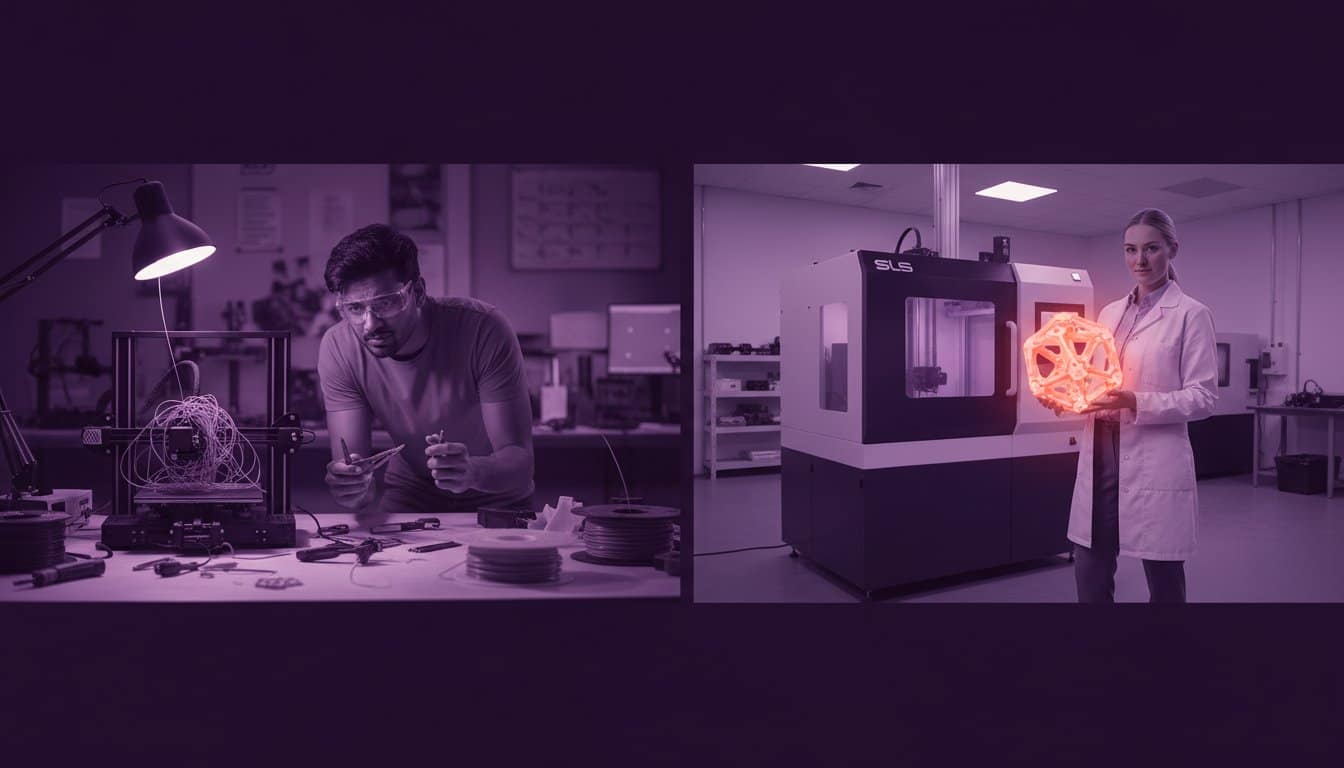
A professional 3D printing service is a precision additive manufacturing process designed for demanding industrial applications. Unlike the output from desktop “hobbyist” machines, industrial-grade 3D printing delivers exceptional accuracy, material integrity, and repeatability, making it a cornerstone of modern engineering. Across the UK, enterprises are shifting from traditional subtractive methods like CNC machining to additive manufacturing to gain a critical competitive edge in agility and innovation. For high-stakes commercial and military sectors, the baseline is simple: zero compromise on quality.
The Role of Additive Manufacturing in Modern Industry
The move towards decentralised manufacturing has made on-demand production of spare parts and custom components a reality. Additive manufacturing is at the heart of this transformation, enabling businesses to produce what they need, when they need it. This is particularly vital in rapid prototyping, where quickly creating and testing physical models drastically reduces the cost of failure during R&D. For sectors with stringent compliance needs, such as space, military, commercial aerospace, and the offshore energy projects managed by Poseidon Offshore Energy, the ability to produce complex, lightweight, and robust parts is a game-changer.
Key Benefits of Professional 3D Printing Services
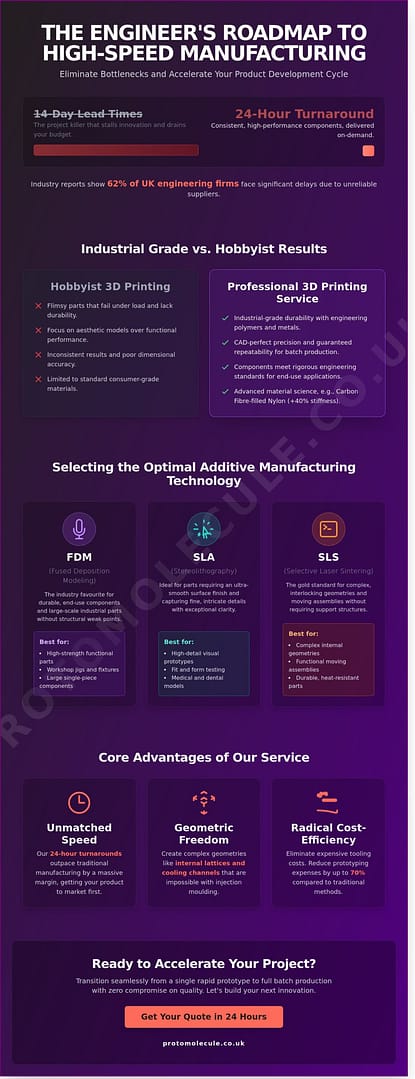
- Speed: With 24-hour turnarounds, a professional 3D printing service can outpace the weeks or months required for traditional tooling and CNC machining, getting critical parts into your hands faster.
- Complexity: Additive manufacturing excels at creating intricate geometries, internal lattices, and consolidated parts that are simply impossible to produce with methods like injection moulding.
- Cost-efficiency: By eliminating the need for expensive moulds and minimising material waste, 3D printing is an exceptionally cost-effective solution for low-volume runs and one-off prototypes.
Additive Manufacturing Technologies: Selecting the Right Process
Choosing the right technology is crucial for achieving the desired mechanical properties and surface finish. While hobbyist machines are limited, a professional 3D printing service offers a suite of industrial-grade processes. The selection depends entirely on your project’s requirements, whether you need the sheer strength of an engineering-grade FDM part or the aesthetic perfection of an SLA model. We utilise industrial-grade filaments and resins, ensuring that every component possesses superior performance characteristics compared to standard consumer materials. Our large-format FDM printing capability also allows for the production of substantial industrial components without sacrificing precision.
FDM (Fused Deposition Modelling) for Functional Parts
FDM is the workhorse of industrial 3D printing, favoured for its ability to produce durable, end-use components, jigs, and fixtures. Using high-performance engineering plastics like PETG, ABS, and carbon-fibre composites, FDM builds parts with outstanding structural integrity. This process is ideal for applications where strength and durability are paramount, such as manufacturing replacement passenger train seat arms or functional automotive prototypes.
SLA and SLS for High Resolution and Complexity
For projects demanding intricate detail or complex internal structures, SLA and SLS are the leading technologies.
- SLA (Stereolithography): This process uses a laser to cure liquid resin layer by layer, achieving an ultra-smooth surface finish perfect for high-detail prototypes, concept models, and master patterns for casting.
- SLS (Selective Laser Sintering): SLS uses a laser to fuse powdered polymer, creating highly complex and durable parts without the need for support structures. This makes it the go-to technology for functional prototypes with moving components and interlocking designs.
Understanding the post-processing requirements for each technology is key to setting realistic lead-time expectations, though our streamlined workflow ensures rapid delivery regardless of the process.
Engineering Value: Reverse Engineering and CAD Optimisation
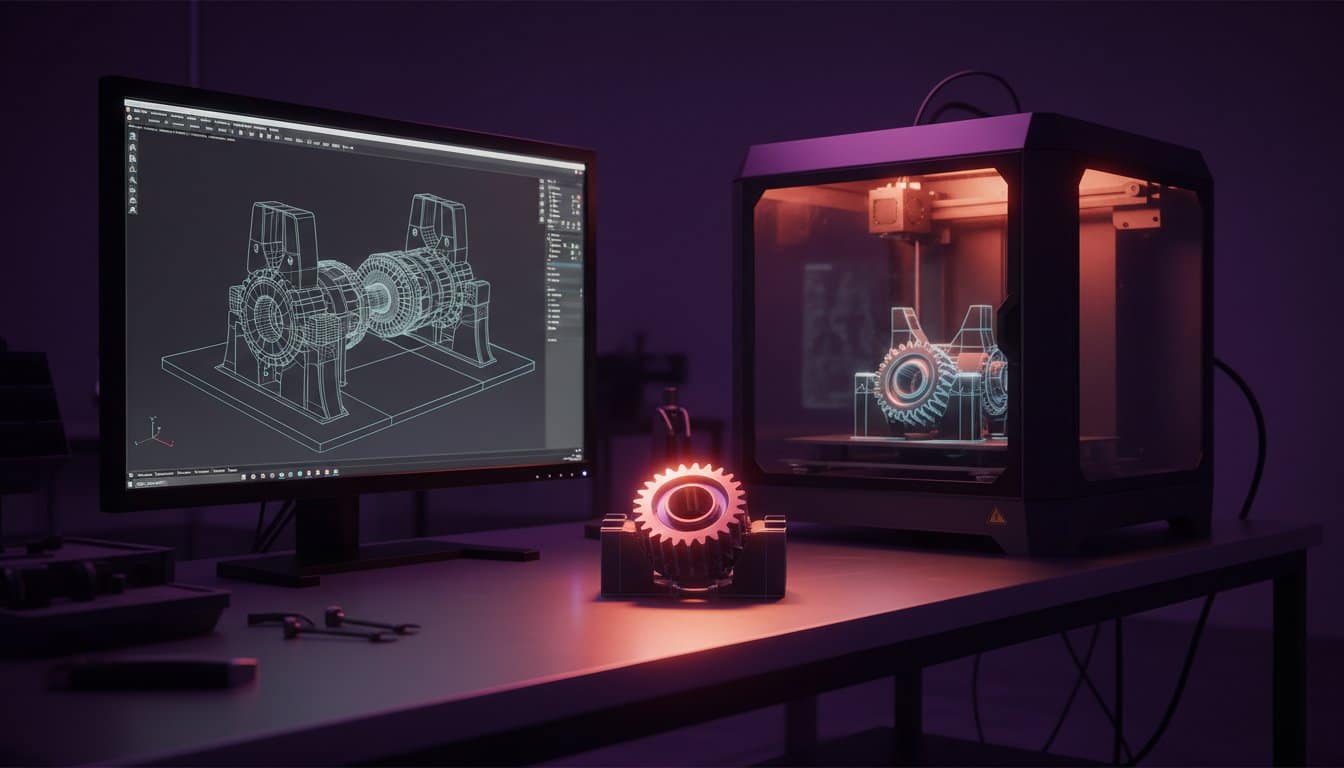
One of the most common hurdles in manufacturing is not having a perfect 3D model ready for print. This is where a true engineering partner shines. We bridge the gap between a physical object and a production-ready digital file through a powerful synergy of 3D scanning, reverse engineering, and professional CAD optimisation. By applying Design for Additive Manufacturing (DfAM) principles, we can enhance a part’s strength, reduce its weight, and minimise print time. This process turns physical legacy parts into valuable digital assets, ready for on-demand production whenever you need them.
From Physical Part to Digital Twin
Our process begins with high-resolution 3D scanning, using surface scan technology to capture every intricate detail of a physical object with micron-level precision. From there, our reverse engineering experts convert the scan data into clean, editable CAD data. This is invaluable for recreating worn, broken, or obsolete components that lack original documentation, such as vintage machinery parts or rare 80s JDM wheel centre caps.
CAD Design and Technical Drawing Services
A successful print starts with a flawless design. Our 3D design and technical drawing services ensure your parts meet strict industrial tolerances. We can work from 2D drawings or even simple sketches, optimising the design for 3D printing to prevent common failure points like warping or delamination. Investing in professional 3D CAD services eliminates guesswork and reduces the need for multiple, costly prototype iterations.
Scalability and Speed: From Rapid Prototyping to Batch Production
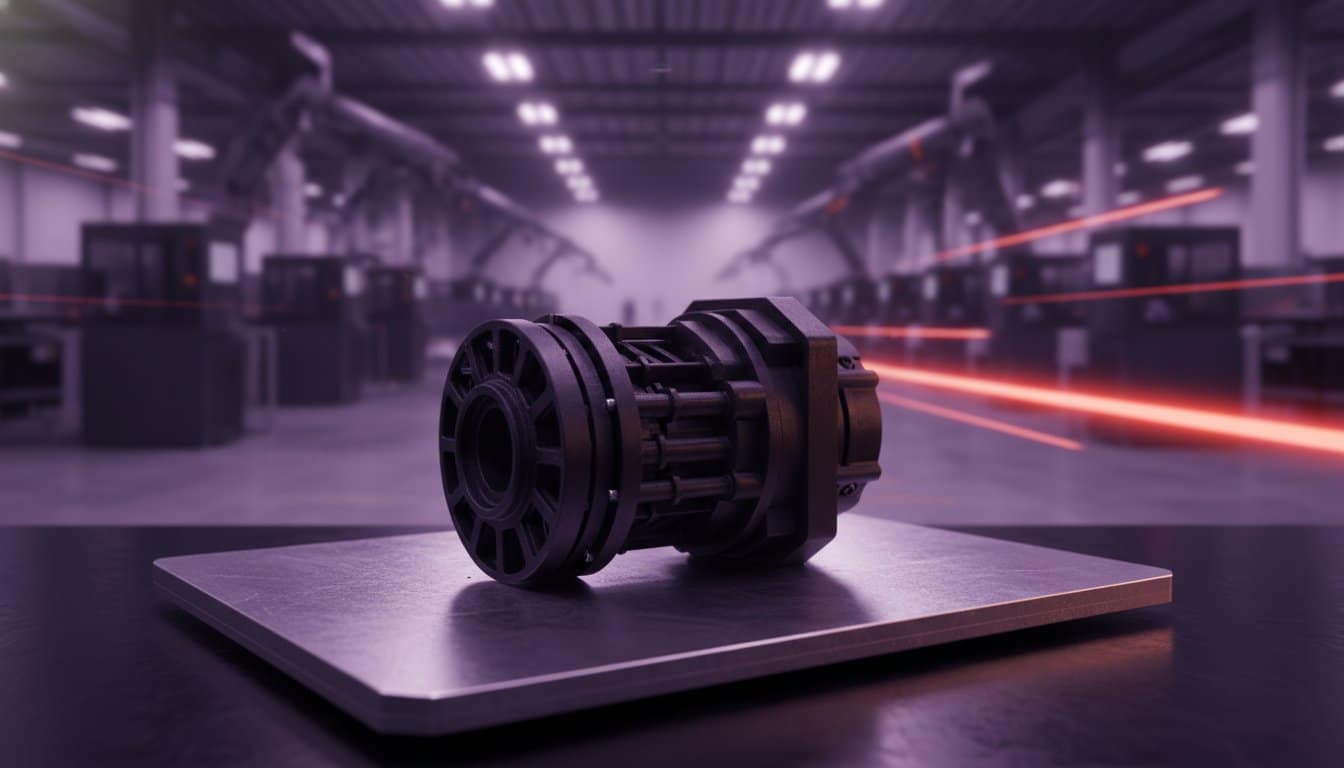
Our service is built to scale with your project, seamlessly guiding you from a single concept model to a full production run of over 1,000 parts. For low-volume manufacturing, 3D printing is often significantly faster and more agile than waiting for injection mould tooling to be created. When you need to beat the clock on project deadlines, our rapid prototyping workflow is your greatest asset. We implement rigorous quality control measures at every stage to maintain absolute consistency across every part in a batch.
The Rapid Prototyping Workflow
- Upload & Assess: Upload your files and our system provides an instant assessment of manufacturability, flagging any potential issues before production begins.
- Select & Refine: Choose your materials and finishes based on the part’s intended use and environmental stressors, such as heat, chemicals, or impact.
- Produce & Dispatch: We begin lightning-fast production, with a 24-hour dispatch option for your most urgent requirements.
Small Batch and Low-Volume Manufacturing
For production runs between 1 and 500 units, 3D printing is frequently the most cost-effective manufacturing solution. Our industrial-grade SLS and MJF machines ensure exceptional part-to-part consistency, delivering reliable results every time. This process also offers unparalleled agility, allowing you to modify designs between batches without incurring any additional tooling costs—a feat impossible with traditional manufacturing.
Choosing Your Manufacturing Partner: The Protomolecule Advantage
Protomolecule is the UK’s agile, tech-savvy studio for high-stakes engineering projects. We are not a faceless, automated platform; we are a dedicated partner committed to solving your most complex challenges. Our service is built on a foundation of speed and precision, reiterating our commitment to 24-hour turnarounds for time-sensitive projects. With cross-sector expertise in everything from space-grade components to bespoke commercial solutions, we stand by our promise: zero compromise on quality, because we know it directly impacts your bottom line.
For those looking to showcase these high-precision components within professional environments, you can visit TPG Events (The Technical Production Group) to see how they provide technical solutions for major conferences and exhibitions.
Why National Clients Trust Our Specialist Studio
Clients across the UK trust Protomolecule because we are an independent, hardworking studio that values deadlines as much as they do. Our team thrives on solving the complex engineering problems that automated platforms cannot handle. Paired with reliable, tracked national delivery, you can be confident that your parts will arrive precisely when you need them, keeping your project on track.
Get Started with Your 3D Printing Project Today
Don’t let delays slow you down. Move your project from idea to reality with a direct, streamlined process. Simply upload your file to receive a quote and our team will get to work turning your designs into high-quality physical parts.
Turn your ideas into reality with Protomolecule — Get an instant quote today.
Frequently Asked Questions
How much does a 3D printing service cost in the UK?
The cost of a 3D printing service depends on several factors, including the part’s volume, the chosen material, the technology used (e.g., FDM, SLS), and the required post-processing. For a precise figure, it is best to upload your 3D model for an instant quote.
Can you 3D print a part if I only have a physical sample and no CAD file?
Yes. Through our 3D scanning and reverse engineering services, we can create a “digital twin” of your physical part. We capture the object’s geometry with a high-resolution scanner and then build a production-ready CAD model from that data.
What is the fastest turnaround time for a professional 3D print?
We offer an ultra-fast 24-hour turnaround service for urgent projects. Our streamlined workflow ensures we can move from file submission to dispatch in the shortest possible time to help you meet critical deadlines.
Is 3D printing suitable for end-use industrial parts?
Absolutely. With industrial-grade materials like engineering plastics, composites, and advanced polymers, 3D printing is used to create strong, durable end-use parts for sectors including aerospace, automotive, and manufacturing.
What is the difference between FDM and SLS 3D printing?
FDM (Fused Deposition Modelling) builds parts by extruding a thermoplastic filament layer by layer, making it ideal for strong, functional components. SLS (Selective Laser Sintering) uses a laser to fuse powdered material, which allows for the creation of highly complex geometries without support structures.
Do you offer 3D design services if my model is not ready for printing?
Yes, we offer comprehensive 3D design and CAD optimisation services. Our team can help refine your existing model or create a new one from scratch based on sketches or technical drawings to ensure it is perfectly suited for additive manufacturing.
Can 3D printing replace CNC machining for metal or plastic parts?
3D printing and CNC machining are complementary technologies. For complex geometries, rapid prototyping, and low-volume production of plastic parts, 3D printing is often faster and more cost-effective. For high-volume runs or parts requiring the specific properties of machined metal, CNC remains a vital tool.
What file formats do I need to provide for a 3D printing quote?
The most common and preferred file formats for 3D printing are .STL, .STEP (.STP), and .OBJ. Most modern CAD software can export in one of these formats. If you have a different file type, please contact us to discuss your project.