Why are you still waiting 20 working days for ISO-grade components when the technology exists to deliver them to your factory floor in under 24 hours? You know that every hour of downtime or every week a prototype sits in a queue costs your business money and disrupts your entire supply chain. It’s frustrating when traditional machine shops go silent the moment a project gets complex or a deadline gets tight. You need a partner that values your time as much as you do.
This guide will show you how to evaluate precision machining companies in the UK to ensure you get the speed of modern additive manufacturing without sacrificing the mechanical integrity of CNC excellence. We’ll demonstrate how to secure 24-hour turnaround times for aerospace and medical parts while using design optimization to reduce your production costs by up to 30%. You’ll learn how to bridge the gap between complex geometries and rapid delivery to keep your projects moving at full speed. Don’t let delays slow you down; it’s time to beat the clock with zero compromise on quality.
Key Takeaways
- Evaluate technical depth by reviewing ISO 9001 and AS9100 certifications to guarantee your engineering partner meets the UK’s highest quality standards.
- Navigate the “Precision Gap” by comparing the surface finish and cost-efficiency of multi-axis CNC machining against advanced industrial 3D printing for batch production.
- Discover the essential criteria for selecting top-tier precision machining companies that can deliver consistent micron-level tolerances for complex 3D geometries.
- Learn how to leverage expert CAD modeling and 3D design support to streamline your manufacturing workflow and eliminate costly errors before production begins.
- Master the art of rapid deployment with strategies to achieve 24-hour turnarounds on time-sensitive engineering projects without compromising on component quality.
Defining Precision Machining in the Modern UK Industry
The engineering landscape has shifted rapidly. Manual lathes and hand-operated milling machines are now relics of the past. By 2026, Machining has evolved into a high-tech discipline dominated by AI-driven multi-axis centres that run with minimal human intervention. UK precision machining companies now operate in an environment where speed is as critical as accuracy. These firms are pivoting toward “Agile Manufacturing” to bypass the 15% increase in global shipping delays recorded across the sector in 2024. By keeping production local, they ensure that critical components don’t get stuck in international transit.
Modern machining focuses on achieving tolerances within microns (μm) consistently across massive batches. This isn’t just about cutting metal; it involves mastering material science to handle high-performance polymers and aerospace-grade alloys like Inconel or Titanium. If you need parts that withstand extreme environments, you can’t rely on guesswork. Get a quote for your next project to see how technical expertise translates into tangible performance. Don’t let delays slow you down when local, high-spec solutions are available.
What Constitutes ‘Precision’ in 2026?
Precision is no longer a luxury. It’s a baseline requirement. A decade ago, a tolerance of ±0.1mm was standard for many industrial applications. Today, the medical and space sectors demand sub-micron accuracy to ensure life-critical systems function without fail. Leading precision machining companies have moved away from viewing quality as a unique selling point; it’s now the minimum standard. Zero compromise on quality is the only way to compete in a market where a single micron represents the difference between a successful satellite launch and a multi-million-pound failure. Understanding these tolerance grades is essential because tighter specs directly impact manufacturing costs and cycle times.
The Impact of Industry 4.0 on Machining Companies
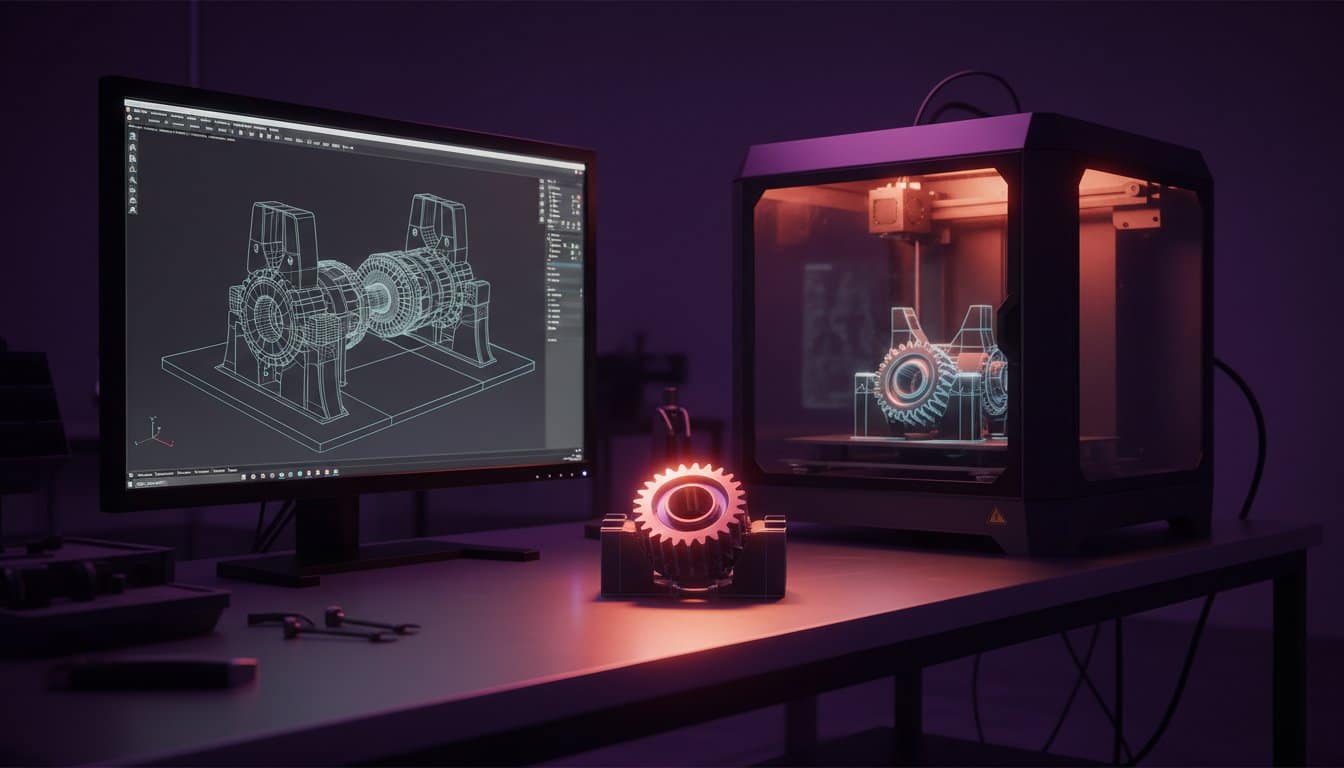
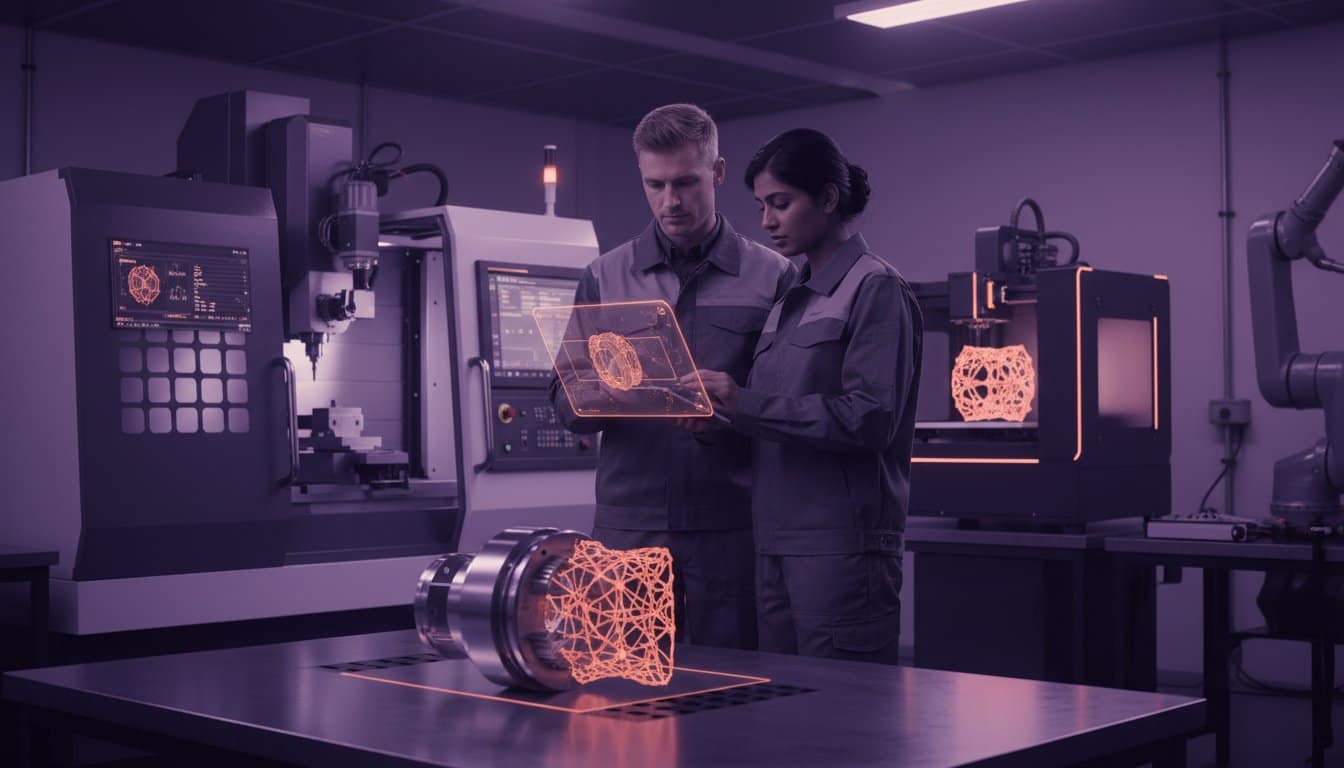
Industry 4.0 has digitised the workshop floor. Digital twins and CAD simulations now allow engineers to stress-test designs before the tool touches the material. This reduces waste and accelerates the rapid prototyping phase by up to 40% compared to traditional methods. The integration of 3D scanning provides real-time quality assurance, catching deviations during the production run rather than after it’s finished. Precision Machining is the intersection of repeatable accuracy and material integrity. Beat the clock on your next development cycle by choosing partners who leverage these digital tools to eliminate human error and deliver results at lightning-fast speeds.
Key Capabilities of Leading Precision Machining Suppliers
Leading precision machining companies in 2026 operate at the intersection of traditional craft and digital agility. They utilize multi-axis CNC milling and turning to achieve tolerances as tight as ±0.005mm. These advanced machines reduce the number of setups required for complex 3D geometries. This slashes lead times and eliminates the stacking errors associated with manual repositioning. Speed is the priority in modern engineering, and these capabilities allow for a seamless transition from digital files to physical components.
The GTMA highlights that the UK precision engineering sector is rapidly adopting integrated digital workflows to maintain a global edge. This includes high-tier post-processing and surface finishing. Whether your project requires bead blasting for a uniform matte look or hard-coat anodising for extreme wear resistance, the finish determines the component’s operational lifespan. If you’re working with legacy hardware where original drawings are lost, reverse engineering provides the solution. We use high-accuracy industrial scanners to recover part data, ensuring 100% fidelity to the original design while allowing for modern material upgrades.
Subtractive vs. Additive Tooling
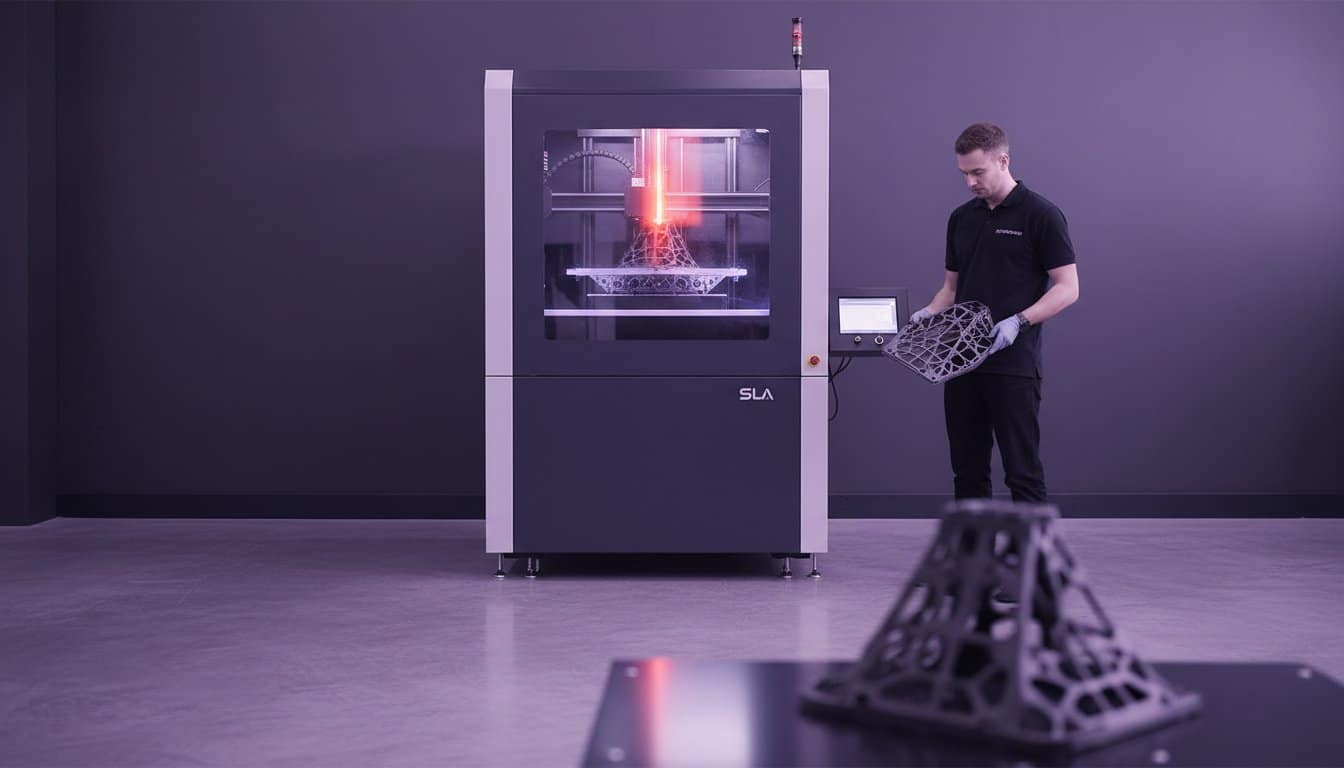
High-stress structural components often demand the density and grain structure that only CNC milling provides. However, 3D printing services using SLS or FDM technologies now replace traditional machining for assembly jigs and check fixtures. This shift can reduce tooling costs by up to 70% for low-volume production. Hybrid manufacturing is the 2026 standard for precision machining companies. We often machine 3D printed blanks to achieve final precision on critical mating surfaces, combining the speed of additive manufacturing with the exactness of subtractive finishing.
Material Versatility and Specialisation
Machining exotic metals like Titanium, Inconel 718, and Cobalt-Chrome requires rigid machinery and specialized high-pressure cooling systems. These materials are essential for aerospace and medical sectors but demand expert handling to avoid work hardening. Precision plastic machining is equally vital, particularly for medical devices and food-safe applications where contamination is a risk. Two primary factors drive your quote: material volume and machine time. Minimizing the raw stock required and optimizing tool paths are the most effective ways to lower your final bill. If you need to move from a CAD file to a physical part in under 24 hours, rapid prototyping is your most efficient route forward.
CNC Machining vs. 3D Printing: Choosing Your Method
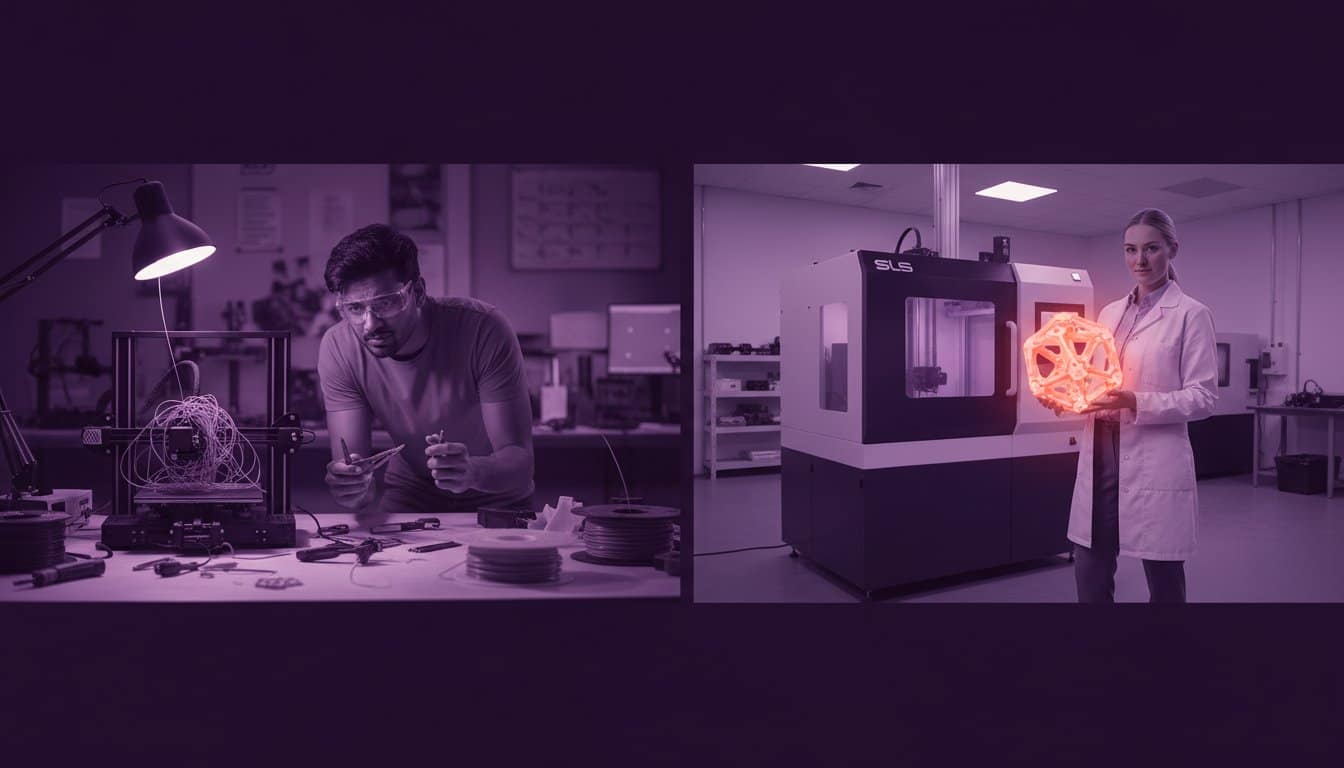
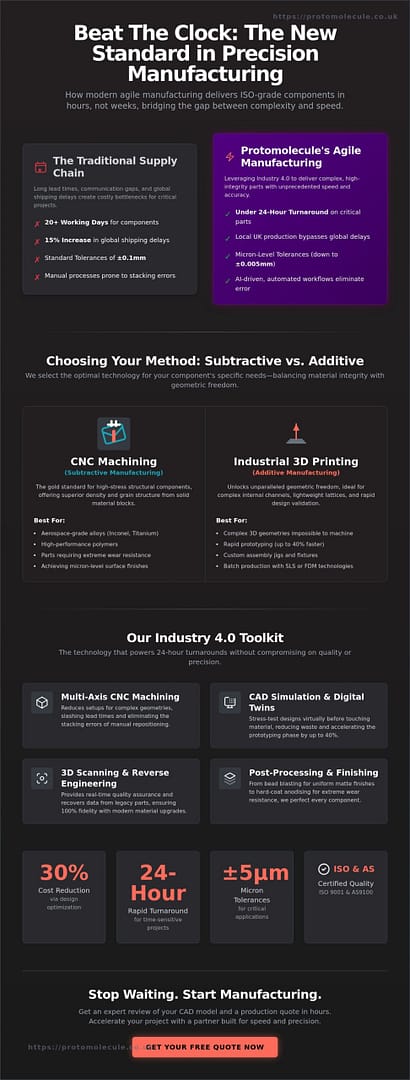
Deciding between subtractive and additive manufacturing isn’t about which technology is superior; it’s about which one protects your margin and meets your deadline. The “Precision Gap” remains the primary technical divide. While industrial 3D printers have made massive leaps, they cannot yet match the mirror-like surface finishes or the extreme tolerances of 5-axis CNC mills. Top precision machining companies regularly achieve tolerances of ±0.005mm, whereas Selective Laser Sintering (SLS) typically operates within a ±0.1mm range. If your component requires a bearing fit or a vacuum seal, CNC is your only viable path.
Cost efficiency depends entirely on your volume and geometry. For a single complex part, CNC setup fees in the UK can easily reach £500 before the machine even starts. Additive manufacturing eliminates these entry costs. According to the 2026 Manufacturing Industry Outlook, the shift toward localized, digital-first production is making hybrid approaches more common. For small batch production runs of 10 to 50 units, 3D printing often provides a lower cost-per-part because it bypasses expensive jigs and fixtures.
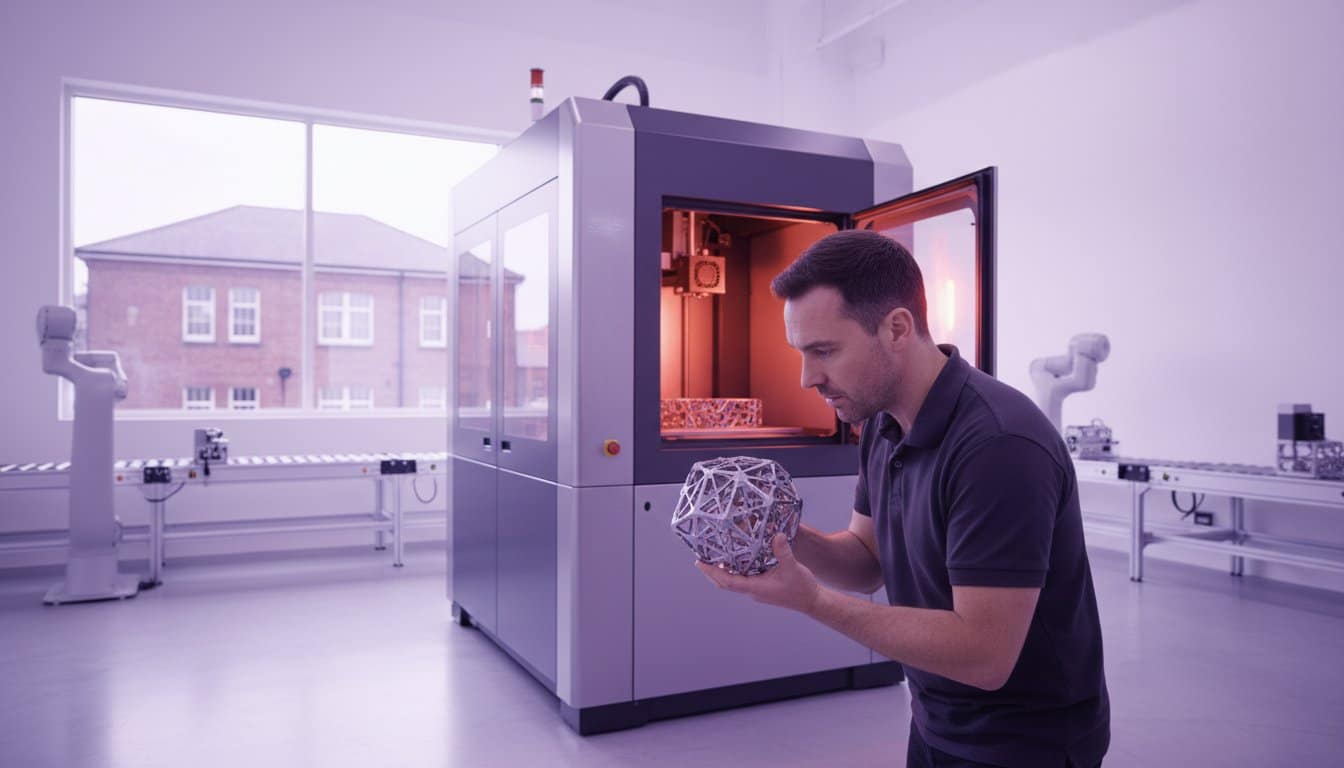
Speed serves as your ultimate competitive advantage. A 24-hour turnaround on a 3D-printed prototype allows your team to fail fast and fix faster. You can test three design iterations in the time a traditional machine shop takes just to source the raw materials. Furthermore, additive manufacturing allows for “complexity without cost.” You can produce intricate internal cooling channels or lattice structures that are physically impossible for a drill bit to reach. Turn your ideas into reality by choosing the method that fits your current stage of development.
When to Stick with Traditional CNC
High-volume runs of simple turned parts are where CNC excels. Once a lathe is programmed, it can churn out thousands of identical units with “one-hit” efficiency that 3D printing can’t touch. You should also stick with CNC for projects requiring specific metallic grain structures. Machining from a solid billet of 6061 Aluminium or Stainless Steel ensures superior fatigue resistance compared to sintered powders. When material specifications are non-negotiable for aerospace or medical compliance, CNC remains the gold standard.
When to Pivot to Additive Manufacturing
Pivot to additive manufacturing for rapid prototyping where design changes happen daily. It’s the ideal choice for small batches where the £2,000 cost of a CNC mould or fixture would make the project dead on arrival. While a CNC-machined housing might require a three-week lead time for tooling and scheduling, an SLS 3D printed equivalent is often ready for dispatch in just three days. Don’t let delays slow you down; use additive methods to beat the clock and get to market first. Get a quote today to see how fast your project can move.
How to Vet and Select a Precision Manufacturing Partner
Selecting from the pool of UK precision machining companies requires more than a simple price comparison. In 2026, the gap between standard machine shops and high-performance engineering partners is defined by technical agility and verifiable quality. You need a partner that treats your deadlines with the same urgency as their own. ISO 9001 and AS9100 remain the gold standards for quality management. These certifications aren’t just badges; they’re your guarantee that every component follows a documented, repeatable process with full material traceability.
Technical depth is the next critical metric. A true partner doesn’t just cut metal; they refine your vision. Evaluate whether a supplier can provide 3D design and CAD modeling support. If your design has a flaw that prevents efficient manufacturing, you need a team that catches it before the spindle starts turning. This Design for Manufacture (DFM) feedback loop is what separates successful projects from costly reworks.
Speed is your most valuable competitive advantage. If a supplier takes three days to return a quote, they’ll likely take three weeks to ship your parts. Top-tier precision machining companies now offer instant quotes and same-day responses. At Protomolecule, we focus on the “Urgency Factor,” providing the rapid feedback necessary to keep your production line moving. Don’t let slow communication become a bottleneck in your development cycle.
Finally, inspect the equipment list. Investigate whether they utilize the latest 5-axis CNC technology and large-format machines. 5-axis machining allows for complex geometries in a single setup, which significantly reduces human error and improves tolerance accuracy across intricate batches. Zero compromise on quality is only possible when the hardware matches the engineering expertise.
The 5-Point Supplier Audit
Run every potential partner through this rigorous check to ensure they can handle your project’s complexity:
- Step 1: Verify quality management systems and demand traceable material certifications for every batch.
- Step 2: Request case studies of similar project complexities, such as passenger train seat arms or high-performance automotive components.
- Step 3: Evaluate their 3D scanning and inspection capabilities to ensure final parts match your CAD data exactly.
- Step 4: Confirm their capacity for both rapid prototyping and full-scale batch production.
- Step 5: Test their responsiveness with a technical query to see if they provide actionable DFM advice within 24 hours.
Red Flags in Precision Machining Quotes
Be wary of quotes that seem too good to be true. Vague lead times that don’t account for post-processing like anodising or heat treatment often lead to missed deadlines. Watch out for hidden fees for CAD file preparation or technical drawing reviews. A transparent partner will be upfront about subcontracted processes, ensuring you aren’t hit with unexpected costs at the end of the project. If they can’t explain their pricing structure clearly, they likely don’t have a firm grip on their own production costs.
Beat the clock and secure your production slot with a team that values your time. Get an instant quote from Protomolecule today.
Protomolecule: Accelerating Precision with Rapid Solutions
Protomolecule redefines what engineers expect from precision machining companies by eliminating the traditional lead-time bottleneck. We bridge the gap between initial concept and high-precision reality with a focus on extreme speed. Our facility operates with a 24-hour turnaround commitment for time-sensitive engineering projects. This isn’t just a goal; it’s our standard operating procedure. We utilize industrial-grade additive manufacturing that rivals traditional CNC machining for both speed and geometric complexity. From our base in the Nottingham and Mansfield area, we provide national reach, serving as a dedicated partner for firms that can’t afford to wait for traditional supply chains.
We don’t believe in trade-offs. Whether your project requires the ruggedness needed for military applications or the exacting tolerances of the space sector, we deliver without delay. Our technical expertise ensures that every part meets industrial standards, positioning us as a leader among precision machining companies specializing in rapid turnaround. We’ve successfully delivered everything from passenger train seat arms to bespoke 80s JDM wheel centre caps, proving that no project is too niche or too complex for our team.
From Rapid Prototyping to Batch Production
Transitioning from a single idea to a full production run often stalls at the R&D phase. Our rapid prototyping service reduces R&D cycles by 70%, allowing you to test and iterate in days rather than months. We handle the scaling process seamlessly, moving from one-off high-resolution scans to full batch manufacturing without losing technical fidelity. In 2024, we delivered mission-critical aerospace components on a 48-hour timeline, ensuring the client met a vital testing window that would have otherwise been missed by weeks.
Get Started with an Instant Quote
Our streamlined procurement process removes the friction that typically slows down UK engineering firms. You won’t wait days for a callback or a complex spreadsheet. Beat the clock by utilizing our technical expertise from the very first interaction. Engineers across the UK trust us because we value their deadlines as much as they do. Our direct, action-oriented approach ensures your project moves from the screen to the shelf in record time. Don’t let delays slow you down. Get a precision manufacturing quote today. Zero compromise on quality is our brand promise.
Future-Proof Your UK Manufacturing Strategy
Navigating the landscape of precision machining companies in 2026 requires more than just technical specs; it demands a partner who understands the urgency of modern engineering. You’ve seen how the choice between CNC machining and additive manufacturing hinges on your specific volume and material requirements. Vetting a supplier now involves looking for specialized capabilities like military-grade production and advanced 3D scanning. Protomolecule eliminates the friction in your supply chain with a 24-hour turnaround on selected projects. Our facility integrates a comprehensive reverse engineering suite to ensure your legacy parts or new prototypes meet space-grade standards without the typical lead times. Whether you’re based in Nottingham or managing a national industrial firm, we provide the technical depth and speed needed to stay ahead. Don’t let production bottlenecks stall your growth. Turn your ideas into high-precision reality with an instant quote and experience zero compromise on quality today. We’re ready to help you beat the clock on your next project.
Frequently Asked Questions
What is the typical lead time for precision machined parts in the UK?
Typical lead times for precision machined parts in the UK range from 5 to 15 working days for standard orders. At Protomolecule, we accelerate this process by offering a 24-hour turnaround for rapid prototypes to help you beat the clock. Larger batch production runs usually require 3 to 4 weeks depending on material availability and finishing requirements.
Can 3D printing achieve the same tolerances as CNC machining?
CNC machining remains superior for tight tolerances, consistently achieving accuracies of +/- 0.025mm compared to the +/- 0.1mm typical of industrial 3D printing. While 3D printing is ultra-fast for complex geometries, precision machining companies are the essential choice for components requiring micron-level precision. We recommend CNC for any mating surfaces or high-stress mechanical parts.
What materials are best for high-precision industrial components?
Stainless steel 316, Grade 5 Titanium, and Aerospace-grade Aluminium 7075 are the top choices for high-performance industrial components. These materials provide the necessary durability for environments exceeding 1,000 PSI or extreme thermal shifts. We select specific alloys to ensure zero compromise on quality, whether you’re building medical devices or subsea equipment.
How does reverse engineering help in replacing obsolete machined parts?
Reverse engineering replaces obsolete parts by using high-resolution 3D scanning to create a digital CAD model from a physical component. This is vital for maintaining machinery from the 1990s or earlier that lacks original manufacturer support. We’ve successfully used this method to recreate everything from 80s JDM wheel centre caps to vintage passenger train seat arms.
What is the difference between 3-axis and 5-axis CNC machining?
3-axis machining operates on the X, Y, and Z planes, while 5-axis machining adds two rotational axes to reach complex angles in a single setup. This capability allows for the production of intricate geometries like turbine blades with 30% less production time than traditional methods. Using 5-axis technology reduces human error and ensures your most complex designs are executed with lightning-fast precision.
How much does a typical precision machining project cost?
Project costs depend on material choice and machine time, with UK industry shop rates generally falling between £50 and £90 per hour. A simple aluminium component might cost £40 in a batch run, while complex one-off prototypes can exceed £250. Don’t let budget uncertainty slow you down; get an instant quote to see our competitive pricing for your specific project.
Why is Design for Manufacture (DFM) important for reducing costs?
Design for Manufacture is critical because it identifies expensive production bottlenecks during the design phase, often cutting total costs by 20%. By optimizing part geometry and using standard tool sizes, we eliminate unnecessary machining steps and reduce material waste. Our engineers provide immediate feedback on your files to ensure your project is both cost-effective and ready for rapid production.
Do you offer UK-wide delivery for batch production runs?
We provide reliable, tracked UK-wide delivery for all batch production runs from our facilities in Nottingham and Mansfield. Most orders reach clients in London, Birmingham, or Manchester within 24 to 48 hours of leaving our floor. We manage the logistics with a sense of urgency so your assembly lines never stop moving while waiting for parts.