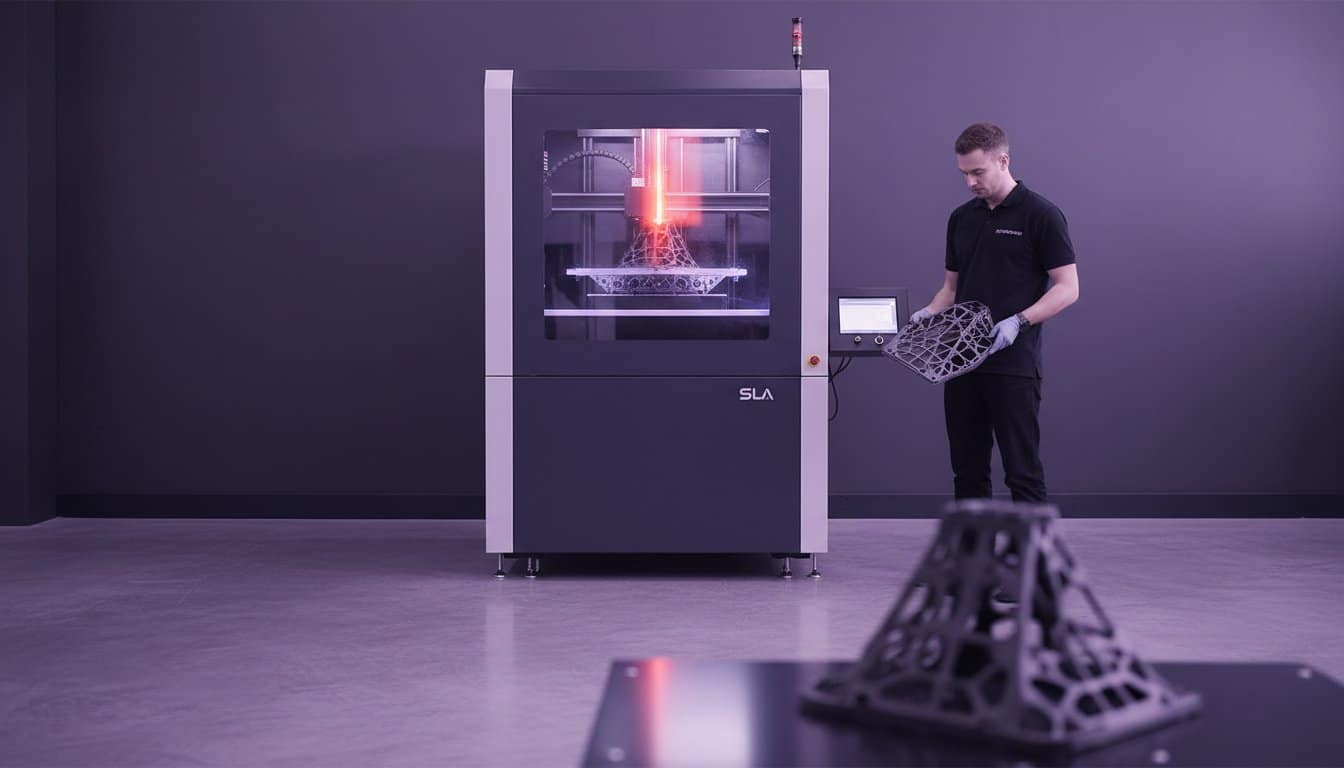
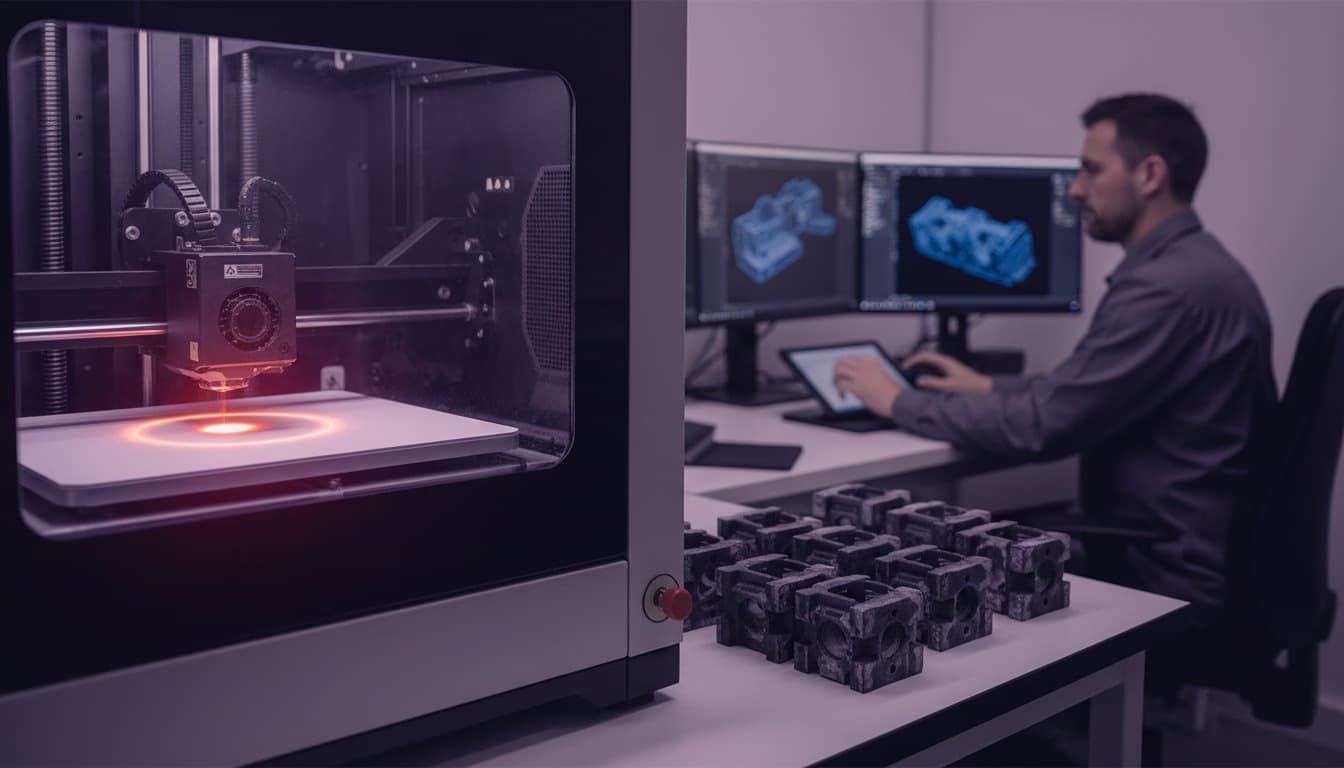
Industrial waste isn’t just a byproduct of production; it’s the expensive result of design errors that multiply across every unit in a batch. Within the UK manufacturing sector, poor Design for Additive Manufacturing (DfAM) often inflates material costs by 35% before the first part even finishes printing. You need a partner who understands that lightning-fast speed is worthless without absolute precision. Protomolecule delivers expert additive manufacturing consulting uk to bridge the gap between a digital CAD file and a high-performance industrial reality. We strip away the confusion surrounding SLA, SLS, and FDM technologies, ensuring your project moves from concept to durable component without the standard 14-day delays typical of traditional suppliers.
You already know that the leap from a single prototype to full-scale batch production is where most engineering projects stall or bleed capital. It’s frustrating to see your ROI shrink because of technical bottlenecks or material mismanagement. This article provides the definitive roadmap to scale your production while maintaining zero compromise on part quality. We’ll explore how to optimize your designs for industrial durability, select high-performance polymers, and implement a workflow that cuts your time-to-market by 50% compared to conventional methods.
Key Takeaways
- Learn how expert additive manufacturing consulting uk bridges the gap between digital design and industrial-grade production to maximise your manufacturing ROI.
- Discover the strategic advantages of Design for Additive Manufacturing (DfAM) and how reverse engineering can modernise legacy components for the modern market.
- Compare the mechanical properties of FDM, SLA, and SLS technologies to ensure you select the right high-performance materials for your specific engineering project.
- Master a proven 5-step roadmap to scale seamlessly from a single rapid prototype to consistent, high-quality batch production.
- Find out how to beat the clock with ultra-fast lead times and precision engineering that guarantees zero compromise on quality for your UK business.
The Strategic Value of Additive Manufacturing Consulting in the UK
UK manufacturing is undergoing a rapid transformation. Businesses are no longer satisfied with basic prototyping; they’re demanding industrial-grade production that integrates seamlessly into existing supply chains. A modern consultant functions as a technical partner rather than a simple service provider. At Protomolecule, we bridge the gap between digital concepts and high-performance physical reality. Professional additive manufacturing consulting uk ensures your business stays ahead of the curve by treating 3D printing, also called additive manufacturing as a serious industrial tool rather than a novelty.
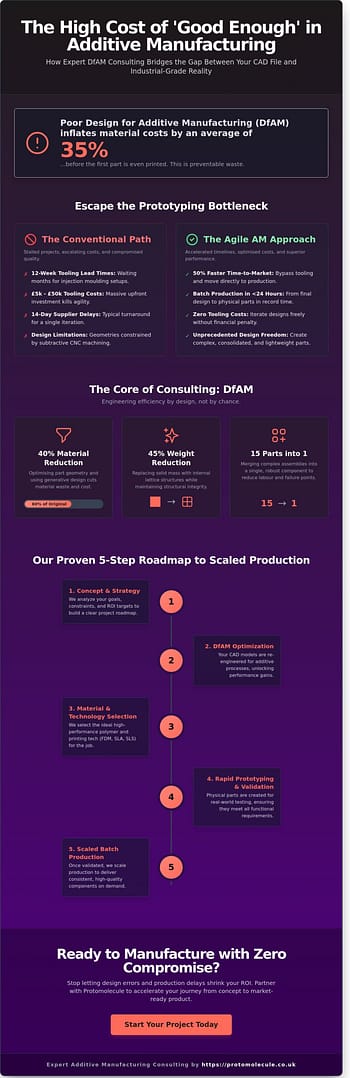
The economic impact of getting Design for Additive Manufacturing (DfAM) right is measurable. Optimising a part for AM can reduce material usage by 40% and cut assembly time by consolidating multiple components into one. We advocate for a “Zero Compromise” approach. This means achieving micron-level precision and material integrity that matches or exceeds traditional CNC machining or injection moulding. When you engage with additive manufacturing consulting uk, you’re investing in a strategy that prioritises functional performance and cost-efficiency from day one.
Reducing Risk in Product Development
Adopting industrial AM without a roadmap is expensive. UK firms often stumble on the same hurdles: incorrect material selection, poor part orientation, and ignoring post-processing requirements. Our consulting prevents these errors, which can lead to machine downtime costing upwards of £500 per hour. We provide independent advice that is free from manufacturer bias. Unlike hardware sales reps, we don’t care which machine you use; we care that your part works. By identifying the right rapid prototyping strategy early, we eliminate the 7 most common failure points, including trapped internal supports and thermal warping, ensuring your first print is your final part.
Accelerating ROI through Agile Manufacturing
Speed is your greatest competitive advantage. Traditional tooling for injection moulding can cost between £5,000 and £50,000 with lead times stretching to 12 weeks. We help you bypass these bottlenecks. Expert consulting identifies the most cost-effective production path, often moving projects into batch production in under 24 hours. This agility allows for lightning-fast design iterations based on real-world physical testing. We focus on shortening the link between your CAD data and a market-ready product. Don’t let delays slow you down; use agile manufacturing to beat the clock and secure your ROI faster than the competition.
Design for Additive Manufacturing (DfAM): The Core of Consulting
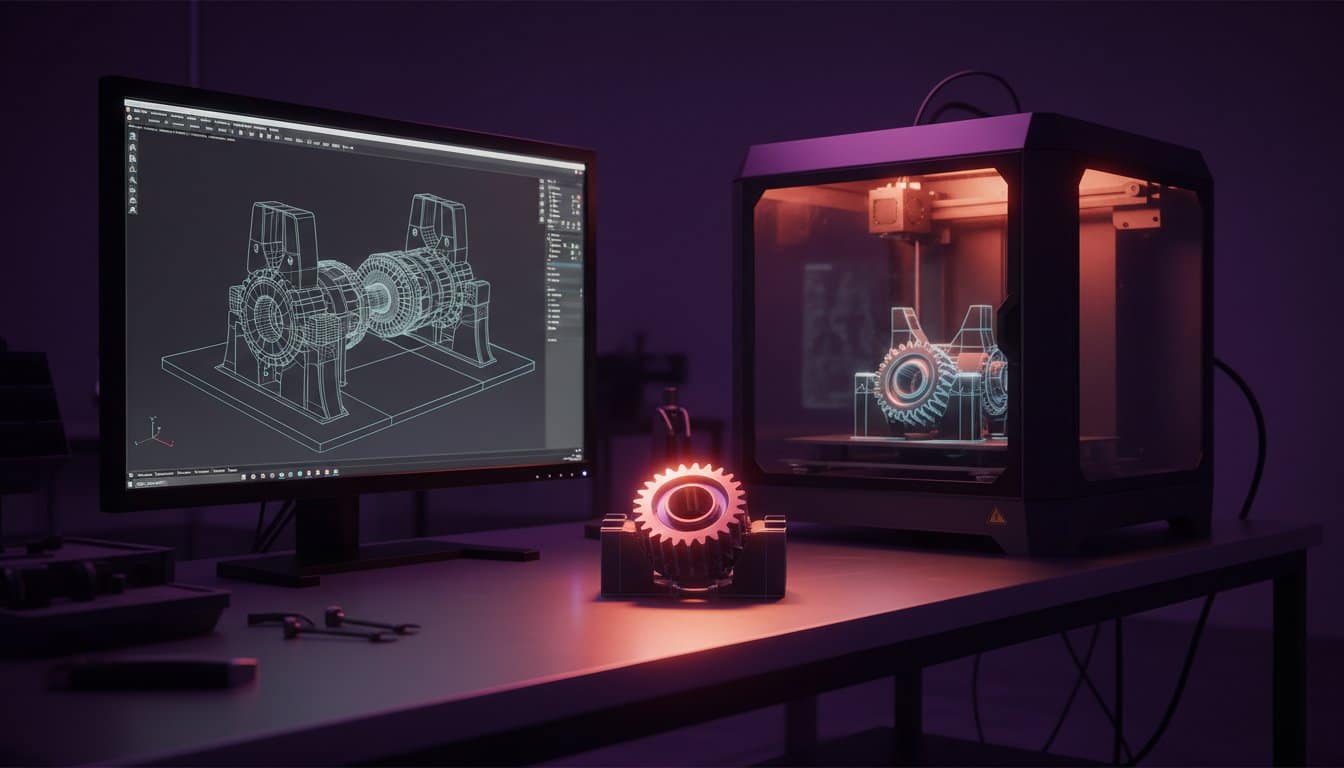
Success in 3D production depends on shifting your mindset from subtractive constraints to additive possibilities. Traditional CNC machining forces you to design for tool access, but our additive manufacturing consulting uk service unlocks geometries that were once impossible. We focus on optimising CAD models to reduce material waste and print time. By using generative design, we’ve helped clients achieve weight reductions of up to 45% while maintaining structural rigidity. This process isn’t just about aesthetics; it’s about engineering efficiency.
Recent advances in additive manufacturing allow for part consolidation that simplifies supply chains. Instead of managing a 15-part assembly, we help you merge those components into a single digital file. This reduces assembly labour and eliminates points of failure. Our team ensures that your technical drawings translate perfectly into high-resolution digital mesh files, preventing the common data loss that ruins industrial prints. We prioritise speed and precision, ensuring your project moves from concept to functional part without unnecessary delays.
Our additive manufacturing consulting uk experts work directly with your engineering team to identify where 3D processes provide the highest ROI. We look at part consolidation, lattice structures for heat dissipation, and internal cooling channels that subtractive methods cannot replicate. This proactive approach ensures you aren’t just printing parts, but rather evolving your entire product architecture for a digital-first economy, where many firms now utilize Remote Podcast Recording and Production to share their technical expertise and build brand authority.
Reverse Engineering and Digitisation
Many UK manufacturers face the “obsolete part” crisis, where a single broken component can halt an entire production line. We solve this using high-resolution 3D scanning to recover parts where original drawings no longer exist. We capture every micron of detail and convert physical geometry into manufacture-ready 3D design files. Reverse engineering is the bridge between legacy hardware and digital future. Whether it’s a vintage automotive component or a bespoke industrial valve, we digitise your physical assets to ensure they’re ready for rapid reproduction.
Technical Drawing and CAD Optimisation
It’s a common mistake to assume that a “printable” file is a functional one. Durability requires specific CAD optimisation that accounts for layer adhesion and thermal stress. We perform rigorous structural integrity checks for high-performance industrial applications, ensuring your parts don’t just look the part but perform under pressure. When preparing files for large-format FDM or precision resin printing, we adjust tolerances to account for material shrinkage. This meticulous approach is how we maintain our promise of zero compromise on quality. If you want to beat the clock on your next development cycle, get a quote and let’s start building.
Technology Selection: FDM, SLA, or SLS for Industrial Projects?
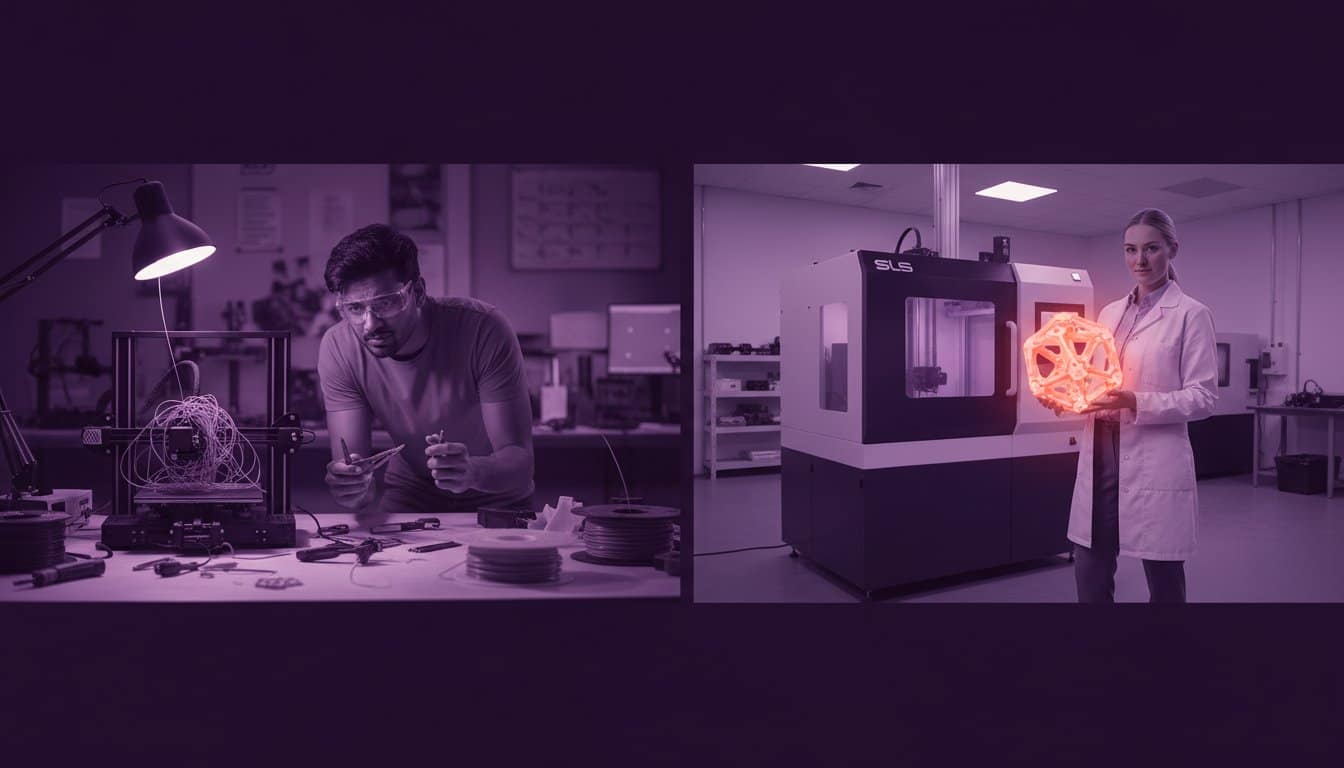
Choosing the wrong technology leads to part failure and wasted capital. Our additive manufacturing consulting uk ensures your project starts with the correct process, whether you’re building a single functional prototype or scaling to batch production. Mechanical performance isn’t universal; it’s a direct result of how layers bond and how materials react to thermal stress. You need a partner who understands the nuance between an aesthetic model and a load-bearing engineering component.
The UK manufacturing sector is rapidly evolving, and precision is non-negotiable. Whether you’re an emerging startup or an established enterprise, selecting between FDM, SLA, and SLS requires a deep dive into your part’s end-use environment. We focus on delivering results that meet the rigorous standards expected in modern British industry, including those outlined in the UK Defence Advanced Manufacturing Strategy, which emphasizes the strategic necessity of robust additive supply chains.
Industrial FDM and Large Format Printing
FDM is the primary choice for large-scale engineering components that require high impact resistance. We utilize industrial-grade filaments like Carbon Fibre-reinforced Nylon and high-temperature thermoplastics to replace traditional metal parts. This technology is ideal for producing jigs, fixtures, and end-use components that must withstand harsh factory environments. By leveraging 3D printing for tooling, you can reduce lead times from weeks to 24 hours. Stop waiting for external toolmakers and start iterating in real-time. FDM provides the durability needed for everything from bespoke automotive ducting to heavy-duty industrial housings.
Precision SLA and SLS Solutions
When your project demands ultra-high resolution and airtight seals, SLA is the superior option. It uses a laser to cure liquid resin, resulting in surface finishes that require minimal post-processing. It’s the standard for medical devices and high-detail consumer electronics where 50-micron accuracy is the baseline.
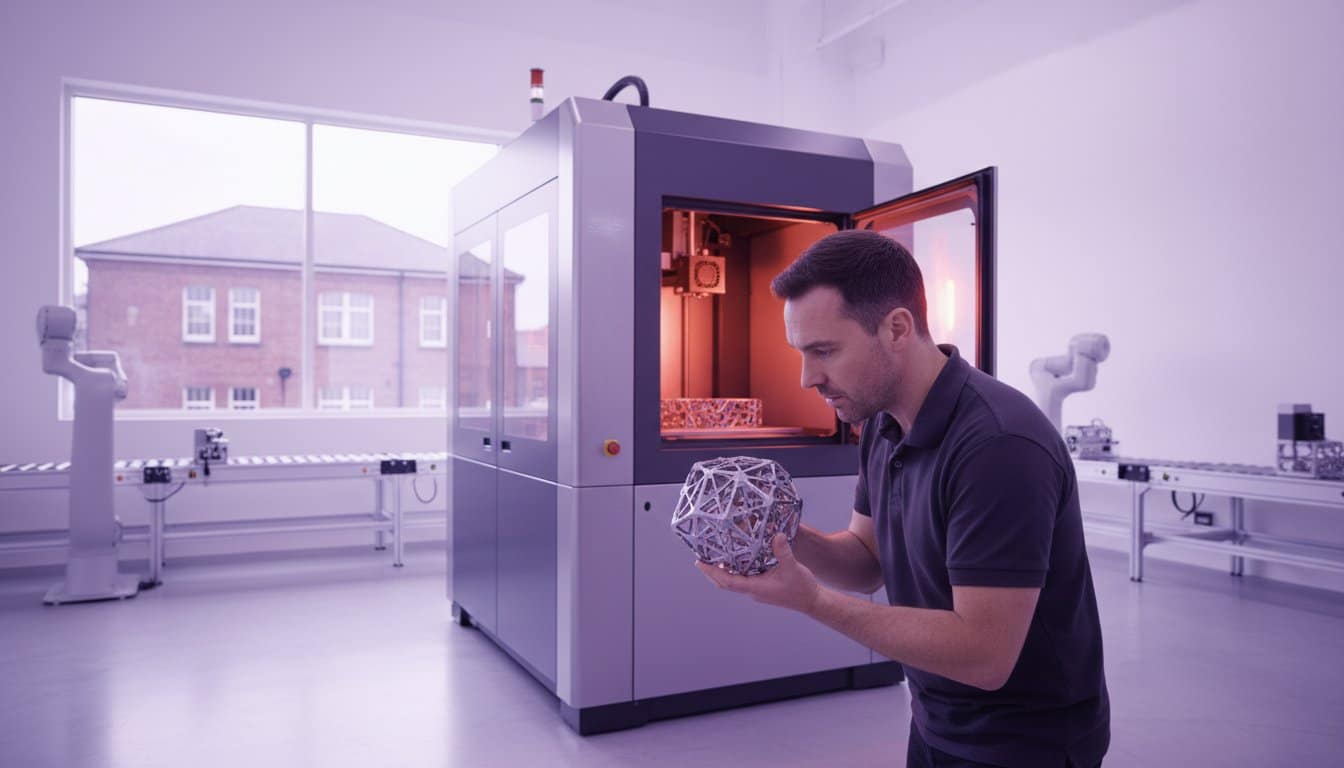
For complex geometries and batch production, SLS offers a support-free environment. Because the surrounding powder supports the part during the build, you can nest hundreds of components in a single volume, maximizing efficiency. SLS parts are isotropic, meaning they have consistent strength in all directions, which is vital for aerospace and high-performance engineering. Our additive manufacturing consulting uk service identifies exactly which resin or powder meets your specific regulatory requirements.
- FDM: Best for robust, large-scale functional parts and rapid tooling.
- SLA: Best for high-resolution prototypes and smooth aesthetic finishes.
- SLS: Best for complex, support-free geometries and durable batch production.
Don’t let technical uncertainty slow your development cycle. We provide the expertise to match material properties to your specific mechanical loads. Turn your ideas into reality with zero compromise on quality.
Scaling from Rapid Prototyping to Batch Production
The Rapid Prototyping Phase
Speed is your greatest competitive advantage. Using rapid prototyping allows you to fail fast and fix faster, validating complex designs in 48 hours rather than weeks. You can conduct iterative testing for fit, form, and function using high-performance polymers that mimic end-use characteristics. Our 24-hour turnaround ensures your project never hits a bottleneck during the critical design validation phase. This agility lets you outpace competitors who are still waiting for traditional tooling quotes or overseas shipping.
Moving into Batch Production
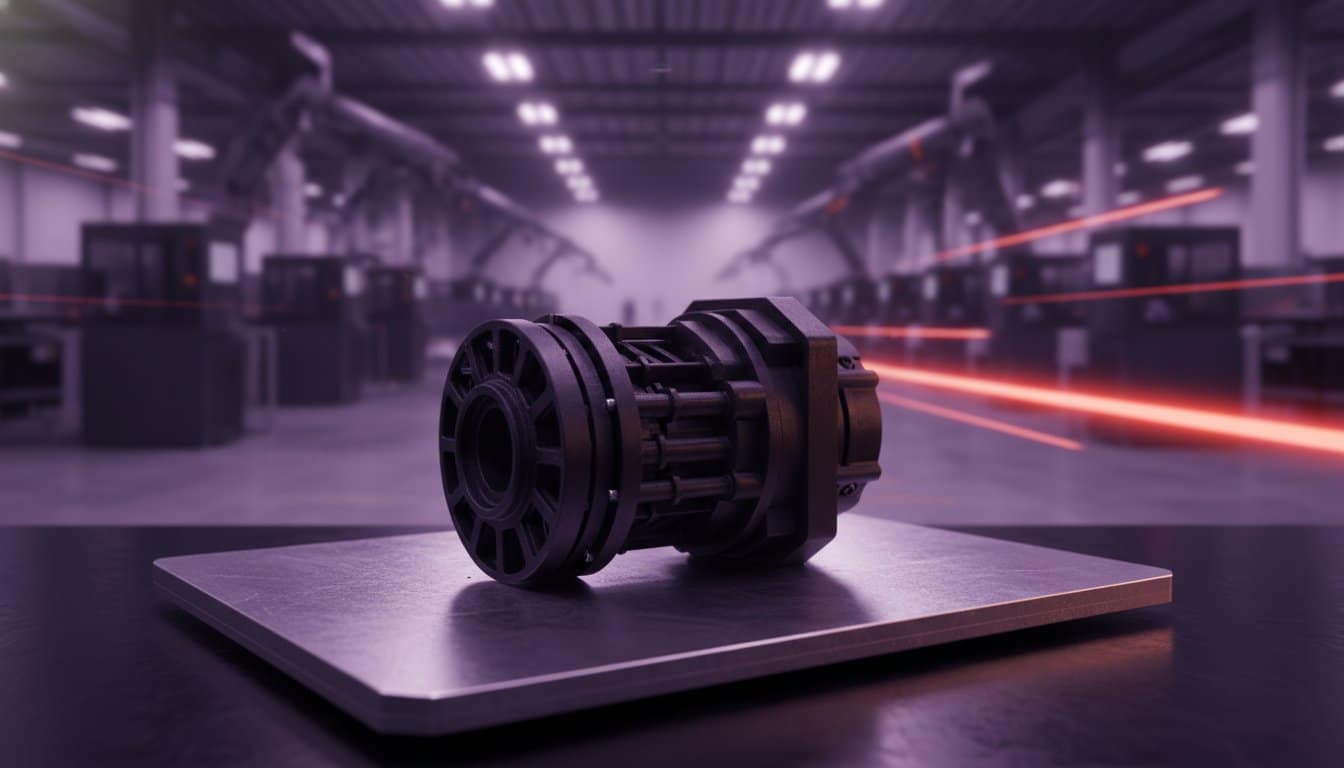
Calculating the break-even point is vital for your project’s commercial viability. For volumes between 50 and 1,000 units, batch production via 3D printing often removes the £5,000 to £20,000 upfront cost associated with injection mould tooling. We manage these low-to-medium volumes by synchronizing multi-machine print runs to achieve consistent tolerances of +/- 0.2mm across every part. This ensures that the 500th unit is identical to the first, providing the reliability required for industrial applications.
Protomolecule: Your Agile AM Consultancy Partner
Protomolecule sits at the leading edge of UK additive engineering. We don’t just offer advice; we provide the technical firepower to turn complex concepts into industrial realities. Based in our Nottingham and Mansfield hubs, we serve the entire UK national market with a focus on speed and precision. Our additive manufacturing consulting uk services are designed for businesses that can’t afford to wait. We’ve replaced the slow, traditional consultancy model with a high-velocity workflow that prioritizes your project’s momentum.
We maintain a strict policy of zero compromise on quality. Every project undergoes a rigorous expert review to ensure that design intent translates perfectly to the final part. Whether you need reverse engineering for legacy components or a completely new 3D design, our team applies the same level of technical scrutiny. We use industrial-grade 3D scanning to capture data with micron-level accuracy, ensuring that your parts fit the first time, every time. It’s about delivering results that work in the real world, not just on a screen.
Expert Problem Solvers for Complex Engineering
Our experience spans the most demanding sectors in the UK. We’ve delivered solutions for military applications, space exploration components, and high-stakes commercial product launches. The Protomolecule advantage is our all under one roof capability. We design, scan, and print in a single, unified environment. This prevents the communication breakdowns that often happen when you juggle multiple contractors. You deal with one team that understands every facet of your build.
- Rapid Turnaround: We’ve successfully delivered passenger train seat arms and bespoke 80s JDM wheel centre caps on timelines that traditional manufacturers deemed impossible.
- Technical Depth: Our engineers understand the nuances of high-performance filaments and batch production.
- National Reach: While our roots are local to the East Midlands, our logistics network ensures next-day delivery to any corner of the UK.
Get Started with Protomolecule Today
Time is your most valuable asset. Don’t let it waste. Our 24-hour turnaround on many prototyping tasks ensures your business stays ahead of the clock. When you partner with us, you’re getting more than a service provider; you’re gaining an agile manufacturing partner. We focus on creating manufacture-ready parts that move your project toward completion without unnecessary iterations. We identify potential failure points before they cost you money, ensuring your additive manufacturing consulting uk experience is both profitable and efficient.
Beat the clock and secure your production timeline today. Use our platform to get an instant quote and see how our expertise can streamline your production. Our team is ready to review your files and provide the technical feedback necessary to scale your operations.
Contact our expert team for an additive manufacturing consultation to discuss your specific engineering challenges and start your project today.
Accelerate Your Production Timeline Today
Moving from a digital concept to full-scale industrial batch production requires more than just a 3D printer; it demands strategic engineering and precise execution. Protomolecule provides the specialist additive manufacturing consulting uk businesses rely on to navigate complex technology selections across SLA, SLS, and FDM platforms. We focus on bridging the gap between initial design and final-use parts, ensuring every component is optimized for performance through expert reverse engineering and high-resolution 3D scanning.
Speed is our primary signature. We offer a 24-hour turnaround on projects because we understand that your deadlines are fixed and your projects are time-sensitive. Whether you’re refining a specialized prototype or scaling up to consistent batch production, our agile approach ensures zero compromise on quality at every stage. It’s time to eliminate manufacturing bottlenecks and move your project forward with confidence. We’re here to help you beat the clock and deliver results that meet the highest industrial standards.
Turn your ideas into reality with an instant quote from Protomolecule
Frequently Asked Questions
What is the difference between 3D printing and additive manufacturing?
Additive manufacturing is the industrial-grade application of 3D printing technologies for end-use production. While 3D printing often refers to rapid prototyping or hobbyist use, additive manufacturing involves a rigorous, data-driven approach to creating functional components. Our additive manufacturing consulting UK services bridge this gap by implementing industrial standards. We focus on repeatability and precision to ensure every part meets the 0.2mm tolerance required for industrial applications.
How much does additive manufacturing consulting cost in the UK?
Consulting costs in the UK vary based on project complexity and the level of technical integration required. According to 2023 UK industry benchmarks, specialist engineering consultancy rates typically range from £150 to £350 per hour. We provide transparent, project-based quotes to ensure you get maximum value without hidden fees. Whether you need a 24-hour feasibility study or a long-term production strategy, our team delivers results that respect your budget and deadlines.
Can you help with reverse engineering a part if I don’t have the CAD files?
Yes, we provide full reverse engineering services using high-precision 3D scanning technology. We capture the exact geometry of your physical part even if the original blueprints are missing. Our scanners achieve accuracy within 0.05mm, allowing us to generate a clean CAD file for immediate production. This process is essential for replacing legacy parts in sectors like the 80s JDM automotive market or rail transport where original documentation no longer exists.
Which additive manufacturing technology is best for high-strength parts?
Fused Deposition Modeling (FDM) with high-performance polymers and Selective Laser Sintering (SLS) are the top choices for strength. For extreme durability, we utilize carbon-fiber reinforced filaments or Nylon 12. These materials offer a tensile strength of up to 70 MPa, making them ideal for functional components like passenger train seat arms. Our additive manufacturing consulting UK experts help you select the specific technology that matches your mechanical requirements to ensure zero compromise on quality.
How fast can you deliver a batch of 100 3D printed parts?
We can often complete a batch of 100 small-to-medium parts within 3 to 5 working days. Speed is our core strength. While others take weeks, our ultra-fast production workflow uses multiple industrial machines simultaneously to beat the clock. If you have a time-sensitive project in Nottingham or anywhere in the UK, we offer a 24-hour turnaround on initial prototypes. Don’t let delays slow you down; get your production moving now.
Do you provide additive manufacturing consulting for the aerospace industry?
Yes, we offer specialized consulting to help aerospace firms navigate lightweighting and part consolidation. Aerospace components require strict adherence to AS9100 standards and precision engineering. We help you reduce part weight by up to 40 percent through generative design and lattice structures. Our expertise ensures that your high-performance flight components are reliable, flight-ready, and delivered according to your strict project milestones.
What materials are available for industrial 3D printing in the UK?
We offer a diverse range of industrial materials including PLA, PETG, ABS, Nylon, and Carbon Fiber composites. Our inventory covers 15 plus specialized materials designed for different industrial environments. Whether you need chemical resistance, UV stability, or high-temperature performance up to 180 degrees Celsius, we have the right filament in stock. We source our materials from leading UK suppliers to ensure consistent quality and rapid availability for every project we undertake.
Is 3D printing cost-effective for medium-volume batch production?
Yes, 3D printing is highly cost-effective for batches ranging from 50 to 500 units by eliminating expensive tooling costs. Traditional injection molding requires an upfront investment of £5,000 to £20,000 for a single mold. With additive manufacturing, you skip this cost entirely. This makes it the superior choice for agile manufacturers who need to iterate designs quickly or produce limited runs. You save money and reduce lead times by 70 percent compared to conventional manufacturing methods.