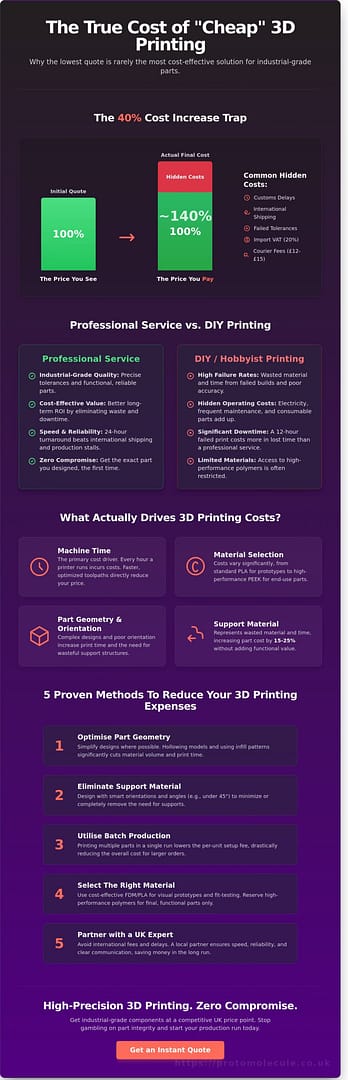
Opting for the lowest initial quote for 3D printing often results in a 40% total cost increase once you factor in customs delays, international shipping, and failed tolerances. You’ve likely realised that the cheapest option on paper is rarely the most cost-effective in practice, especially when hidden post-processing fees or high failure rates from budget DIY prints stall your production line. Finding genuine cheap 3d printing shouldn’t mean gambling on part integrity or waiting weeks for a parcel to clear the border. It’s about technical efficiency and precision engineering, not cutting corners.
You deserve industrial-grade quality without the inflated price tags often associated with bespoke manufacturing. This guide promises to show you how to achieve the lowest possible cost for your parts while maintaining the exact tolerances your project demands. We’ll help you secure functional, professional components at a competitive UK price point so you can get your project moving immediately with zero compromise on quality.
We will break down the specific CAD adjustments that slash material waste and explain how to leverage local 24-hour turnaround times to beat the clock on your next manufacturing run.
Key Takeaways
- Understand the critical distinction between hobbyist-grade “budget” prints and professional, cost-effective manufacturing that balances price with part utility.
- Learn how to achieve cheap 3d printing results by optimising geometry to eliminate support material and utilising batch production to lower your per-unit setup fees.
- Identify the hidden costs of DIY printing-including maintenance, electricity, and failed builds-and why professional studios often deliver better long-term value.
- Discover how expert 3D design and reverse engineering can breathe new life into legacy components while maintaining zero compromise on industrial quality.
- Master the core variables of machine time and material selection to ensure your project remains on budget and beats the clock.
Defining Cheap 3D Printing: Price vs Value in Additive Manufacturing
Finding cheap 3d printing in the UK requires a shift in perspective. You shouldn’t just look at the bottom line of a quote. True affordability is the balance between the initial price and the final part’s utility. In 2024, the UK market has seen a 22% increase in demand for local production as engineers move away from unreliable overseas suppliers. This shift is driven by the concept of Total Project Cost. This metric accounts for every penny spent from the initial CAD design to the moment the part is fitted. While a hobbyist machine might cost £200 to purchase, the downtime and material waste of a failed 12-hour print often exceed the price of a professional service.
Professional rapid prototyping focuses on industrial-grade cost-effectiveness. This differs from budget hobbyist prints that lack dimensional accuracy. The broader field of additive manufacturing allows for complex geometries that traditional machining cannot achieve, but only if the process is optimised. Protomolecule delivers this precision with a 24-hour turnaround, ensuring your project stays on track. Don’t let delays slow you down; focus on the value delivered per pound spent.
The “Cheap” Trap: Why the Lowest Quote Can Be the Most Expensive
The lowest quote often hides systemic inefficiencies. If a service provider uses unoptimised processes, the cost of failed prints and material wastage eventually passes to you. Overseas services frequently attract clients with low unit prices, yet they ignore the 20% import VAT and the potential £12 to £15 courier handling fees. A 10-day shipping delay can stall a production line, costing a business hundreds of pounds per hour in lost productivity. Getting it right the first time with a professional UK partner eliminates these risks. We provide an instant quote to keep your budget transparent and your timeline secure. Beat the clock by choosing reliability over a deceptive upfront price.
When to Prioritise Cost Over Complexity
Not every project requires high-end resins or carbon-fibre reinforced filaments. Identifying when to use cheap 3d printing methods like Fused Deposition Modelling (FDM) is essential for budget management. FDM is ideal for aesthetic prototypes, fit-testing, and simple jigs. If you’re creating a visual model for a presentation, a 0.2mm layer height in standard PLA offers the best ROI. However, functional end-use parts, such as passenger train seat arms or automotive components, require more robust materials. Balancing lead times with budget constraints ensures maximum efficiency. We help you choose the right material for the job, ensuring zero compromise on quality while maintaining your financial targets.
The Core Variables: What Actually Drives 3D Printing Costs?
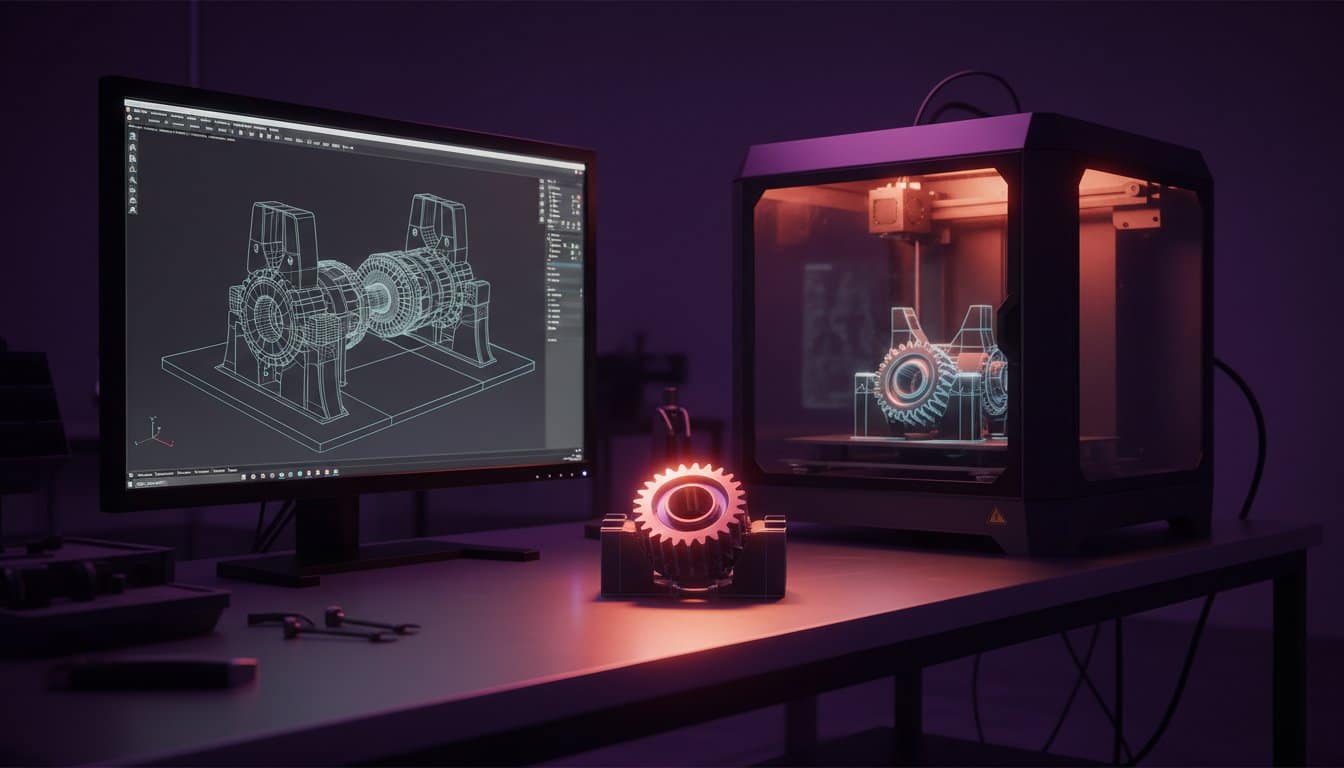
Securing cheap 3d printing isn’t just about finding the lowest quote; it’s about understanding the mechanics of production. Machine time serves as the primary cost driver in any professional studio. Every hour a printer runs consumes electricity, requires monitoring, and prevents the next project from starting. At Protomolecule, we optimise toolpaths to ensure your parts are produced with lightning-fast efficiency, reducing the total bench time required for each build. A report from the National Institute of Standards and Technology (NIST) highlights how machine utilisation directly drives 3D printing costs, making speed a critical factor for your budget.
Beyond machine hours, material selection dictates the final price. Standard filaments like PLA or PETG are perfect for rapid prototyping and cost significantly less than high-performance polymers like PEEK or carbon-fibre-reinforced nylon. Part orientation also plays a vital role. If a component is oriented poorly, it may require extensive support structures. These supports represent wasted material and extra machine time, often increasing the price of a part by 15% to 25% without adding any functional value.
Material Volume and Infill Density
Precise material calculation is essential for predicting project fees. We evaluate the volume of the 3D model to determine exactly how much raw material is consumed during the build. Reducing infill density is a proven method to lower costs; a part with 20% infill uses far less material than a solid component while remaining durable enough for most functional tests. Hollowing a model can reduce material costs by up to 40% while maintaining structural integrity for non-load-bearing parts. This approach allows you to turn your ideas into reality without overspending on hidden internal volume.
Technology Selection: FDM vs. SLA vs. SLS
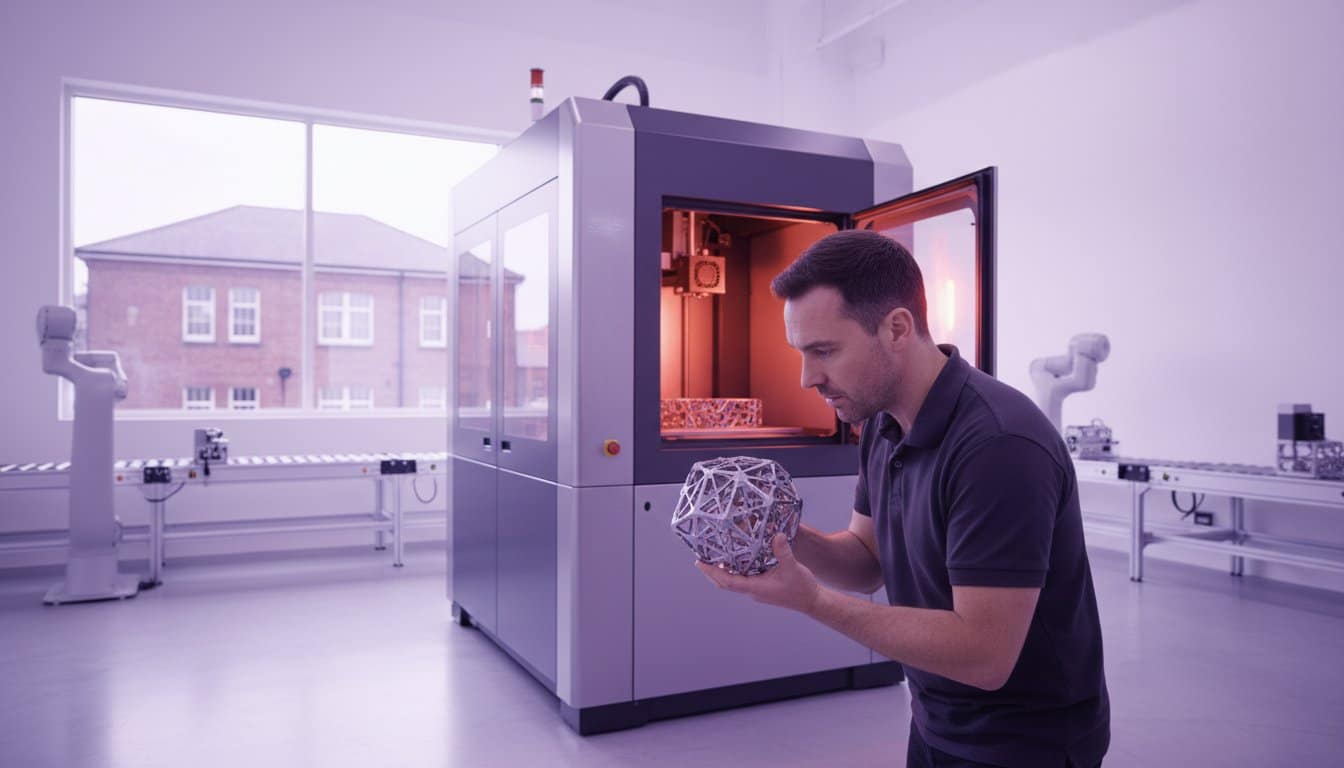
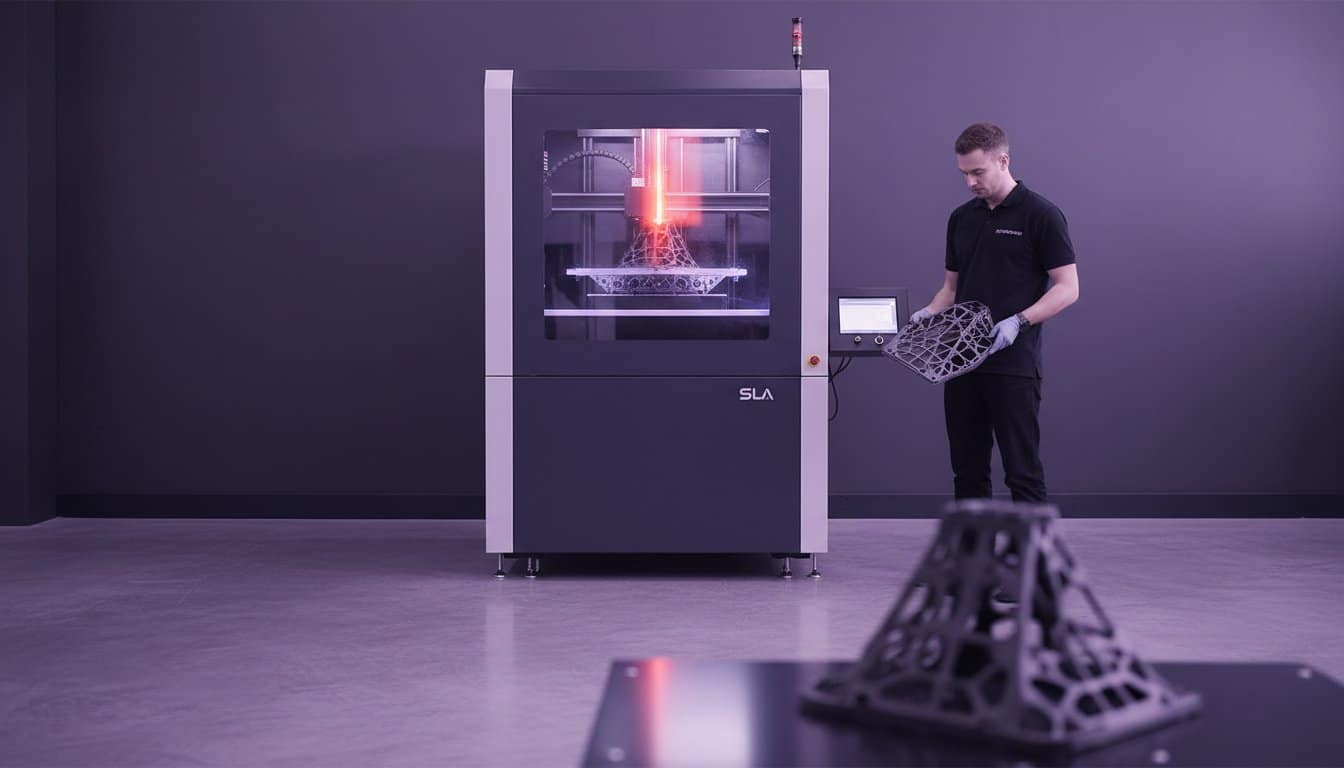
FDM remains the most cost-effective solution for large-scale geometry and initial concept models. It uses affordable filaments and requires minimal setup. For projects requiring high-detail or small-batch components, such as 80s JDM Wheel Centre Caps, SLA (Stereolithography) provides superior surface finish but carries a higher resin cost. If you need complex batch production, SLS (Selective Laser Sintering) is the industrial choice. While the initial setup is higher, SLS allows for “nesting” multiple parts in a single build volume without support waste, making it highly efficient for producing items like Passenger Train Seat Arms in volume.
Finally, consider the impact of post-processing. While cheap 3d printing often refers to the “as-printed” part, labour-intensive tasks like manual sanding, painting, or vapour smoothing add significant costs. These manual steps require skilled technicians to spend time on each part. To keep your budget lean, we recommend designing parts that function perfectly straight from the printer. This direct approach ensures a 24-hour turnaround and zero compromise on quality.
Professional Service vs. Desktop Printing: The Hidden Costs of DIY
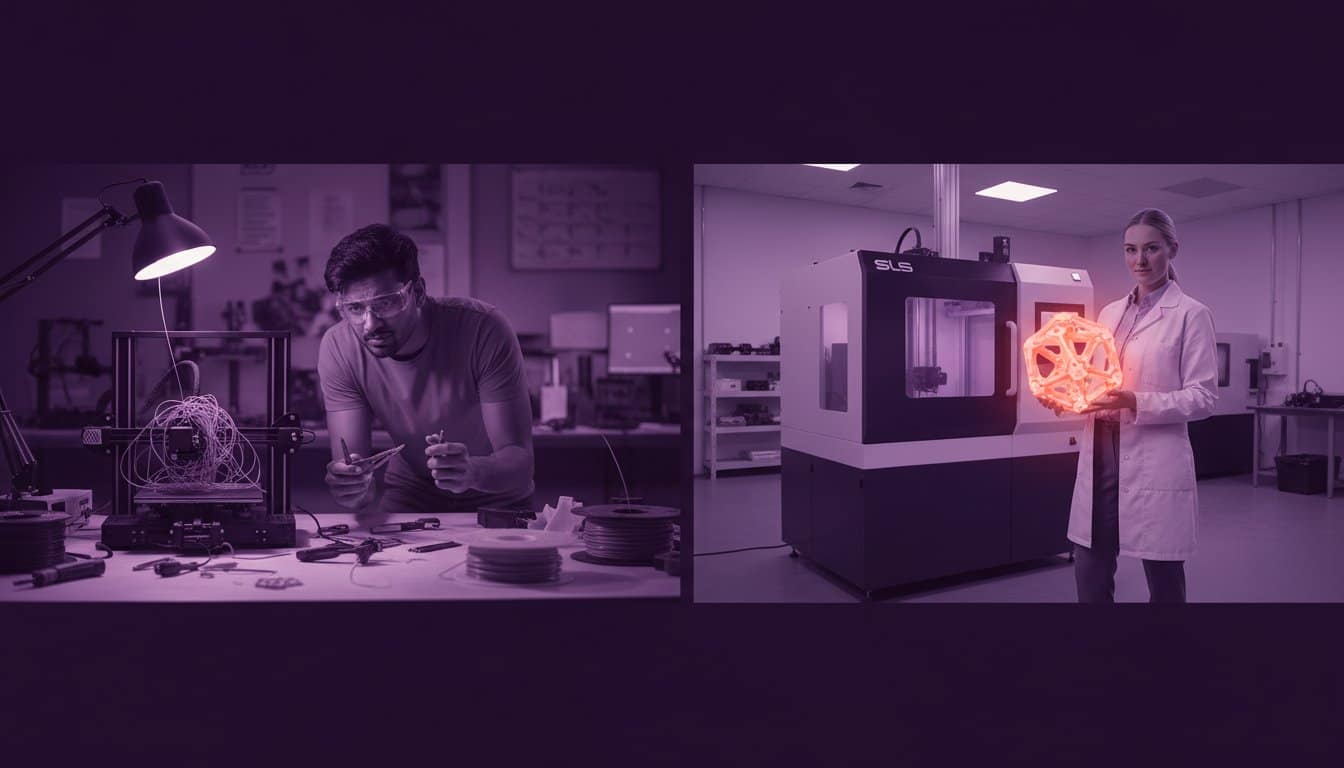
Purchasing a budget desktop printer often feels like the most logical path to cheap 3d printing. However, the initial £200 to £400 investment is just the tip of the iceberg. Hidden costs quickly accumulate through failed prints, wasted filament, and high electricity consumption. In the UK, fluctuating energy rates and the hours spent recalibrating entry-level hardware can turn a simple prototype into a financial drain. Professional studios use industrial machines that offer a significantly lower cost-per-successful-part. You aren’t just paying for plastic; you’re paying for a guaranteed result.
Expert intervention at the start of a project saves more money than any budget hardware can. Protomolecule provides specialised 3D design services to ensure your geometry is suited for the intended manufacturing process. This prevents common errors like thin walls or unsupported overhangs that lead to structural failure. While a home setup might take three attempts to get a part right, our industrial systems deliver precision on the first run. We eliminate the “trial and error” phase that inflates the cost of DIY projects.
Consider the practicalities of a professional setup versus a hobbyist one:
- Maintenance: Industrial machines require less downtime and professional calibration.
- Material Yield: High-end slicer algorithms reduce support material waste by up to 20%.
- Electricity: Efficient, insulated chambers consume less power per cubic centimetre of printed material.
- Success Rate: Professional hardware achieves a 99% success rate compared to the 70% often seen with unmonitored desktop units.
Reliability and Zero Compromise on Quality
Industrial-grade sensors and active heated chambers are standard in our studio. These features eliminate warping and delamination, which are the primary causes of failure in unheated home environments. For engineering or military-grade applications, repeatable results are non-negotiable. Our 3D printing services include rigorous quality assurance as part of the price. We don’t ship parts that don’t meet the exact specification. This “Zero compromise on quality” approach protects your budget from the hidden costs of re-manufacturing.
The Time-to-Market Advantage
Project delays are expensive. If a product launch is pushed back by a week because of a machine breakdown, the lost revenue far outweighs the cost of outsourcing. We focus on “beating the clock” to keep your project moving. Outsourcing allows your engineers to focus on high-value design work rather than troubleshooting clogged nozzles or bed levelling issues. Protomolecule’s 24-hour turnaround ensures you have parts in hand while your competitors are still waiting for their desktop machines to finish a slow, single-layer print. Speed is the ultimate cost-saver in modern manufacturing.
5 Proven Methods to Reduce Your 3D Printing Expenses
Achieving cheap 3d printing results doesn’t require a sacrifice in part performance or accuracy. It requires a strategic approach to design and production. By understanding how machine time and material volume drive costs, you can make informed decisions that slash your project spend without compromising the final output. Efficiency is at the core of our operations, and these five steps reflect the same logic we use at Protomolecule to keep our services competitive for clients across the UK.
- Step 1: Optimise geometry to eliminate the need for support material. This reduces both raw material waste and the manual labour required for post-processing.
- Step 2: Use batch production to lower the per-unit setup fee. Spreading fixed costs across 50 or 100 units is always more economical than single-run prints.
- Step 3: Hollow out non-functional areas of the design in CAD. Reducing the internal volume of a part directly lowers the material cost, which is often the largest variable in a quote.
- Step 4: Choose standard colours and materials like black or white PLA and PETG. Opting for standard stocks avoids custom setup charges and machine purging fees.
- Step 5: Provide print-ready files in STL or STEP format. Delivering clean, manifold data eliminates the need for hourly design and consulting fees.
Design for Additive Manufacturing (DfAM)
The 45-degree rule is the most effective tool for cost reduction. Any overhang steeper than 45 degrees typically requires support structures. By designing self-supporting angles, you save material and prevent the surface scarring that occurs where supports meet the part. Simplify complex internal lattices; while they look impressive, they increase toolpath complexity and print time. CAD optimisation is the most effective way to lower a quote.
Scaling from Prototype to Production
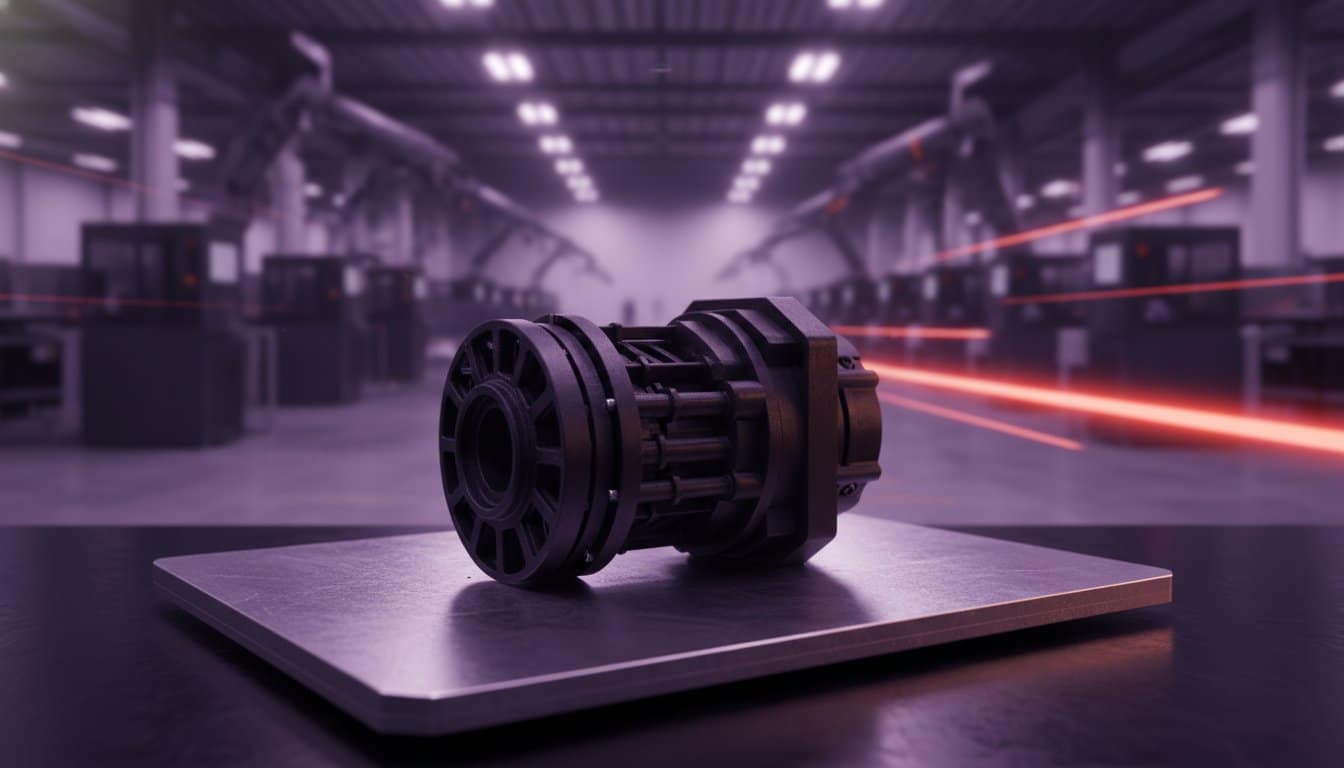
Transition from rapid prototyping to small-batch manufacturing as soon as your design is validated. The economics of scale in 3D printing are clear. 100 parts aren’t 100x the price of one because we use multi-part nesting. This process involves packing as many components as possible into a single build volume. It maximises machine efficiency and ensures you aren’t paying for empty space in the printer. For projects like passenger train seat arms or custom automotive components, nesting can reduce unit costs by 30% or more compared to individual runs. We focus on speed and precision to ensure your cheap 3d printing project stays on track and under budget.
Don’t let high costs stall your innovation. Stop overpaying for your parts and start building. Get an instant quote now and see how our efficiency saves you money.
Protomolecule: High-Precision 3D Printing with Zero Compromise on Quality
Protomolecule operates as an agile manufacturer serving the entire UK market with a focus on speed and technical precision. While many enthusiasts search for cheap 3d printing, the real value lies in securing parts that actually perform under industrial pressure. We provide professional-grade results from our Nottingham and Mansfield studios, ensuring your project moves from a digital file to a physical component within a 24-hour window. Our team eliminates the middleman, offering direct access to engineering expertise that keeps your costs low without sacrificing the structural integrity of your designs.
Our technical team specialises in reverse engineering, a process that drastically reduces overheads for legacy part replacement. Instead of commissioning expensive new tooling or waiting weeks for overseas shipping, we scan and replicate components with micron-level accuracy. This approach has saved our clients significant capital on projects ranging from 80s JDM wheel centre caps to bespoke industrial jig components. By choosing a local UK partner, you bypass international customs delays and ensure your manufacturing remains responsive to real-time demands.
- 24-hour turnaround for time-sensitive prototyping.
- Industrial-grade filaments and high-performance polymers.
- Transparent, competitive pricing with no hidden fees.
- Dedicated engineering support for every project.
Expert Problem Solving for Complex Engineering
We don’t just print; we engineer. Our work on passenger train seat arms for the commercial rail sector demonstrates our ability to meet rigorous British engineering standards. Every part we produce remains a functional part because we apply technical scrutiny to every layer. Working with a UK studio means your cheap 3d printing project benefits from a deep understanding of local safety regulations and material requirements. We ensure that 100% of our output meets the specific mechanical needs of your industry, whether you’re in aerospace or commercial product development.
The demand for professional reliability extends beyond the workshop; for instance, many UK professionals now use an MRSA home test kit UK to manage health screenings with the same level of speed and accuracy we provide for your technical 3D printing needs.
Get Your Instant Quote and Beat the Clock
Speed defines our workflow and your success. Don’t let delays slow you down when you can beat the clock with our streamlined quoting process. We act as your dedicated manufacturing partner, prioritising precision from the first interaction. You receive a clear, actionable quote that allows you to manage your budget effectively while accessing high-end additive manufacturing technology. We focus on the immediate needs of your business, providing a reliable path from concept to production. Get a Quote today and start your manufacturing journey with a studio that delivers zero compromise on quality.
Scale Your Production Without the Premium Price Tag
Achieving cheap 3d printing in the UK market doesn’t require you to sacrifice precision for price. By moving away from the hidden overheads of DIY desktop setups and leveraging industrial-grade FDM and SLA technology, you eliminate the risk of failed prints and wasted material. Industry data suggests that professional additive manufacturing can reduce prototyping lead times by up to 70% compared to traditional machining methods. Smart design choices and strategic material selection directly impact your bottom line without devaluing the final product.
Protomolecule provides the bridge between cost-efficiency and high-end engineering. We operate with a 24-hour rapid turnaround to ensure your project stays on schedule. Our team handles the technical complexities so you can focus on delivery. Don’t let manufacturing bottlenecks stall your progress or inflate your budget. It’s time to secure professional-grade components that meet your exact specifications. Get an instant 3D printing quote today and experience our zero compromise on quality guarantee. Let’s get your project moving at lightning speed.
Frequently Asked Questions
What is the cheapest 3D printing material for functional parts?
PETG (Polyethylene Terephthalate Glycol) is the cheapest 3D printing material for functional parts requiring durability and impact resistance. It provides a significant strength advantage over PLA while remaining more affordable than high-end engineering plastics like Nylon. We frequently use PETG for components like 80s JDM wheel centre caps because it balances low cost with the UV resistance needed for automotive environments.
How much does a typical 3D printing service cost in the UK?
Typical UK 3D printing services often have a minimum order charge between £15 and £30 to cover machine setup and technical review. The final price depends on the part’s volume and the chosen technology. For those seeking cheap 3d printing, FDM processes offer the lowest entry point. Small, simple brackets can often be produced for under £10 each when ordered as part of a small batch run.
Can I get a 3D print done within 24 hours?
Yes, you can receive your 3D print within 24 hours by using our express rapid prototyping service. We’ve designed our workflow to prioritise speed, allowing us to move from digital file to physical part in a single day. This ultra-fast turnaround helps engineering teams in Nottingham and across the UK beat the clock on critical project deadlines without sacrificing precision.
Is it cheaper to 3D print or use CNC machining for prototypes?
3D printing is almost always cheaper than CNC machining for low-volume prototypes or complex geometries. CNC machining carries high initial setup costs, which can exceed £150 for a single part due to tool path programming and material wastage. 3D printing is an additive process that creates zero compromise on quality while eliminating these expensive tooling fees for initial design iterations.
How do I design my 3D model to make it cheaper to print?
You can make your 3D model cheaper to print by reducing the amount of support material required and hollowing out thick sections. Orient your design to avoid overhangs greater than 45 degrees to save on both material and post-processing labour. Reducing the infill density to 15% or 20% for non-structural areas is another effective way to lower the total price of your cheap 3d printing project.
What is the cheapest way to 3D print a large object?
FDM (Fused Deposition Modelling) is the most cost-effective method for printing large objects due to the low cost of raw filament. Choosing a larger layer height, such as 0.3mm, significantly reduces the machine’s runtime and total labour costs. We use this approach for industrial components like passenger train seat arms, ensuring large-scale parts remain affordable while maintaining necessary structural integrity.
Are online 3D printing services cheaper than buying a 3D printer?
Online services are cheaper for the 88% of users who don’t require constant, daily production. A reliable industrial-grade 3D printer costs between £2,000 and £5,000, which doesn’t include the cost of electricity, maintenance, or failed prints. By using a professional service, you skip these capital expenses and get instant access to high-performance materials and expert technical support for every project.
Do you offer discounts for batch production and small runs?
We provide tiered pricing discounts for batch production where the cost per unit can drop by as much as 60% compared to a single prototype. Small runs of 10 to 100 units benefit from streamlined setup processes that make bridge manufacturing highly economical. Turn your ideas into reality by requesting a bulk quote, as larger volumes allow us to maximise machine efficiency and pass those savings to you.