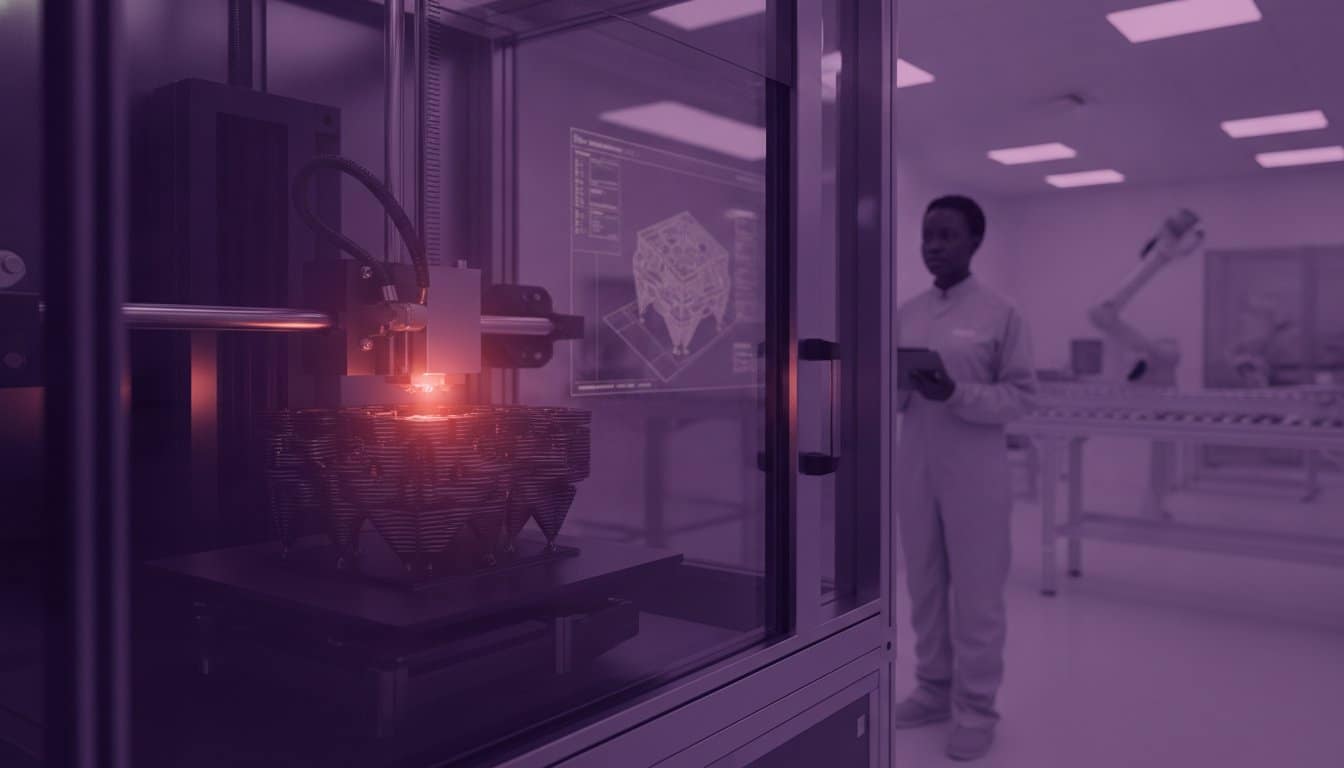
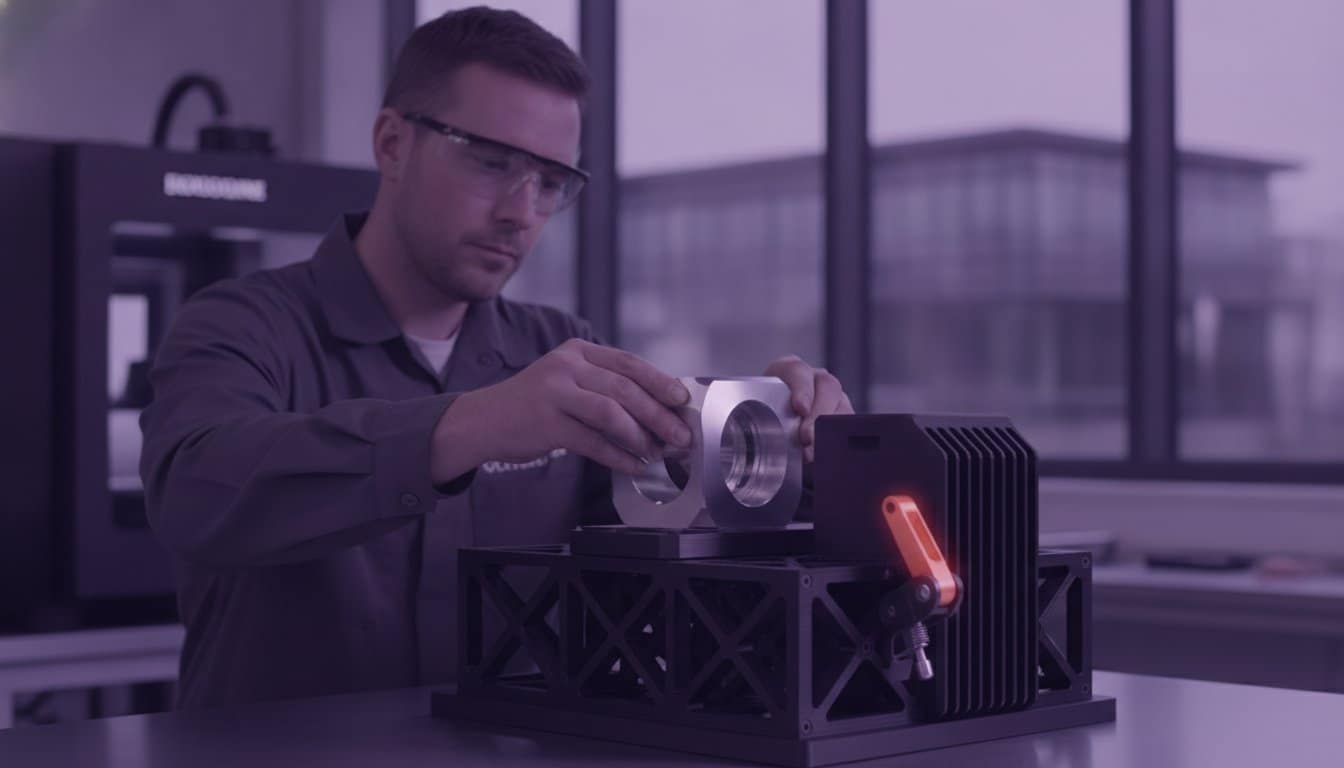
Traditional subtractive manufacturing for workholding is an expensive bottleneck that your production line can no longer afford. Every day spent waiting for a CNC-machined tool is a day of lost productivity and mounting costs. You likely recognise the frustration of heavy, cumbersome steel jigs that cause worker fatigue and the high price tags associated with one-off customisations. In the fast-paced UK engineering sector, precision and speed aren’t just goals; they’re requirements for survival.
This guide reveals how custom jigs and fixtures 3d printing transforms your shop floor by reducing lead times by weeks and slashing production costs. With the UK additive manufacturing market projected to grow from USD 1.2 billion in 2026 to USD 3.2 billion by 2031, the shift towards digital-first tooling is accelerating. You’ll learn how industrial-grade polymers now serve as viable metal alternatives, offering the same accuracy with a fraction of the weight. We’ll preview the latest software optimisations in Autodesk Fusion v.2704.1.15 and show you how to deploy lightweight, ergonomic tools that improve worker safety whilst maintaining uncompromising standards.
Key Takeaways
- Accelerate your production schedule by converting weeks of traditional CNC lead time into days with rapid additive manufacturing.
- Improve worker safety and reduce operator fatigue through strategic lightweighting techniques that replace heavy steel with high-strength polymers.
- Learn to select the right technology and hardware inserts to ensure your custom jigs and fixtures 3d printing projects deliver industrial-grade durability.
- Unlock the ability to create fixtures for legacy parts by integrating 3D scanning and reverse engineering into your digital workflow.
- Reduce manufacturing overheads by adopting an iterative prototyping cycle that guarantees perfect fitment before moving to batch production.
The Strategic Shift: Why 3D Printing Jigs and Fixtures Outperforms Traditional Machining
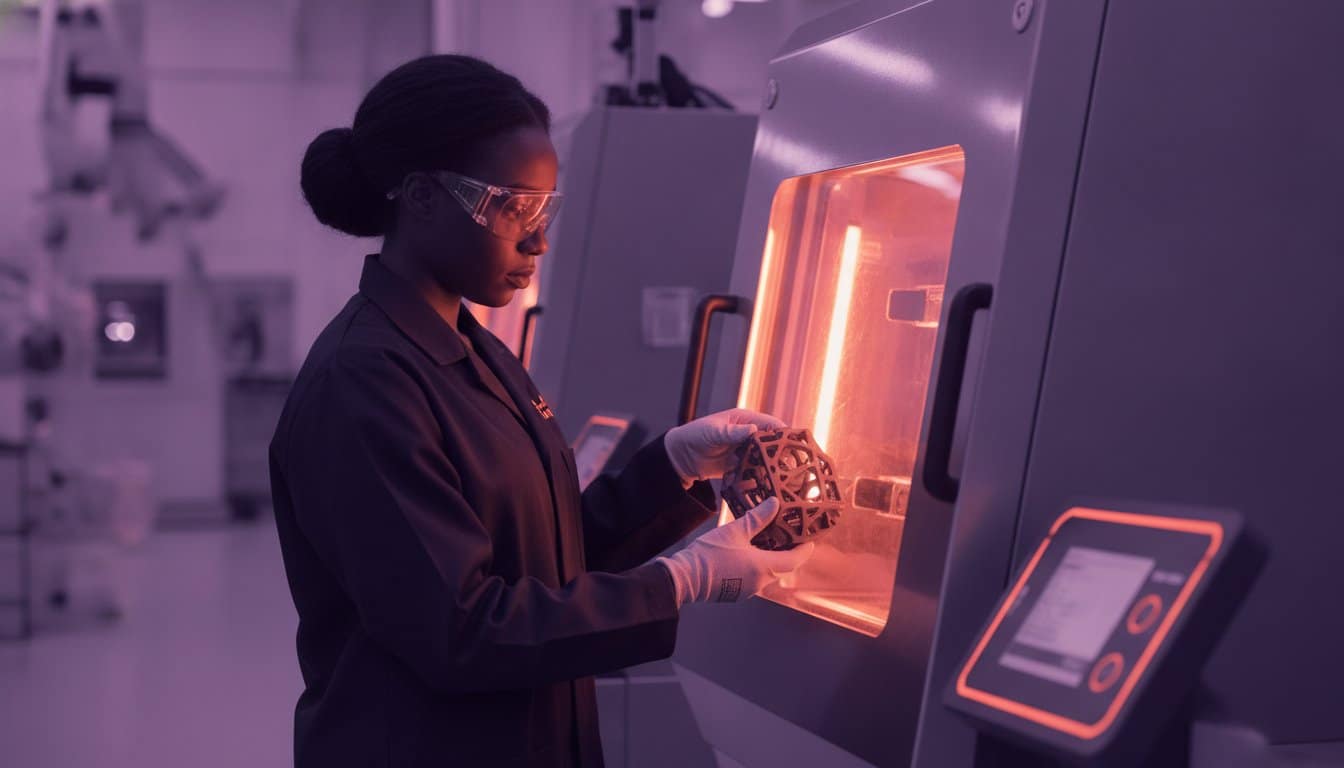
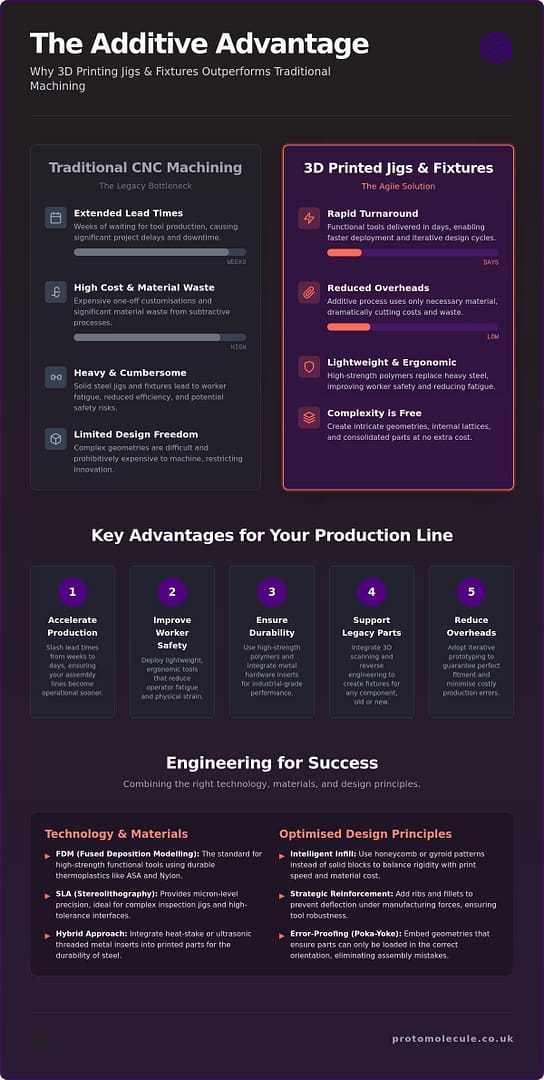
Traditional machining for custom tooling is a legacy bottleneck that restricts your agility. Whilst CNC milling relies on lead times often measured in weeks, custom jigs and fixtures 3d printing delivers functional tools in days. This shift isn’t just about speed; it’s about performance. Additive manufacturing allows for internal lattice structures that significantly reduce tool weight. Unlike solid metal blocks that cause operator strain, 3D printed alternatives are ergonomic and lightweight. This improves worker safety whilst maintaining the rigidity required for industrial applications.
Complexity comes at zero additional cost in the additive world. Intricate geometries that would be impossible or prohibitively expensive to machine are produced with ease. You can consolidate complex assemblies into a single printed unit. This reduces part counts, eliminates assembly errors, and simplifies your inventory management. It’s a direct route to a more efficient shop floor.
Defining Jigs vs. Fixtures in the Additive Era
Understanding the distinction is vital for effective tool design. A jig is a type of custom-made tool that guides a cutting or assembly instrument, whereas a fixture securely holds the workpiece in a fixed position. Additive techniques allow you to integrate “living hinges” and compliant mechanisms directly into the design. These features enable integrated clamping without the need for additional hardware, creating a more streamlined and reliable workflow.
The Economic Case for Additive Manufacturing Aids
The financial benefits are immediate. Subtractive milling often results in significant material waste as you cut away from a solid block. In contrast, additive layering uses only the material required for the part. Your ROI is calculated not just through material savings, but through reduced machine downtime. Faster deployment of rapid prototyping aids means your assembly lines are operational sooner, ensuring your project deadlines remain on track and your overheads stay low.
Engineering for Success: Design Principles and Material Selection
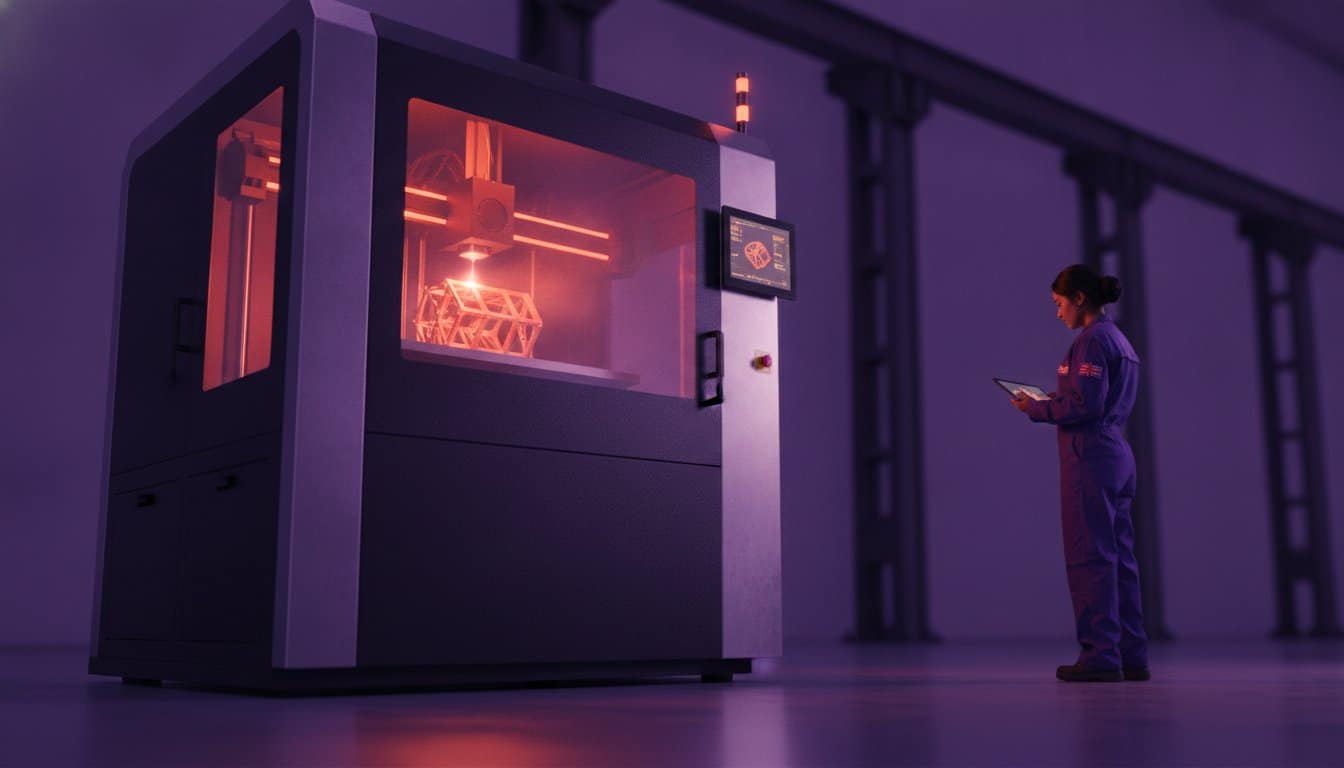
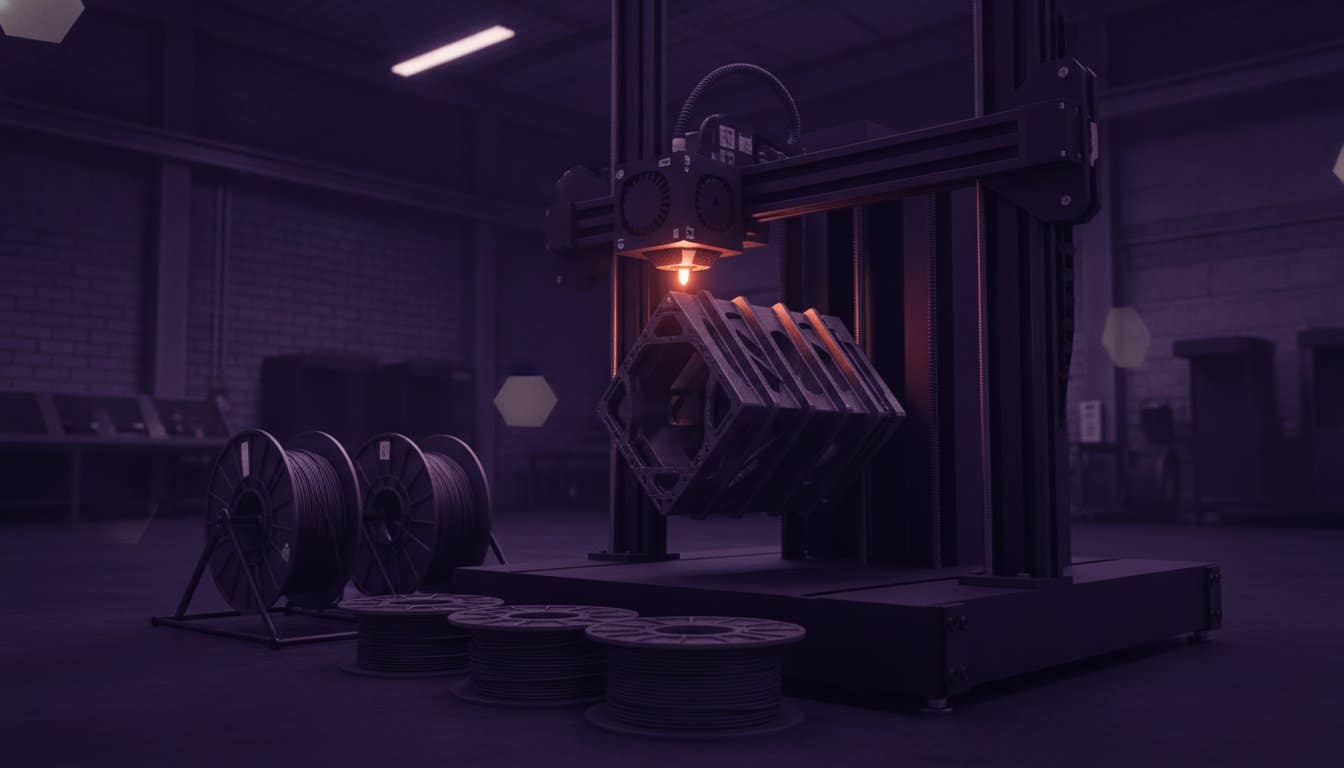
Engineering success starts with selecting the correct additive process for the specific environmental demands of your factory floor. Whilst FDM (Fused Deposition Modelling) is the standard for high-strength functional tools, SLA (Stereolithography) provides the micron-level precision required for complex inspection jigs. Choosing materials like ASA or Nylon ensures your tools withstand chemical exposure and thermal stress in harsh industrial settings; this resistance is equally vital for laboratories handling high-purity research materials from Biomod Peptides. High-performance thermoplastics often outperform traditional metals in weight-sensitive applications without compromising on structural integrity.
Successful custom jigs and fixtures 3d printing projects often utilise a hybrid approach. You shouldn’t rely on plastic threads for high-cycle components. Instead, integrate heat-stake or ultrasonic threaded metal inserts directly into the printed part. This provides the durability of steel with the rapid turnaround of additive manufacturing. Modern software now automates jig and fixture design, allowing you to embed “poka-yoke” features. These error-proofing geometries ensure parts can only be loaded in the correct orientation, eliminating assembly mistakes before they happen.
Optimising Geometry for Strength and Speed
Don’t print solid blocks. Use honeycomb or gyroid infill patterns to balance rigidity with speed. Strategic use of ribs and fillets prevents deflection under manufacturing forces. These design choices ensure your tools remain robust whilst reducing material costs. If you need assistance with complex geometries, learn more about our 3D design services to refine your concepts for the shop floor.
Surface Finish and Tolerances
Achieving high-tolerance interfaces requires the right process. SLS and SLA offer superior “as-printed” accuracy for inspection aids. For critical CNC interfaces, consider secondary post-processing. Reaming or light machining on printed surfaces ensures your fixtures interface perfectly with existing hardware. This hybrid strategy combines the best of both worlds. Explore our 3D printing service to see how these tolerances translate into real-world performance.
Implementing 3D Printed Tooling: From Reverse Engineering to Batch Production
Implementing a modern tooling strategy requires a robust digitisation workflow. Whilst many engineers assume a perfect CAD file is a prerequisite, the reality of the shop floor often involves legacy components with no digital record. This is where 3D scanning acts as a critical bridge. By capturing the exact dimensions of a physical part, you can develop custom jigs and fixtures 3d printing solutions that fit perfectly the first time. This iterative “print-test-refine” cycle allows for rapid adjustments that would be cost-prohibitive with traditional machining.
Digital inventories also revolutionise long-term maintenance. Instead of storing physical backups that take up valuable warehouse space, you maintain a digital library of your manufacturing aids. If a tool breaks or wears out, you simply send the file to the printer for an on-demand replacement. This eliminates downtime and ensures your production lines remain agile and responsive to immediate needs. It is a proactive approach that prioritises uptime and operational efficiency.
Reverse Engineering Legacy Tooling
Capturing complex, organic shapes is a precision task. High-resolution 3D scanning allows you to digitise worn or legacy tools with incredible accuracy. Once captured, this data is converted into functional CAD models, providing a foundation for modern fixture design. Explore our reverse engineering expertise to see how we transform physical assets into digital blueprints for industrial production.
Scaling with Batch Production
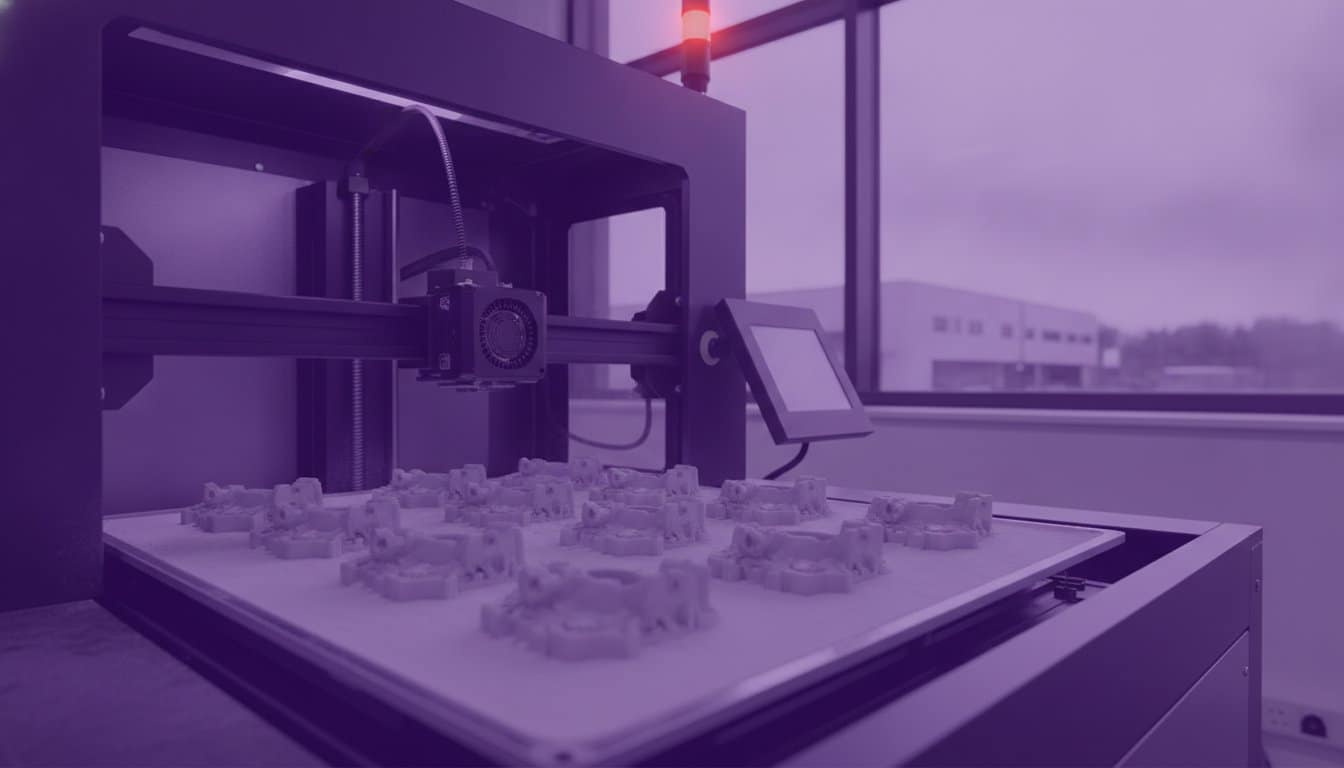
Once a prototype is validated, scaling across multiple manufacturing sites becomes a matter of digital distribution. Batch production ensures that every assembly line in your network uses identical, high-standard tooling. Whether you require ten or one hundred units, industrial SLS and FDM technologies provide the consistency needed for large-scale operations. Review our batch production capabilities to understand how we support national manufacturing rollouts with speed and precision.
Future-Proof Your Production Line with Additive Tooling
The transition from slow, subtractive processes to agile digital manufacturing is no longer optional for UK engineers. You’ve seen how integrating 3D scanning with high-performance polymers eliminates the constraints of legacy hardware and reduces lead times from weeks to days. By adopting custom jigs and fixtures 3d printing, you protect your workforce whilst maximising assembly line throughput. This strategic shift ensures your facility remains responsive to the pressures of modern production without sacrificing precision.
Ensuring your workforce is well-supported during these technological shifts is vital; for comprehensive human resources guidance and strategic support, businesses can turn to pioneer-hr.com.
Protomolecule provides a complete end-to-end service, from high-resolution reverse engineering to industrial batch production. Our specialist expertise in the military and space sectors ensures your manufacturing aids meet uncompromising standards for reliability. We focus on delivering a rapid turnaround for time-critical UK engineering projects, helping you maintain a competitive edge in a fast-moving market. Get a precision quote for your custom tooling today and start delivering results with the speed your project demands. Modernise your shop floor and secure your manufacturing future today.
Frequently Asked Questions
How durable are 3D printed jigs and fixtures in a high-volume production environment?
3D printed tools are highly durable when paired with industrial-grade materials and strategic hardware integration. Using carbon-fibre reinforced polymers or high-performance Nylon ensures these tools withstand thousands of production cycles without structural failure. We recommend integrating metal bushings or heat-set inserts into high-wear contact points to maintain long-term integrity. This hybrid approach provides the longevity required for demanding UK manufacturing environments whilst significantly reducing tool weight and worker fatigue.
Can 3D printed fixtures hold the same tolerances as CNC machined aluminium?
Industrial 3D printing technologies like SLA and SLS achieve precision levels that rival traditional CNC machined aluminium for the majority of workholding applications. Whilst FDM is ideal for structural strength, SLA processes routinely hold tolerances within +/- 0.05mm, making them perfect for high-accuracy inspection aids. If your project requires sub-micron precision on specific mounting faces, we utilise secondary post-processing to ensure your custom jigs and fixtures 3d printing results interface seamlessly with existing assembly hardware.
What is the best 3D printing material for jigs that come into contact with oils or chemicals?
ASA and Nylon (PA12) are the most effective materials for tools that face regular contact with industrial oils, coolants, or cleaning chemicals. ASA provides exceptional chemical resistance and UV stability, ensuring the tool does not degrade or swell when exposed to harsh shop floor fluids. Nylon is a versatile workhorse that offers high fatigue resistance and chemical durability. It’s the standard choice for functional assembly aids in the automotive and aerospace sectors where fluid exposure is constant.
How long does it typically take to design and print a custom fixture?
Most custom fixtures are designed, printed, and delivered within 48 to 72 hours, moving your project from concept to the shop floor in days rather than weeks. This rapid turnaround is made possible by our integrated 3D design and printing workflow, which allows for immediate iteration and testing. By bypassing the lengthy setup times and material lead times associated with traditional subtractive machining, you can deploy manufacturing aids exactly when they’re needed to prevent production bottlenecks.