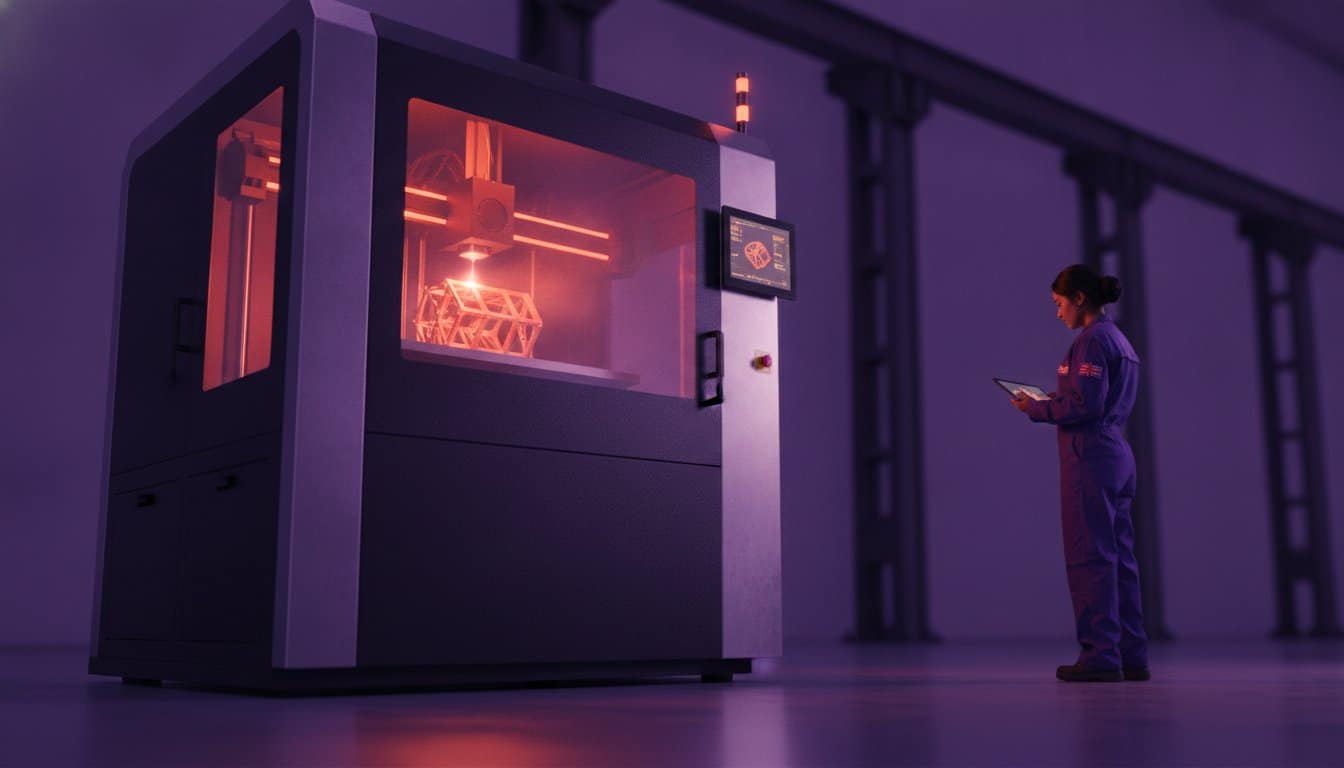

The biggest barrier to launching a hardware product in the UK isn’t your idea; it’s the £20,000 invoice for an injection mould tool you haven’t even tested yet. For many founders, the traditional manufacturing route feels like a trap of high upfront costs and sluggish lead times from overseas suppliers. This is where rapid prototyping for startups uk becomes a strategic weapon rather than just a design step. By eliminating tooling fees and leveraging local agility, you can move from a digital concept to a physical part in days.
We understand that your runway is precious and every week spent waiting for a shipment is a week your competitors gain ground. This guide explores how to leverage tool-less manufacturing to produce anywhere from 1 to 1,000 parts with professional precision. You’ll discover how to secure a reliable UK partner for agile production, navigate the latest 2026 funding opportunities like the Made Smarter programme, and select materials that bridge the gap between a prototype and a market-ready product.
Key Takeaways
- Implement a tool-less manufacturing strategy to preserve vital startup capital whilst maintaining agility during low-volume production runs.
- Leverage rapid prototyping for startups uk to compress development timelines and respond to market feedback in days rather than months.
- Digitise physical components with industrial 3D scanning to bridge the gap between legacy parts and modern 3D design files.
- Transition from functional testing to commercial batch production by selecting high-performance SLS or large-format FDM technologies.
- Optimise your product’s performance and durability through professional guidance on engineering-grade material selection.
Table of Contents
The Strategic Advantage of Rapid Prototyping for UK Startups
Success in the UK hardware sector requires more than a brilliant concept; it demands a manufacturing strategy that doesn’t drain your bank account before you’ve sold a single unit. Understanding what is rapid prototyping is fundamental to this strategy. It’s a tool-less manufacturing method that allows for fast iteration and low-volume production. Unlike traditional methods, this approach removes the need for expensive, permanent moulds, allowing you to stay agile.
UK SMEs are increasingly abandoning traditional injection moulding for production batches under 1,000 units. Sinking capital into a fixed tool for a product that might require design tweaks in three months is a high-risk gamble. By using a professional rapid prototyping service, you bridge the “Death Valley” of product development. You move from a CAD model to a market-ready part without the multi-week wait for overseas tooling or the risk of obsolete inventory.
This approach supports a “just-in-time” manufacturing model. You don’t need to store thousands of units in a warehouse. You produce what you need, when you need it, effectively eliminating stock storage overheads and improving your cash flow. It’s about being lean, precise, and responsive to the market.
Cost-Effective Manufacturing Without Tooling Fees
The “zero-tooling” concept is the ultimate equaliser for rapid prototyping for startups uk. Traditional CNC or injection moulding often requires a five-figure investment before the first part is even produced. In contrast, additive manufacturing offers a superior ROI for small runs because you pay for the material and machine time rather than the infrastructure. This allows you to redirect thousands of pounds into marketing or further R&D whilst your product is already in the hands of early adopters.
For many hardware founders, this saved capital also supports the personal branding required for high-stakes investment pitches, where professional imagery from BR-Photography can help establish the necessary credibility.
Accelerating Time-to-Market Through Iteration
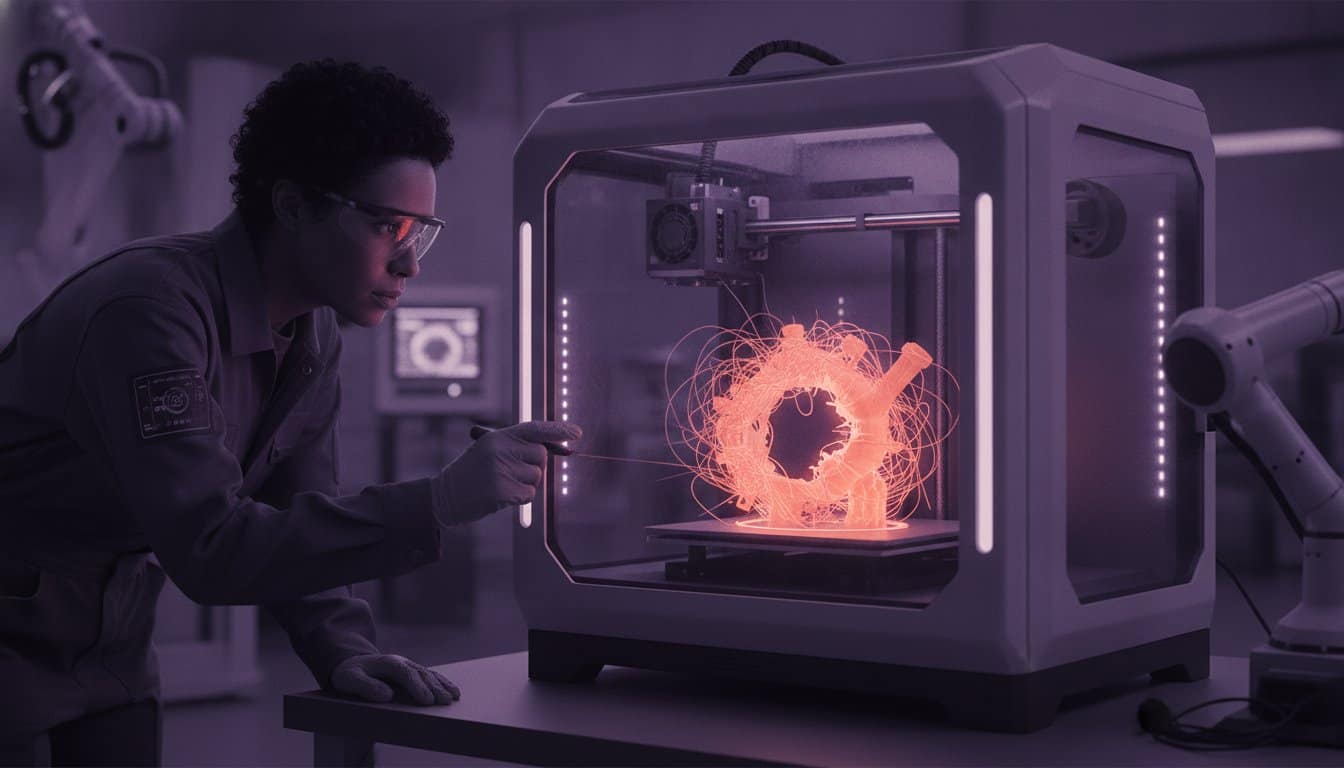
Speed is your primary advantage over established corporations. Whilst a large firm might take six months to approve a design change, you can iterate daily. This agility compresses development cycles from months to a few weeks. Rapid prototyping empowers small firms to outpace industrial giants by turning user feedback into functional hardware in real-time.
Overcoming the Digital Barrier: Design and 3D Scanning
Many founders begin their journey with a hand-carved model, a modified off-the-shelf component, or a legacy part that simply lacks a CAD file. This is often the first major roadblock in rapid prototyping for startups uk. Without a digital blueprint, your production stops before it begins. You can’t iterate on what you can’t measure, and manual measurements with calipers often fail to capture the complex, organic geometries of modern engineering.
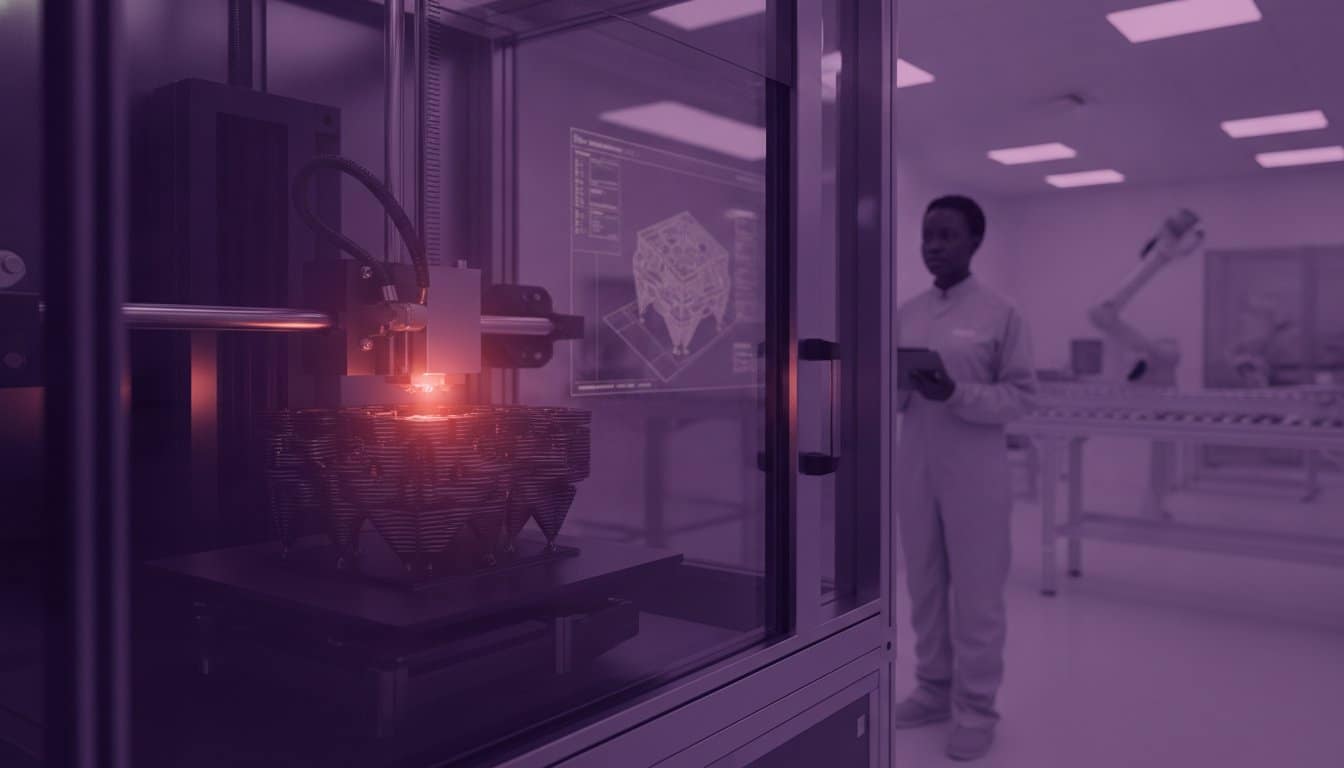
Industrial 3D scanning solves this by creating high-resolution digital twins of physical objects. It maps millions of data points across a surface in seconds, capturing details that traditional methods miss. This data forms the foundation for a professional reverse engineering service. Whether you need to maintain legacy equipment or improve upon a competitor’s existing product, digitisation allows you to refine designs with mathematical precision.
Beyond simple replication, you must apply Design for Additive Manufacturing (DfAM) principles. This ensures your part isn’t just a copy; it’s optimised for the specific stresses it will face. Lightweighting through topology optimisation or adding internal lattice structures can significantly improve performance whilst reducing material costs. Ensuring your digital files are production-ready is the fastest way to avoid delays. You can speak with an engineer today to verify your model’s integrity before starting your next run.
From Physical Part to Digital Model
Capturing complex geometries requires more than a steady hand. Our 3D scanning services use non-contact light technology to create a precise mesh of your physical part. This digital mesh is the essential first step in the reverse engineering workflow, allowing us to reconstruct the geometry into a clean, editable CAD file. It’s the most reliable method to ensure new components integrate perfectly with your existing hardware assemblies.
Professional CAD Design for Manufacturing
A rough 2D sketch or a basic scan isn’t enough for a high-performance production run. Professional 3D design services transform these raw concepts into robust, printable models. This is a critical stage in rapid prototyping for startups uk, as it bridges the gap between a visual concept and an engineering-grade part. We optimise your files for specific technologies, ensuring they’re ready for FDM, SLA, or SLS production without the risk of structural failure.
Scaling Production: From One-Offs to Batch Manufacturing
Moving from a single functional prototype to your first commercial run is where many hardware startups stumble. You’ve proven the concept; now you must prove the business model. Transitioning to batch production allows you to fulfil initial orders without the crushing overhead of traditional factory setup fees. This is the stage where rapid prototyping for startups uk evolves from a design tool into a scalable manufacturing solution that bridges the gap to mass market.
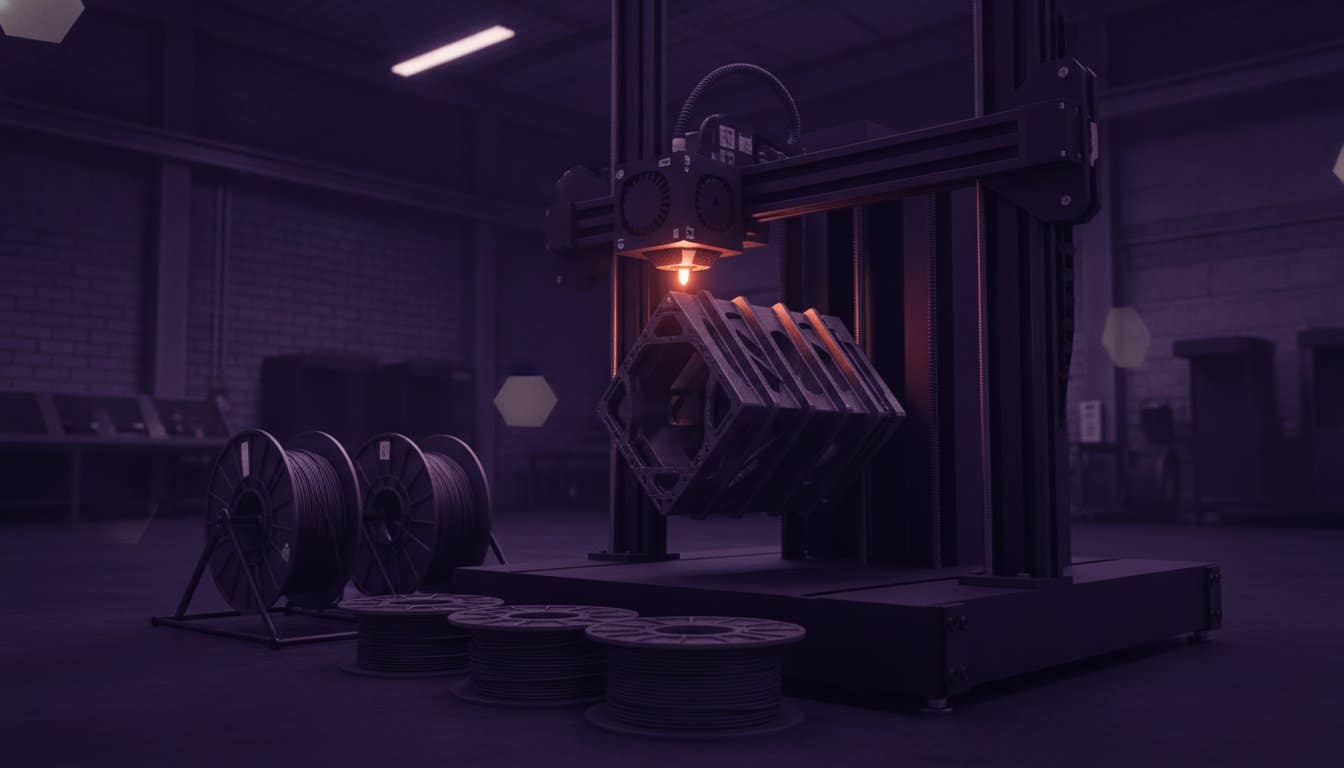
Selecting the right technology is vital for your bottom line. FDM remains the most cost-effective choice for large enclosures or simple housings. However, for complex, high-strength engineering parts, SLS (Selective Laser Sintering) is often superior because it requires no support structures, allowing for intricate internal geometries and better nesting of parts. Keeping production within the UK eliminates the friction of customs delays and significantly reduces your carbon footprint. You gain direct, real-time communication with engineers who understand the nuances of your project.
Consistency is non-negotiable for commercial success. To ensure every part in a run of 100 or 500 meets the same standard as your original prototype, we employ professional post-processing and finishing techniques. This transforms raw prints into market-ready components that look and feel like high-end consumer goods, ready for immediate sale or assembly. If your commercial strategy involves international expansion, you can learn more about ALM to see how their specialist translation and multilingual marketing services support global product launches.
Choosing the Right 3D Printing Technology
Different applications demand specific processes. FDM is excellent for functional jigs, fixtures, and internal components whilst SLA provides the superior surface finish required for high-detail consumer electronics prototypes. For industrial transport or niche automotive projects, our capability for large format FDM printing allows for the creation of oversized industrial components in a single piece, maintaining structural integrity that joined parts often lack.
Selecting a Professional UK Manufacturing Partner
Don’t settle for a faceless service provider that treats your project as just another file in a queue. You need a partner with technical expertise across military, space, and commercial sectors who shares your sense of urgency. A genuine commitment to rapid turnaround times is what separates a successful product launch from a missed market opportunity. Take the next step in your development journey. Get a rapid quote for your project and start manufacturing today.
Secure Your Competitive Edge with Agile Manufacturing
Success in the 2026 hardware market depends on your ability to iterate faster and spend smarter. By integrating rapid prototyping for startups uk into your workflow, you eliminate the financial risk of traditional tooling whilst maintaining total control over your production timeline. Whether you’re digitising complex legacy components through industrial 3D scanning or scaling to your first commercial batch, the path to market is now shorter than ever.
Protomolecule provides more than just prints. We offer specialist expertise in military and aerospace sectors, bringing industrial-grade precision to every startup project. Our advanced 3D scanning and reverse engineering capabilities ensure your designs are optimised for performance, whilst our fast UK-wide turnaround for time-critical engineering parts keeps your development on track. We value your project deadlines as much as our own and we’re ready to solve your most complex engineering hurdles.
Stop waiting for overseas shipments and start building. Start your project with a rapid 3D printing quote to transform your digital models into physical reality. Your vision deserves a manufacturing partner that works as hard as you do. Let’s get your product to market today.
Frequently Asked Questions
Is 3D printing cost-effective for startups in the UK?
Yes, 3D printing is exceptionally cost-effective for UK startups, particularly for production batches under 1,000 units. It eliminates the requirement for expensive injection mould tooling, which can often cost between £5,000 and £20,000 upfront. By removing these entry barriers, you can allocate your limited capital towards marketing and product refinement rather than fixed industrial assets.
What if I don’t have a 3D CAD file for my project?
You can still move forward by utilising professional 3D design or scanning services. If you possess a physical part, a prototype, or even a detailed technical sketch, we can bridge the digital gap for you. Our engineers use industrial scanning to create a precise digital twin, which is then converted into a production-ready CAD model suitable for manufacturing.
How quickly can I receive my 3D printed prototypes?
Speed is the core advantage of rapid prototyping for startups uk, with most standard projects completed within 2 to 5 working days. For time-critical engineering requirements, express turnaround options are available to ensure your project stays on schedule. This agility allows you to test a functional part on Monday and have a refined version in your hands by Friday.
Can 3D printed parts be used for end-use commercial products?
Modern additive manufacturing technologies like SLS and high-resolution SLA produce parts that are entirely suitable for commercial sale. These components possess the structural integrity and surface finish required for sectors ranging from consumer electronics to niche automotive parts. When paired with professional post-processing, 3D printed batches are often indistinguishable from traditionally manufactured goods.
What materials are best for industrial-grade 3D prints?
Material selection depends on your part’s intended environment, but Nylon (PA12) is the industry standard for functional, high-strength applications. For enclosures requiring a smooth aesthetic finish, we recommend specialised resins or high-impact filaments. We provide professional guidance on material properties to ensure your parts survive rigorous mechanical testing and real-world usage.
Do you offer 3D scanning services for existing physical parts?
Yes, we provide comprehensive in-house 3D scanning and reverse engineering services. This process is vital for startups that need to interface with existing machinery or reproduce legacy components that lack original blueprints. We capture the exact geometry of your part and deliver a clean, editable 3D file that is ready for immediate iteration or batch production.