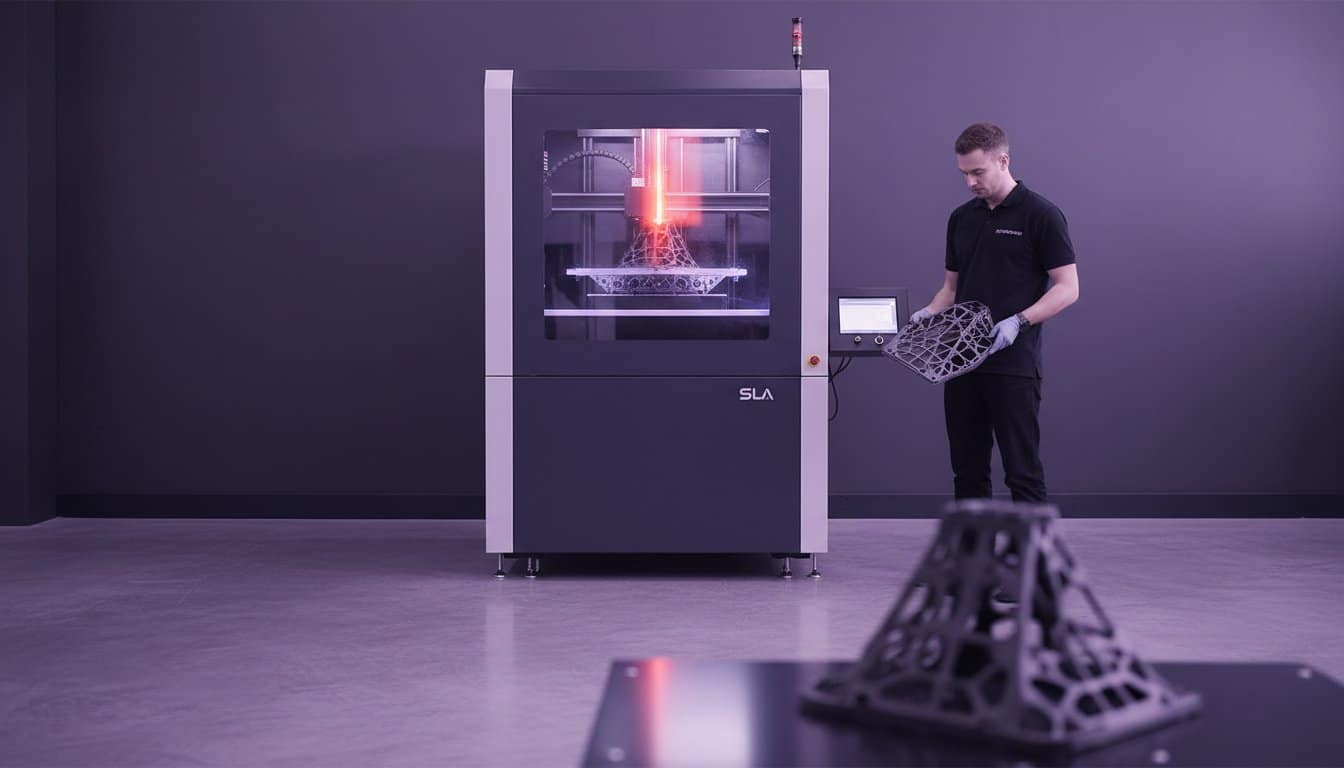
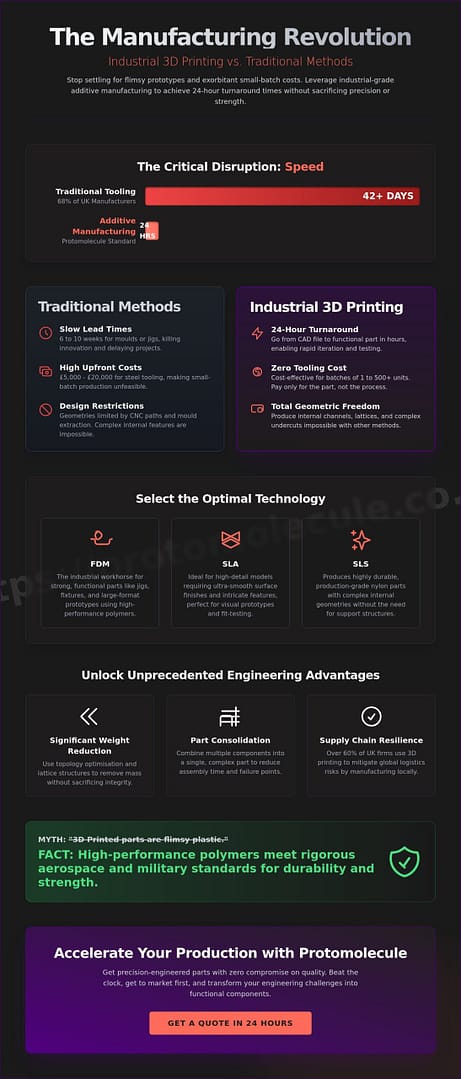
Traditional lead times for custom tooling still exceed 42 days for 68% of UK manufacturers, a delay that kills innovation before it starts. You know that waiting weeks for a single prototype isn’t just frustrating; it’s a competitive disadvantage that drains your budget and stalls your production line. High-performance 3d printed components shouldn’t feel like a compromise between speed and strength. You need parts that survive the rigours of the factory floor, not just the boardroom table, and you need them delivered with zero compromise on quality.
Stop settling for flimsy prototypes and exorbitant small-batch costs that hinder your development cycle. This guide shows you how to leverage industrial-grade additive manufacturing to achieve 24-hour turnaround times without sacrificing precision. Discover how to transform complex engineering challenges into functional components with lightning-fast delivery. We’ll explore the technical path to producing geometries impossible for CNC machines, ensuring you achieve industrial-grade strength with tolerances as tight as 0.1mm from the very first iteration.
Key Takeaways
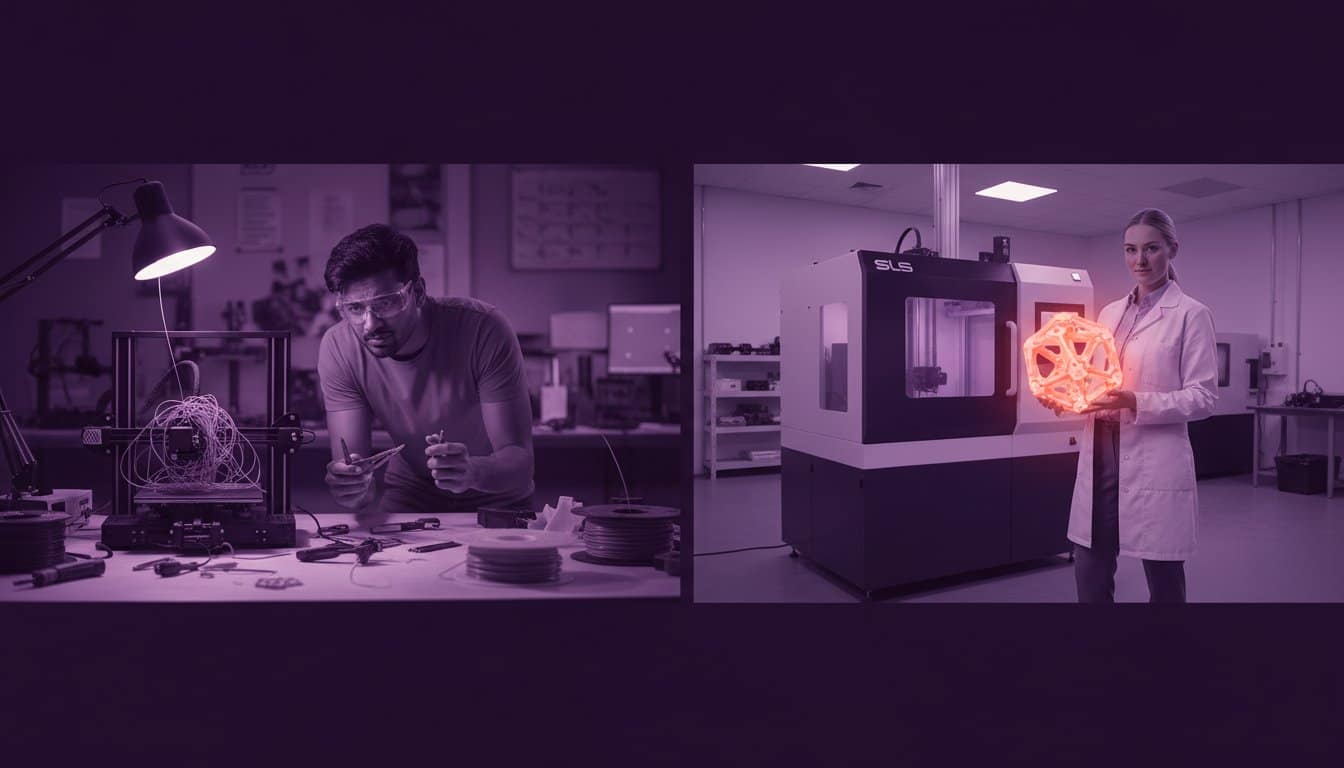
- Identify the critical differences between consumer-grade desktop printing and industrial additive manufacturing to ensure your project meets professional standards.
- Select the optimal technology—FDM, SLA, or SLS—based on the specific mechanical properties and precision required for your engineering application.
- Discover why modern 3d printed components utilizing high-performance polymers are now the standard for durability in the aerospace and military sectors.
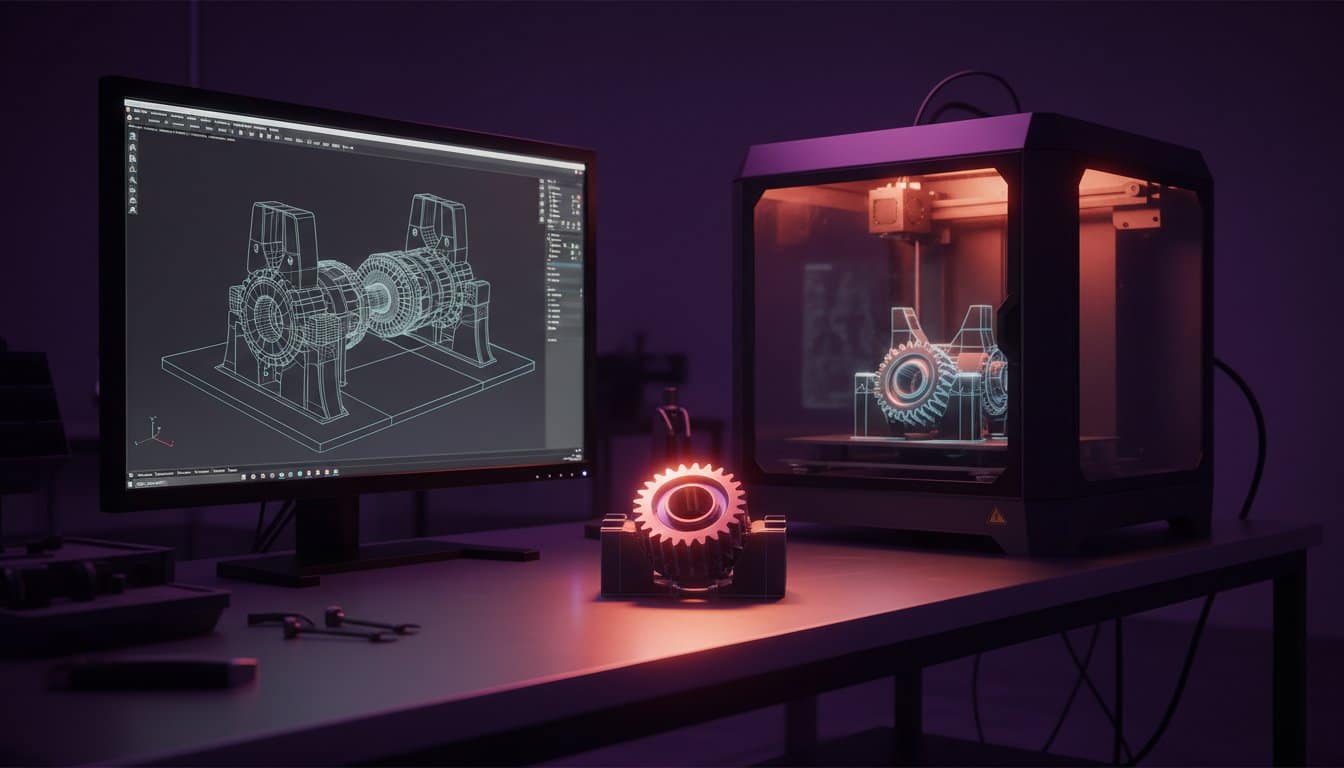
- Master the fundamentals of Design for Additive Manufacturing (DfAM) to streamline the transition from initial 2D sketches to production-ready CAD files.
- Learn how to leverage a 24-hour turnaround to beat the clock on urgent deadlines and maintain absolute agility in your manufacturing workflow.
What is 3D Printing in 2026? Defining Modern Additive Manufacturing
3D printing has evolved from a niche prototyping tool into a cornerstone of UK industrial production. At its core, What is 3D Printing involves the precise, layer-by-layer construction of physical objects directly from a digital CAD file. By 2026, the gap between consumer-grade desktop machines and industrial additive manufacturing has widened significantly. While hobbyist printers remain useful for basic shapes, professional-grade systems now produce high-performance 3d printed components that meet rigorous aerospace and automotive standards. We’ve moved past simple visual models; today’s focus is on functional, load-bearing engineering parts that perform under pressure.
UK industries are increasingly turning to additive manufacturing to build supply chain resilience. According to recent industry reports, over 60% of domestic manufacturers have integrated 3D printing to mitigate global logistics risks. By producing parts locally in hubs like Nottingham and Mansfield, firms eliminate the 4-week wait for overseas shipping, replacing it with 24-hour local turnaround. This shift ensures that critical components are available exactly when they’re needed, keeping production lines moving without interruption.
The Core Benefits of Professional 3D Printed Parts
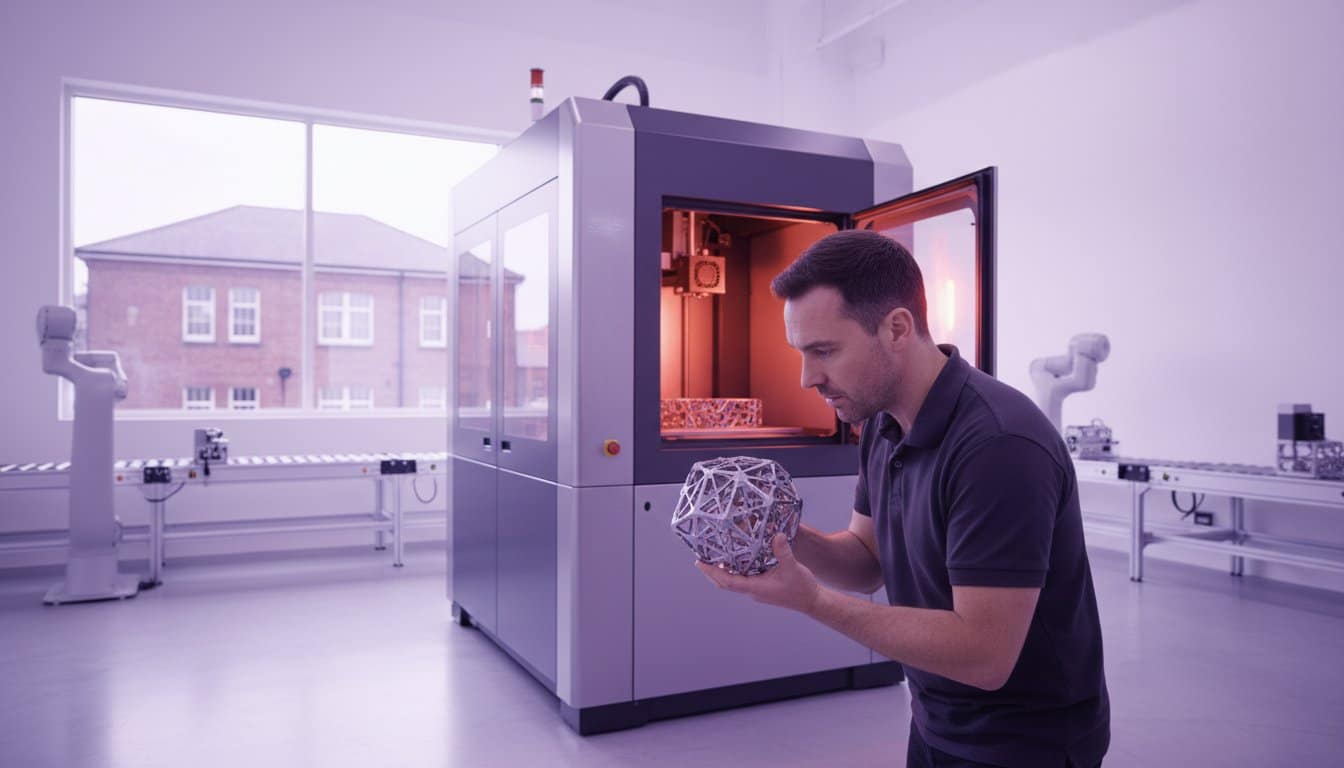
Professional additive manufacturing offers unmatched geometric freedom. You can create complex internal cooling channels or intricate undercut features that traditional injection moulding simply cannot achieve. This capability allows for:
- Significant weight reduction: Use topology optimisation and lattice structures to strip away unnecessary mass without sacrificing structural integrity.
- Cost-effective small-batch production: Produce between 1 and 500 units without the £5,000 to £20,000 upfront cost of steel tooling.
- Part consolidation: Combine multiple components into a single complex part, reducing assembly time and potential failure points.
Why Traditional Manufacturing is Being Disrupted
The primary disruptor is speed. Traditional CNC machining or injection moulding often requires a lead time of 6 to 10 weeks to create initial moulds or jigs. In contrast, industrial 3d printed parts are ready for testing in hours. This speed allows engineers to iterate designs instantly based on real-world stress tests. Don’t let traditional manufacturing bottlenecks slow your development cycle. You can access these technical advantages through professional 3D printing services to ensure your project stays on schedule. Protomolecule delivers precision-engineered parts with zero compromise on quality, helping you beat the clock and get to market first.
Core Technologies: Navigating FDM, SLA, and SLS for Your Project
Selecting the right production method is the difference between a part that fails under load and one that thrives in an industrial setting. Professional UK studios don’t guess; they match material science to the application. This process begins with Defining Modern Additive Manufacturing standards to ensure every component meets rigorous mechanical benchmarks. Whether you are based in Nottingham or operating nationally, your 3d printed parts must withstand the specific stresses of their environment, from chemical exposure to high-torque mechanical loads.
The choice of technology dictates the final part’s mechanical properties. It is a strategic trade-off between surface aesthetics and structural integrity. A component destined for a passenger train seat arm requires different internal bonds than a high-detail architectural model. We focus on delivering results that align with your project deadlines, ensuring the technology matches the speed your business demands.
FDM (Fused Deposition Modelling): The Industrial Workhorse
FDM is the backbone of rapid manufacturing. It uses thermoplastic filaments like PLA, PETG, and Carbon Fibre Nylon to build parts layer-by-layer. This technology is ideal for functional prototypes, jigs, and fixtures. If your project involves large-format parts or components that need high-strength properties, FDM is the most cost-effective solution. High-performance filaments like Carbon Fibre Nylon offer a massive increase in stiffness compared to standard plastics, making them perfect for demanding engineering environments where durability is the only metric that matters.
SLA and SLS: Precision and Complexity
SLA uses UV resins to create 3d printed parts with ultra-high detail. It is the best choice for aesthetic models or “look and feel” prototypes where a smooth surface finish is non-negotiable. However, if you need durability and complex geometry, SLS is the superior option. SLS fuses nylon powder with a laser, requiring no support structures. This allows for intricate internal channels and complex mechanical assemblies in a single build. Choose SLS for high-durability production parts that need to perform with the same isotropic strength as traditional injection-moulded nylon.
Don’t let design indecision stall your progress. If you need to beat the clock on a tight deadline, our rapid prototyping services provide the technical clarity you need to move from CAD to a physical part in under 24 hours. Zero compromise on quality is our baseline, ensuring your engineering challenges are solved with precision and speed.
Materials and Strength: Debunking the “Flimsy Plastic” Myth
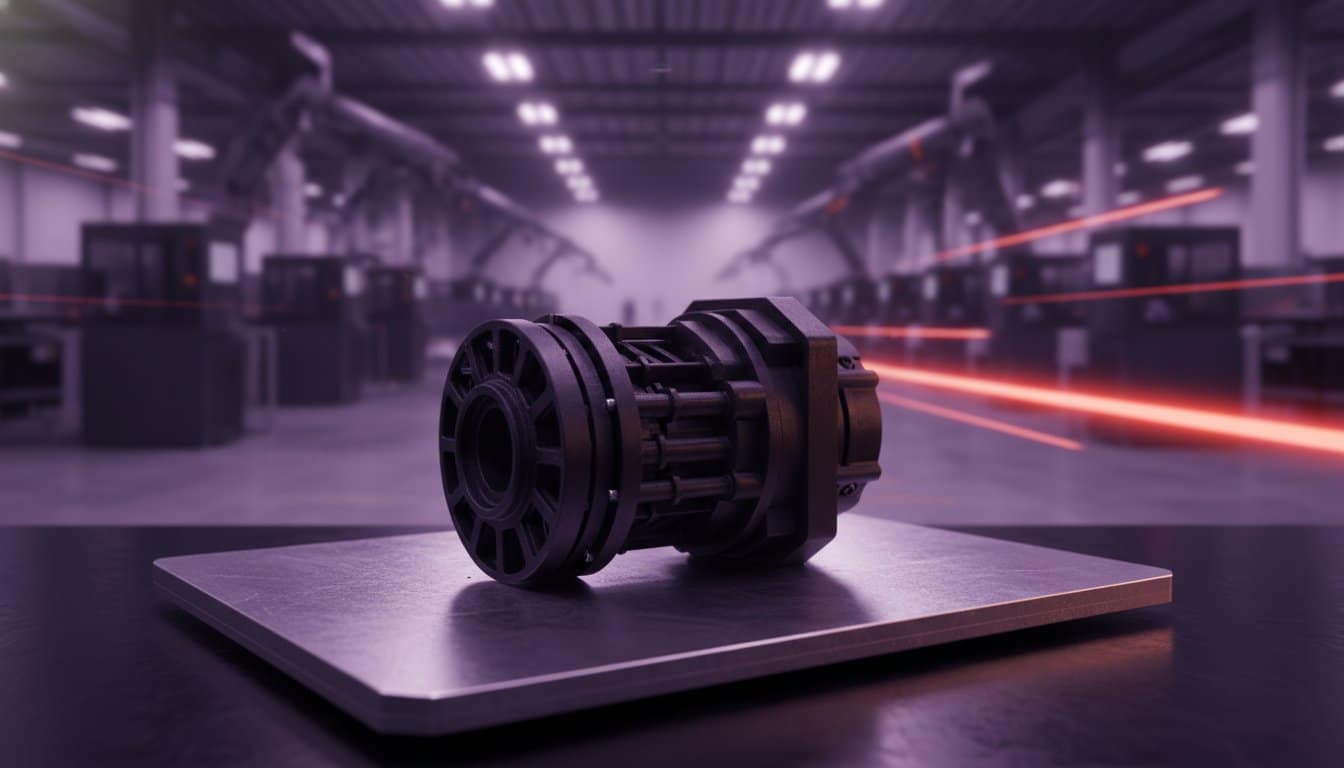
The misconception that 3d printed components are fragile toys is a relic of the early hobbyist era. Current industrial standards prove that additive manufacturing delivers parts capable of withstanding extreme mechanical stress. In sectors like aerospace and defence, engineers now rely on high-performance polymers to replace heavy metal brackets and housings. Strength in a 3d printed part isn’t a happy accident; it’s a result of precise engineering. By leveraging Design for Additive Manufacturing (DfAM), we optimize internal infill patterns and wall thicknesses to provide maximum rigidity while reducing total mass by up to 60% compared to solid blocks.
Don’t let outdated assumptions slow your development cycle. Modern hardware allows for granular control over the toolpath, ensuring that material is deposited exactly where the stress loads require it. This targeted reinforcement means a well-designed plastic component can often outperform a poorly designed metal one. Whether you’re building a custom jig for a factory floor in Nottingham or a functional prototype for a high-speed automotive application, the focus remains on delivering industrial-grade durability without the lead times of traditional casting.
Engineering-Grade Materials
Stop settling for basic filaments when your project demands more. Nylon 12 and Carbon Fibre composites are the workhorses of the modern studio, offering strength-to-weight ratios that challenge aluminium. These materials provide exceptional chemical resistance and remain thermally stable at temperatures exceeding 150°C. If you’re struggling with obsolete machinery, reverse engineering allows us to upgrade legacy parts with these advanced composites, often resulting in a component that lasts longer than the original OEM version. We don’t just replicate; we improve.
Testing and Validation
Reliability is built on data, not guesswork. Professional prints undergo rigorous tensile strength testing to ensure they meet the specific load requirements of your application. Recent advancements in thermal management during the build process have increased layer adhesion by 40%, virtually eliminating the risk of delamination in functional parts. For projects requiring uniform strength, Selective Laser Sintering (SLS) is the gold standard. In the context of SLS printing, isotropy describes a state where the mechanical properties of a part remain consistent in all directions, regardless of the build orientation. This ensures your components perform predictably under pressure.
Post-processing is the final step in securing peak performance. We use chemical smoothing and specialized epoxy coatings to seal the surface of the part, which increases fatigue life and provides an airtight finish. This isn’t just about aesthetics; it’s about protecting the structural integrity of the part from environmental degradation. Beat the clock on your next project with parts that are ready for the real world. Zero compromise on quality.
Design for Additive Manufacturing (DfAM): Preparing Your Files
High-performance 3d printed parts aren’t the result of luck; they’re the product of rigorous digital preparation. Successful additive manufacturing requires a fundamental shift from traditional subtractive mindsets. You aren’t just designing a shape; you’re designing a build process. Moving from 2D sketches to a production-ready 3D CAD model involves accounting for gravity, heat, and material shrinkage before the printer even starts.
File integrity is your first hurdle. While the STL format remains an industry standard for its simplicity, it often lacks the mathematical precision required for high-end engineering. We recommend using STEP files where possible. STEP files maintain “true” geometry rather than a mesh of triangles, ensuring that 20mm holes remain exactly 20mm. If you must use STL, ensure your mesh density is high enough to avoid “faceting” on curved surfaces, but not so heavy that it crashes the slicing software. Every megabyte should serve a purpose.
Optimising Geometry for Success
Precision engineering in 3D printing relies on mastering self-supporting angles. To minimise material waste and post-processing time, design your overhangs at angles greater than 45 degrees. This approach allows the printer to build layers upon themselves without the need for sacrificial support structures. When your project involves complex fluid dynamics or internal airflow, teardrop-shaped internal channels are superior to circular ones, as they prevent the “ceiling” of the channel from sagging during the build. If your team lacks the internal capacity for these optimisations, our expert 3D design services can bridge the gap from concept to manufacture.
- Wall Thickness: Maintain a minimum of 1.2mm for structural FDM parts to ensure durability.
- Tolerances: For interlocking 3d printed assemblies, a clearance of 0.2mm to 0.5mm is standard for industrial-grade accuracy.
- Orientation: Design with the build plate in mind to maximise strength along the X and Y axes.
From Physical Object to Digital Model
Modern manufacturing often requires replicating components that no longer have active CAD data. We utilise high-precision 3D scanning to digitise physical objects with micron-level accuracy. This process creates a point cloud that we then convert into a “watertight” mesh, meaning the digital volume is completely enclosed and ready for the slicer.
This workflow is the foundation of reverse engineering. Whether you’re modernising obsolete industrial machinery or reproducing rare automotive components like 80s JDM wheel centre caps, scanning allows for rapid iteration. We clean up the raw scan data, remove wear and tear from the digital model, and prepare it for lightning-fast production. Don’t let a lack of drawings stall your project; we turn physical bottlenecks into digital assets in under 24 hours.
Ready to move from digital file to physical part? Get an instant quote and beat the clock today.
Agile Manufacturing: Accelerating Production with Protomolecule
Protomolecule acts as your national partner for high-speed, zero-compromise manufacturing. We understand that in modern engineering, time is the most expensive resource. Our “Beat the Clock” philosophy dictates every workflow in our studio, ensuring that a 24-hour turnaround remains the standard rather than the exception. This rapid response saves critical engineering projects from stalling, allowing teams to iterate, test, and deploy at a pace that traditional manufacturing cannot match.
Scaling your project shouldn’t mean facing a new set of delays. We bridge the gap between initial design and market readiness by facilitating a seamless transition from a single 3d printed proof-of-concept to full batch production. Because we operate locally from our studios in Nottingham and Mansfield, we eliminate the risks associated with international shipping and fragmented communication. You receive reliable, UK-based expertise and fast national delivery that keeps your supply chain lean and responsive.
Rapid Prototyping and Beyond
Our rapid prototyping service collapses traditional R&D cycles. Projects that once required three to six months of development are now completed in a matter of days. We don’t just act as a print bureau; we function as expert problem solvers. Our team has engineered solutions for a diverse range of high-stakes applications, from bespoke 80s JDM wheel centre caps for automotive enthusiasts to high-performance passenger train seat arms for industrial transport sectors. We apply the same level of technical precision to every 3d printed component, ensuring it meets the specific mechanical requirements of its environment.
Getting Your Project Started Today
Starting your next project is a streamlined, friction-free process. Upload your CAD files directly to our secure portal to receive an instant, professional quote. We’ve removed the administrative hurdles that slow down innovation, allowing you to move from digital design to physical part in record time.
- Upload your file for immediate technical review.
- Receive a transparent quote with no hidden lead-time extensions.
- Benefit from our “zero compromise on quality” guarantee on every part.
Don’t let manufacturing bottlenecks dictate your success. Beat your next project deadline by partnering with a studio that values your timeline as much as you do. Get a quote now and experience the speed of industrial-grade agile manufacturing.
Accelerate Your Production Cycle Today
Modern additive manufacturing has evolved beyond simple prototyping into a robust industrial solution. By leveraging industrial-grade FDM, SLA, and SLS technologies, you can now produce 3d printed components that meet the rigorous standards of the UK space and military sectors. Success relies on high-performance materials and precise DfAM principles to eliminate the “flimsy plastic” myth. Protomolecule provides the technical expertise and infrastructure to handle everything from intricate aerospace parts to high-volume commercial production runs.
Precision and speed are the benchmarks of our service. We offer a 24-hour turnaround for time-sensitive projects; this ensures your deadlines are met with zero compromise on quality. Whether you’re developing a new product or solving a complex engineering bottleneck, our team delivers results that move the needle. Don’t let manufacturing delays stall your progress; take the next step with a partner that values your timeline as much as you do.
Turn your ideas into reality—get a lightning-fast quote from Protomolecule today.
We look forward to engineering your next success story.
Frequently Asked Questions
Is 3D printing strong enough for functional parts?
Yes, industrial-grade materials like Carbon Fibre Nylon or PETG provide the mechanical properties needed for demanding end-use components. We have produced passenger train seat arms and 80s JDM wheel centre caps that withstand rigorous daily stress. Tensile strength for high-performance filaments can exceed 70 MPa. Zero compromise on quality ensures your 3d printed part performs under heavy pressure without failure.
How long does it take to get a 3D printed part delivered?
We offer a lightning-fast 24-hour turnaround for most standard prototyping projects to keep your workflow moving. Orders placed before 10:00 AM often enter production the same day. For clients in Nottingham, Mansfield, or across the UK, our streamlined process ensures a 3d printed component reaches your desk within 1 to 3 working days. Don’t let delays slow you down; beat the clock with our rapid manufacturing.
What materials can you use for professional 3D printing?
We utilize a robust range of engineering-grade thermoplastics and resins including PLA, PETG, ASA, and Carbon Fibre reinforced Nylon. Each material serves a specific industrial purpose. ASA provides UV resistance for outdoor automotive parts, while Nylon offers superior impact resistance. Our stock includes 15 different material types to meet diverse engineering requirements. We select the exact filament to match your project’s environmental and mechanical demands.
Can you 3D print a part from a broken physical sample?
Yes, we use high-precision 3D scanning and reverse engineering to recreate parts from broken or obsolete samples. Our technicians scan the original geometry to within 0.05mm accuracy. We then repair the digital mesh to create a functional CAD model for production. This process is essential for restoring vintage machinery or replacing discontinued industrial components where original blueprints no longer exist. Turn your broken parts into new reality.
What is the maximum size for a 3D printed component?
Our standard build volume accommodates parts up to 300mm x 300mm x 300mm, but larger components are produced using modular assembly. For oversized projects, we split the digital model into interlocking sections joined with high-strength bonding agents or mechanical fasteners. This technique allows us to manufacture full-scale automotive panels or large industrial housings without sacrificing structural integrity. We manage the entire assembly to ensure a seamless, precision fit.
Do I need a CAD file to use a 3D printing service?
You don’t need a finished CAD file to start, as our design team can create one from your sketches or physical prototypes. While a .STL or .STEP file is ideal for instant production, we provide full design support to bridge the gap. We turn your rough ideas into reality by developing production-ready digital models. This eliminates technical barriers for engineers and hobbyists alike, accelerating the journey from concept to physical part.
How much does it cost to 3D print a custom part?
Pricing depends on material volume, print time, and post-processing requirements, with basic prototypes starting at approximately £15. Industrial projects involving high-performance materials like Carbon Fibre Nylon will incur higher costs due to raw material prices. According to 2024 UK market benchmarks, professional service fees typically reflect the complexity of the geometry and the required tolerances. Get a quote today to receive a precise, transparent breakdown for your project.
What is the difference between FDM and SLA printing?
FDM uses melted filament to build layers, while SLA uses a UV laser to cure liquid resin into high-resolution solid parts. FDM is the go-to for durable, functional components used in mechanical testing. SLA excels at producing intricate details and smooth surface finishes for jewellery or dental models. FDM layers are typically 0.1mm to 0.3mm thick, whereas SLA can achieve resolutions down to 25 microns for extreme precision.