
A single millimetre of deviation isn’t just a minor measurement error. It’s a total project failure that drains your budget and stalls your production line. You’ve likely felt the frustration of receiving a batch of components only to find they don’t fit the final assembly due to poor dimensional stability or inconsistent quality. Partnering with a high accuracy 3d printing service should guarantee that your complex designs translate perfectly from the CAD environment to the physical world. Precision isn’t an optional extra; it’s the essential foundation of modern UK engineering.
This article shows you how industrial-grade additive manufacturing achieves uncompromising dimensional accuracy and micron-level detail for your most demanding projects. We’ll examine the technical trade-offs between different high-precision technologies and explain how to source a reliable UK partner that prioritises expert technical support. You’ll learn how to reduce lead times without sacrificing the rigorous quality standards required for automotive, aerospace, or industrial transport parts. We’ll break down the synergy between 3D scanning, CAD optimisation, and manufacturing that ensures every component meets your exact specifications every time.
Key Takeaways
- Distinguish between layer resolution and dimensional precision to ensure your parts meet strict engineering tolerances every time.
- Learn how a high accuracy 3d printing service bridges the gap between digital CAD data and physical components for flawless assembly fitment.
- Discover the workflow secrets that maintain strict consistency across batch production, from niche automotive parts to industrial transport components.
- Identify how integrated 3D design services can optimise your models for additive manufacturing, reducing lead times without compromising on quality.
- Explore why high-stakes sectors like defence and aerospace rely on micron-level detail to maintain operational safety and performance.
Defining High Accuracy in Industrial 3D Printing
In industrial manufacturing, high accuracy is the measurable deviation between your digital CAD model and the final physical component. When you commission a high accuracy 3d printing service, you’re paying for the absolute assurance that your part will perform exactly as designed. For UK sectors like aerospace and the military, this precision is non-negotiable. Reliability hinges on repeatability. You need the hundredth part to be identical to the first. We achieve these tight tolerances through meticulously calibrated industrial hardware that maintains consistency across every axis, ensuring your 3D printing project meets rigorous engineering standards.
Resolution vs. Dimensional Accuracy: The Technical Distinction
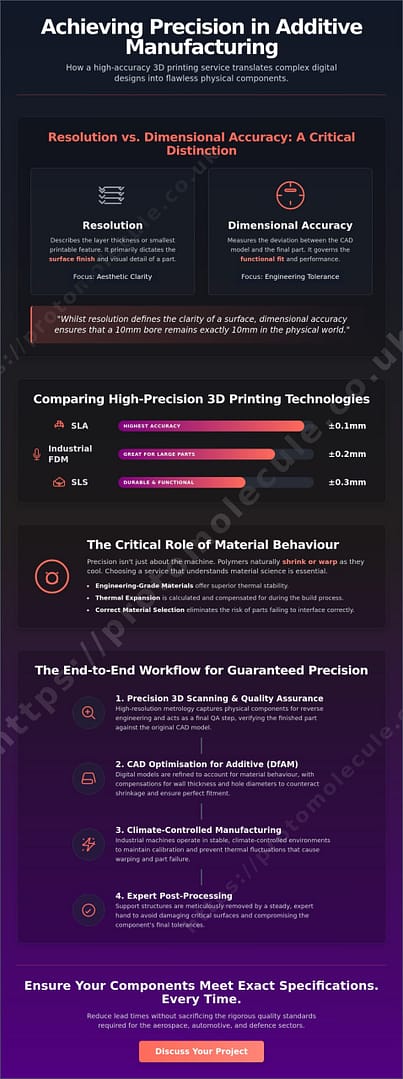
Many providers confuse resolution with accuracy, but they serve different masters. Resolution describes the layer thickness or the smallest feature a machine can produce, which primarily dictates surface finish and visual detail. Accuracy, however, governs the dimensional integrity and fit of the part. Whilst resolution defines the clarity of a surface, dimensional accuracy ensures that a 10mm bore remains exactly 10mm in the physical world.
Different 3D printing processes offer varying tolerance levels that impact your final assembly:
- SLA (Stereolithography): Excellent for intricate detail with tolerances often reaching +/- 0.1mm.
- SLS (Selective Laser Sintering): Ideal for durable, functional parts with typical tolerances around +/- 0.3mm.
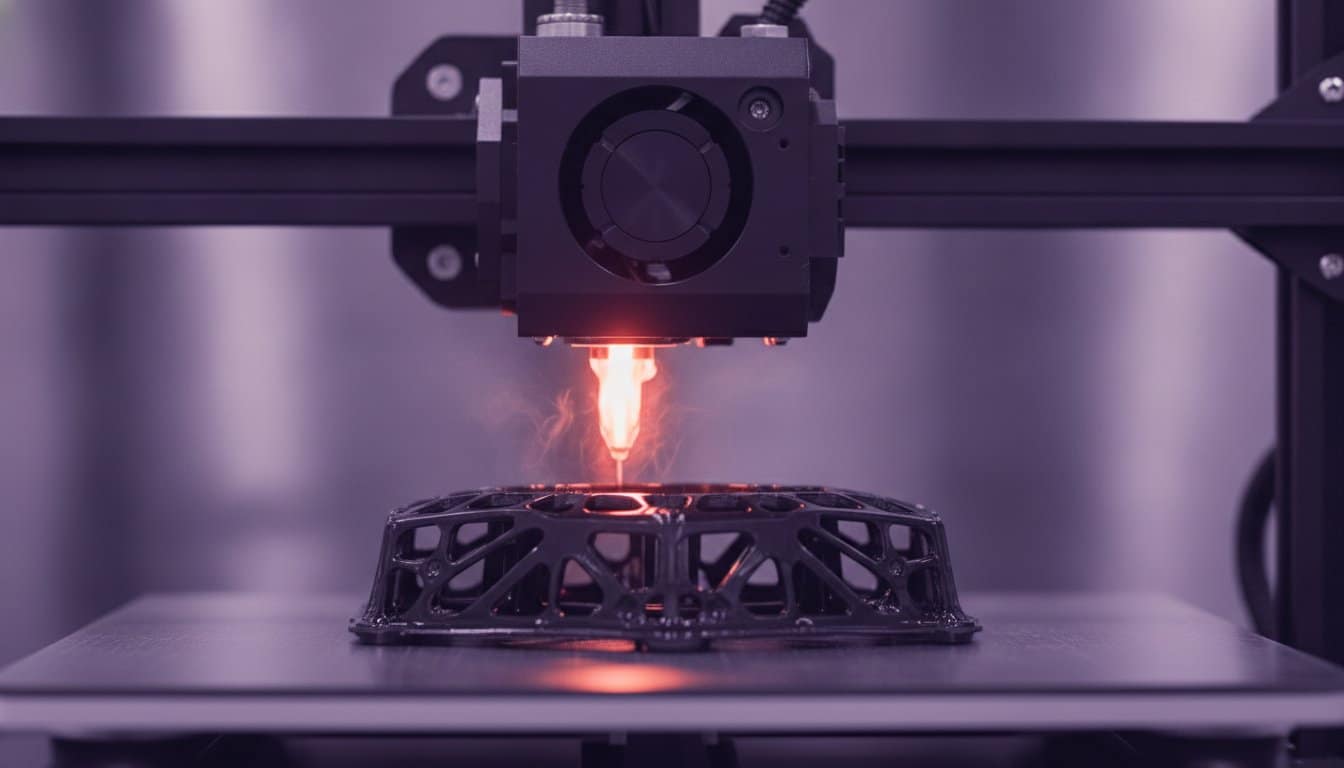
- Industrial FDM: Best for large-scale components, with high-end systems achieving +/- 0.2mm or 0.002mm per mm.
The Role of Material Behaviour in Precision Manufacturing
Precision isn’t just about the machine; it’s about managing material behaviour. As polymers cool, they naturally shrink or warp, which can compromise the dimensional precision of your project. High-performance, engineering-grade materials offer superior thermal stability compared to standard filaments. Protomolecule selects specific materials based on your project’s unique tolerance requirements. We account for thermal expansion during the build to ensure the final part doesn’t derail your assembly. Choosing a high accuracy 3d printing service that understands these chemical properties eliminates the risk of parts failing to interface correctly in the field.
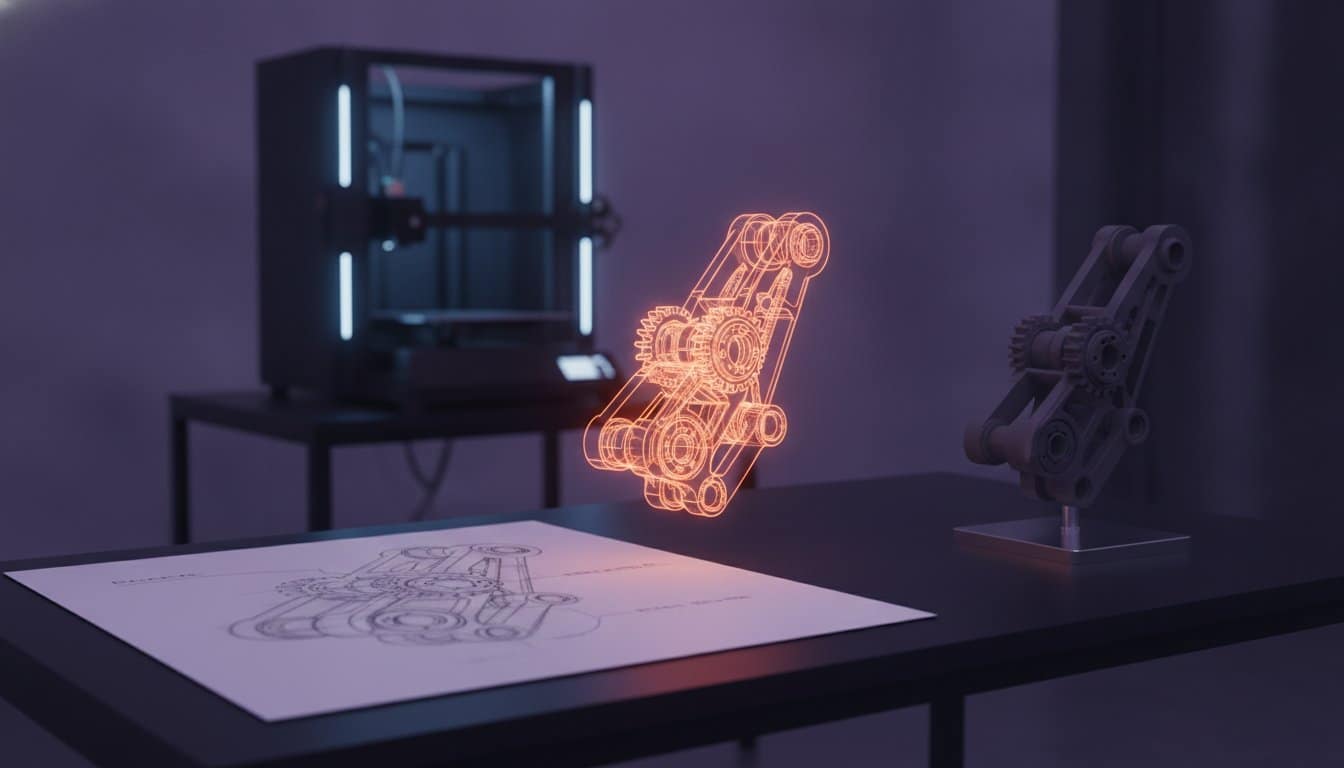
The Engineering Workflow for Precision Components
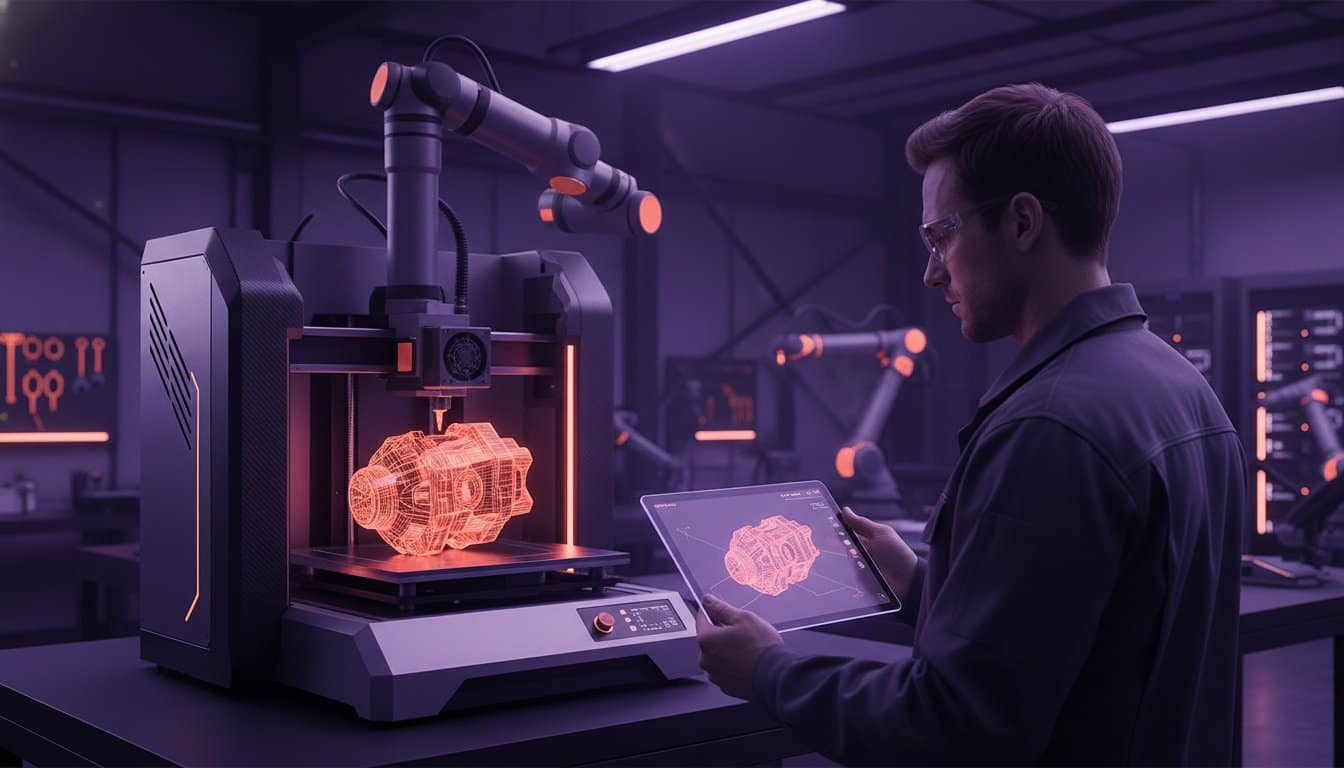
Precision in manufacturing isn’t an accident. It’s the result of a rigorous, multi-stage workflow. You can’t achieve micron-level detail with substandard digital inputs. High-quality CAD data is the absolute prerequisite for any successful project. Our 3D design services specialise in optimising these models to navigate the specific constraints of additive manufacturing. Our high accuracy 3d printing service relies on this synergy between digital precision and physical control. Beyond the digital file, the physical environment must be strictly managed. We operate in climate-controlled spaces to maintain machine calibration and ensure part stability during the build. This control prevents the thermal fluctuations that lead to warping. Finally, professional post-processing is critical. Removing support structures requires a steady, expert hand to avoid damaging critical tolerances. If you’re ready to start, contact our team to discuss your specifications.
Integrating 3D Scanning for Reverse Engineering
Achieving “closed-loop” accuracy often begins with capturing the physical. Our 3D scanning services use advanced metrology to record existing components with sub-millimetre precision. This data feeds directly into our reverse engineering process, allowing us to recreate or improve parts that lack original technical drawings. We don’t just use scanning for capture; it acts as our primary Quality Assurance tool. By overlaying a scan of the finished print against the original CAD model, we verify that every dimension aligns with industrial manufacturing standards.
CAD Optimisation for Additive Manufacturing (DfAM)
Designing for the process is vital. You must account for how material behaves as it transitions from a liquid or powder to a solid. We apply specific compensation techniques for wall thickness and hole diameters to counteract natural material cooling. This proactive approach ensures your part fits its housing the first time. When you prepare files for our high accuracy 3d printing service, focus on high-resolution STL or STEP exports to preserve geometry. This attention to detail at the design stage eliminates the “guesswork” often found in low-end prototyping.
Industrial Applications and Batch Production Standards
High-stakes sectors like space, military, and commercial transport leave no room for error. Components must survive extreme stresses while maintaining perfect fitment. Our high accuracy 3d printing service supports these industries by delivering parts that adhere to rigorous aerospace and defence specifications. Whilst small-scale precision is common, maintaining accuracy over distance is a unique challenge. We utilise Large Format FDM Printing to produce industrial jigs and fixtures that remain dimensionally stable across their entire length. Protomolecule positions itself as your agile engineering partner. We combine technical expertise with a sense of urgency, providing the rapid turnarounds your project deadlines demand without compromising on quality.
Scaling from Prototype to Batch Production
Moving from a single rapid prototype to a full production run introduces new variables that can affect dimensional consistency. Many providers struggle with drift over time. Our batch production services solve this through strict machine monitoring and standardised workflows. This ensures that the hundredth part is as precise as the first. For UK manufacturers, 3D printed batch production offers a significant cost-efficiency advantage for low-to-medium volumes. It eliminates the high upfront costs of traditional tooling whilst allowing for rapid design iterations. This approach keeps your production agile and your overheads low.
Quality Assurance and Uncompromising Standards
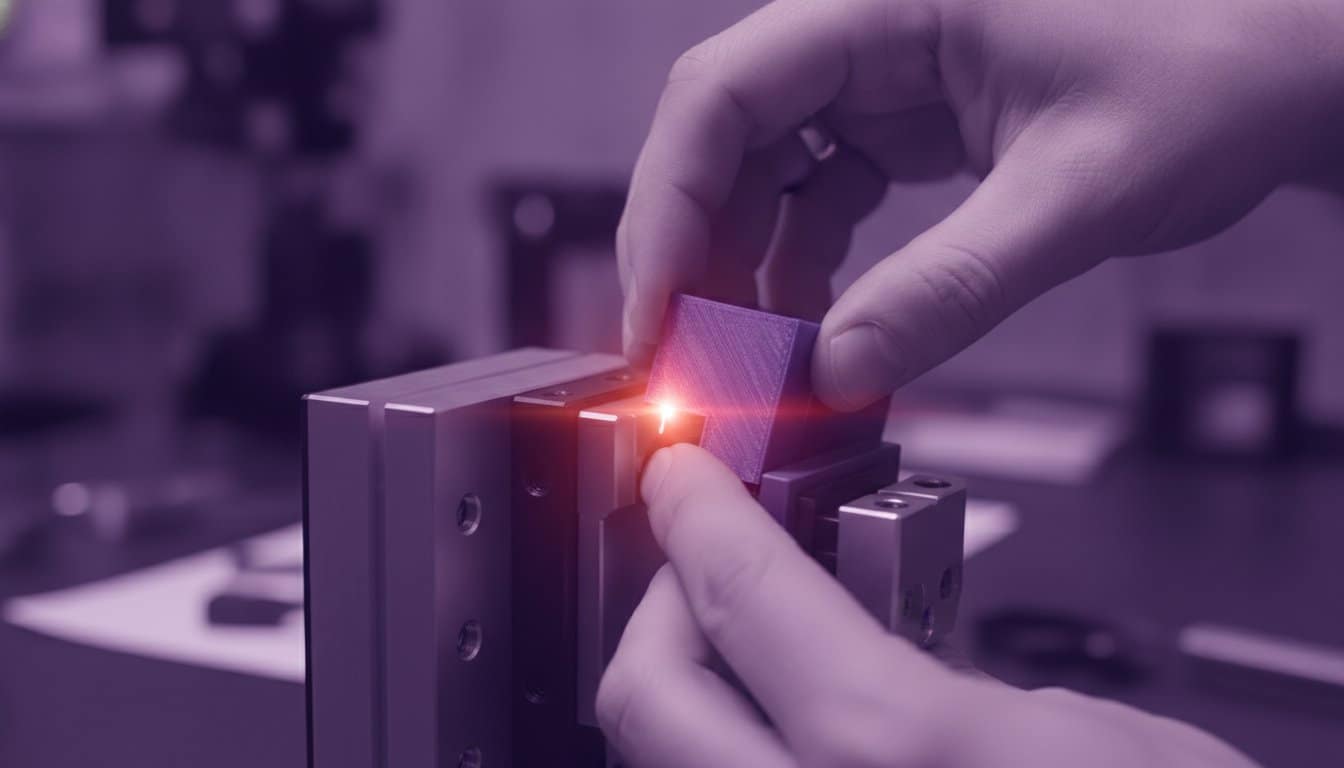
We verify every project through robust inspection protocols. Our team uses calibrated metrology tools to ensure that final parts meet your requested tolerances. Success depends on clear communication. We work closely with your engineers to identify critical dimensions and functional requirements before the build begins. This proactive approach prevents costly delays and ensures your components are ready for immediate deployment. Our uncompromising standards serve as your final assurance of reliability. Ready to start your precision project? Get an instant quote for your high accuracy 3d printing service needs today.
Elevate Your Manufacturing with Engineering Precision
Engineering success depends on the bridge between digital intent and physical reality. You’ve seen how true precision relies on more than just high-resolution settings; it requires a synergy of calibrated hardware, material expertise, and rigorous design optimisation. By prioritising dimensional stability and micron-level detail, you eliminate the risks of assembly failure and costly production delays. Choosing a high accuracy 3d printing service ensures that your designs perform exactly as intended when they reach the field. Don’t settle for components that are simply close enough.
Protomolecule provides the technical foundation your project requires. We leverage specialist expertise in the space and military sectors alongside advanced 3D scanning and reverse engineering capabilities to solve your most complex geometry challenges. Whether you need a single critical prototype or fast turnaround batch production for UK industry, our uncompromising standards guarantee reliability at every scale. Contact Protomolecule for a high-accuracy 3D printing quote to secure the precision your project deserves. We’re ready to help you push the boundaries of what your designs can achieve.
Frequently Asked Questions
What is the typical dimensional accuracy of an industrial 3D printing service?
Industrial systems typically achieve dimensional tolerances between +/- 0.1mm and +/- 0.3mm depending on the specific technology and material used. SLA processes are generally the most precise, whilst industrial FDM systems provide excellent stability for larger components. A professional high accuracy 3d printing service manages these variables through strict calibration and environmental controls to ensure your parts meet the required engineering specifications every time.
Can 3D printing achieve the same tolerances as CNC machining?
Standard 3D printing processes generally cannot match the ultra-tight tolerances of precision CNC machining, which can reach +/- 0.025mm. However, additive manufacturing is often the superior choice for complex geometries and internal channels that are impossible to mill. For the majority of industrial jigs, fixtures, and functional prototypes, the +/- 0.1mm accuracy provided by high-end 3D printers is more than sufficient for flawless assembly fitment.
How does 3D scanning improve the accuracy of reverse-engineered parts?
3D scanning captures the exact physical geometry of a part with sub-millimetre precision, creating a highly detailed digital twin. This eliminates the human error associated with manual measurement tools like callipers or gauges. By using this precise data as a foundation for reverse engineering, we can create CAD models that perfectly replicate the original part’s dimensions, ensuring that any replacement components fit their existing housings without modification.
What materials are best for high-accuracy 3D printed components?
Engineering-grade polymers such as ABS, Polycarbonate, and high-performance resins are the best choices for precision projects. These materials offer superior thermal stability, which reduces the risk of warping or shrinkage as the part cools during the manufacturing process. Selecting a material with a low thermal expansion coefficient is vital for maintaining tight tolerances, especially for components that will be used in varying temperature environments.
How do I specify the required tolerances when requesting a 3D printing quote?
You should provide a technical drawing alongside your CAD file that clearly highlights your critical dimensions and required tolerance ranges, such as +/- 0.1mm. This allows our engineers to determine the best machine orientation and material choice to meet your standards. When you use our high accuracy 3d printing service, clear communication about the part’s final application helps us optimise the build for the highest possible precision and performance.
Does the size of the part affect the accuracy of the 3D print?
Part size has a direct impact on dimensional outcomes because material shrinkage and thermal expansion are cumulative forces. Larger components naturally experience more movement across their total length than smaller parts. We manage these challenges using Large Format FDM Printing, which is specifically designed for stability over distance. Accuracy is often expressed as a percentage of total length, typically ranging from +/- 0.1% to +/- 0.2% on industrial-grade systems.