The most visually stunning part on your desk might be the biggest liability in your test rig. Whilst SLA is celebrated for its surface finish, relying on resin for high-stress mechanical testing often leads to brittle failure. Choosing between fdm vs sla for functional prototypes isn’t just about aesthetics; it’s a critical engineering decision that determines whether your project moves to production or stalls. With functional prototypes now accounting for 48.05% of the prototyping market, precise material selection is non-negotiable for UK engineering success.
You’ve likely felt the pressure of a development cycle where a single failed component results in wasted budget and missed deadlines. We’ll provide the data you need to select the technology that delivers the mechanical integrity and thermal resistance your testing requires. This comparison examines the trade-offs between FDM’s thermoplastic durability and SLA’s isotropic precision, drawing on our experience with high-end UK projects from niche automotive components to industrial transport parts. Uncompromising standards drive every build.
Key Takeaways
- Identify why engineering-grade thermoplastics in FDM provide superior impact resistance compared to standard UV-cured resins.
- Discover how to prevent prototype failure by assessing the thermal stability of FDM against the potential degradation of SLA in high-heat conditions.
- Learn to select fdm vs sla for functional prototypes based on whether your project requires isotropic precision or raw mechanical durability.
- Streamline your product development cycle by matching SLA to ergonomic fit testing and FDM to rigorous end-use field trials.
- Gain the confidence to specify the correct manufacturing process, ensuring your functional testing delivers reliable, repeatable data.
Beyond Aesthetics: Defining FDM and SLA for Functional Performance
Visual fidelity is often a distraction in engineering. A prototype that looks perfect but fails under load is a liability. When evaluating fdm vs sla for functional prototypes, you must look past surface finish and focus on the underlying 3D printing processes that dictate mechanical behaviour. FDM relies on mechanical bonding between layers; SLA relies on chemical cross-linking. This fundamental difference determines how your part reacts to torque, heat, and impact.
FDM: The Workhorse of Engineering Thermoplastics
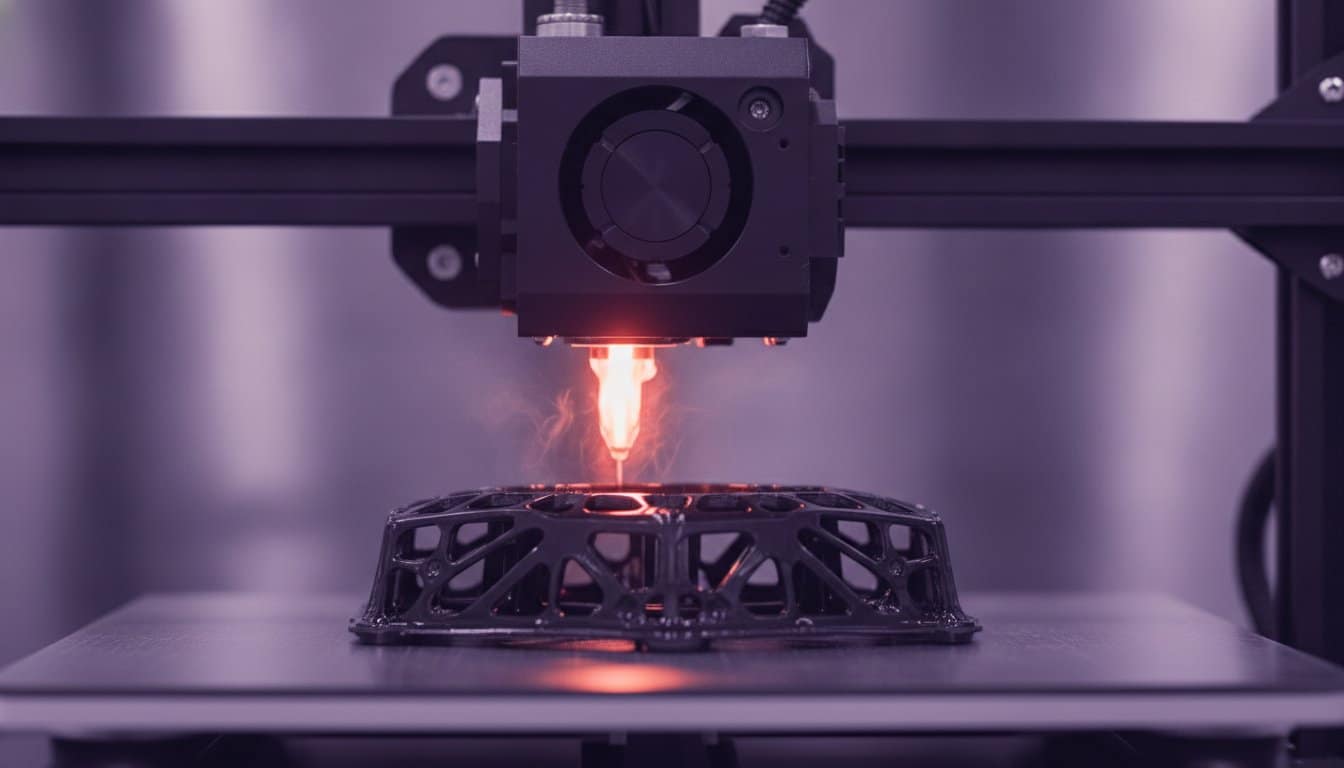
FDM remains the industry standard for rugged testing because it utilises production-grade materials like ABS, Polycarbonate, and Carbon Fibre composites. These materials offer high impact resistance and structural durability for real-world applications. However, FDM parts are anisotropic. They exhibit different mechanical properties depending on the orientation of the print. The bond between layers is typically weaker than the strength of the plastic itself, meaning parts can split along the Z-axis if not designed correctly. Protomolecule uses rapid prototyping strategies to optimise part orientation, ensuring your FDM components survive the rigours of functional testing.
SLA: Precision and Isotropic Integrity
SLA offers a level of precision and isotropic integrity that FDM cannot match. Because the UV laser cures liquid resin into a continuous solid, the part’s strength is uniform in all directions. Selecting fdm vs sla for functional prototypes often comes down to this requirement for uniform strength. Forget the outdated notion that resin is inherently brittle. The evolution of Tough and Durable resins means SLA can now produce parts with the flexural strength of ABS or the wear resistance of Polypropylene. Use SLA when your project demands airtight seals, intricate internal channels, or assembly verification with tight tolerances.
The Critical Comparison: Mechanical Strength, Thermal Resistance, and Precision
Success in high-performance sectors like defence or aerospace hinges on data, not guesswork. An academic study on FDM vs. SLA performance highlights that while FDM is often the default for impact, modern SLA resins are closing the gap. Isotropy is the property where a material’s mechanical traits remain identical in all directions. This gives SLA a distinct advantage for complex loads. Conversely, FDM Nylon provides superior elongation at break, making it the better choice for components that must flex without snapping.
Thermal resistance often dictates the winner. Standard FDM thermoplastics like Polycarbonate maintain structural integrity at temperatures that would cause SLA resins to soften or degrade. If your functional test involves engine bay temperatures or high-friction environments, FDM is usually the safer bet. However, for airtight seals and intricate internal geometries, SLA precision is unmatched. It eliminates the stair-stepping effect of FDM layers that often compromises vacuum-tight assemblies.
When Strength is Paramount: The FDM Advantage
Choose FDM for jigs, fixtures, and shop-floor tools that endure constant mechanical stress. You can customise the part’s behaviour by adjusting infill density and wall thickness to prioritise either weight or raw crushing strength. For heavy-duty industrial transport parts, our 3D printing service delivers the ruggedness required for field trials. High-performance filaments ensure your prototype performs like a production part.
When Precision Dictates Function: The SLA Edge
Precision is the primary driver for fluidics, manifolds, and high-tolerance assemblies. SLA’s ability to produce smooth internal channels reduces friction and ensures predictable flow rates in hydraulic testing. To achieve the full mechanical potential of these parts, post-curing is essential. This final UV and thermal treatment completes the chemical cross-linking, transforming the green part into a stable, functional component. This process ensures your assembly verification is based on accurate, repeatable results.
Strategic Selection: Matching Technology to Your Prototyping Stage
Selecting fdm vs sla for functional prototypes requires aligning the technology with the specific stage of your development cycle. Early-stage form and fit testing often favour SLA. Its superior dimensional accuracy allows for precise assembly verification and ergonomic assessments that FDM layer lines might obscure. Conversely, move to FDM when your project enters end-use functional testing. Field trials for industrial components demand the ruggedness of thermoplastics that can withstand real-world handling and environmental exposure.
Efficiency is a primary driver in modern manufacturing. Whilst FDM parts are often ready for testing immediately after support removal, SLA requires a multi-stage post-processing regime of washing and curing. This added time is the price of isotropic integrity. Our 3D printing service provides the agility to pivot between these technologies as your requirements shift from visual verification to mechanical validation.
The Hybrid Approach: Using Both Technologies
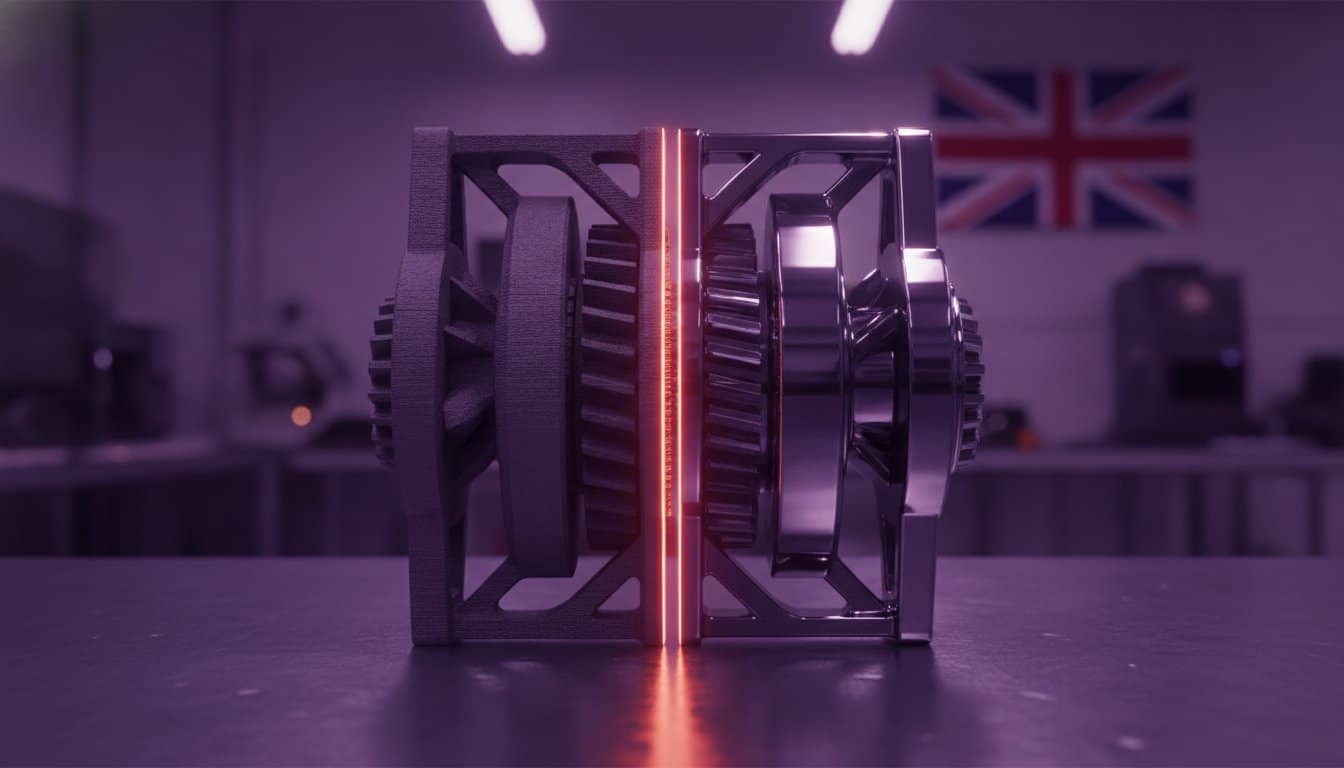
Complex assemblies rarely rely on a single process. A common engineering logic involves using FDM for a structural chassis and SLA for high-detail interface components. This hybrid method optimises both cost and performance. Professional 3D design ensures that part geometries are optimised for their respective manufacturing constraints; this reduces failure rates during the transition from digital model to physical prototype.
Final Decision Checklist for Engineers
- Does the part require airtightness or fluid-tightness? Choose SLA for its chemically bonded, non-porous structure.
- Will the part be exposed to temperatures above 60°C? Choose FDM with engineering-grade materials like Polycarbonate or ABS.
- Is the primary goal mechanical impact resistance? Choose FDM with high-performance filaments or carbon-fibre composites.
Confidence in material performance accelerates your turnaround. By matching the process to the functional requirement, you eliminate the risk of prototype failure and keep your development programme on track. We maintain uncompromising standards across both platforms to ensure your testing data remains reliable and actionable.
Accelerate Your Development with the Right Prototyping Strategy
Engineering success is built on the foundation of the right material choice. You now understand that the debate between fdm vs sla for functional prototypes is resolved by your specific testing phase. FDM delivers the rugged thermoplastic performance needed for mechanical impact; SLA ensures the isotropic precision critical for intricate fluidics and high-tolerance assemblies. Matching these technologies to your project requirements eliminates the risk of brittle failure and ensures your data remains reliable and actionable.
Protomolecule brings ISO-standard precision and deep expertise across the military and aerospace sectors to every build. We prioritise your project deadlines, offering a rapid turnaround for time-sensitive UK engineering projects. Don’t let material limitations or slow suppliers delay your path to production. Get an instant quote for your functional prototype and secure the mechanical integrity your project demands. Our team is ready to solve your most complex manufacturing challenges with industrial-grade reliability and uncompromising standards.
Take the next step with confidence and watch your design perform exactly as intended in the field. Your vision deserves a partner that values precision and speed as much as you do.
Frequently Asked Questions
Is SLA 3D printing strong enough for functional parts?
Yes, SLA is absolutely strong enough for functional parts when you specify engineering-grade photopolymers. Whilst standard resins are often brittle, modern “Tough” and “Durable” resins are engineered to mimic the impact resistance of ABS or the fatigue resistance of Polypropylene. These materials are ideal for connectors, snap-fits, and intricate assemblies that require isotropic strength to withstand multi-directional stress during mechanical testing cycles.
Why is FDM generally preferred for large-scale functional prototypes?
FDM is the preferred choice for large-scale functional prototypes due to its compatibility with production-grade thermoplastics and significantly larger build volumes. It offers a more cost-effective solution for substantial components like automotive panels or industrial housings. Additionally, FDM avoids the extensive chemical washing and UV curing cycles that become logistically challenging and time-consuming when producing larger geometries under tight project deadlines.
What is the difference in post-processing between FDM and SLA?
The primary difference lies in the complexity of the workflow. FDM post-processing is largely mechanical, involving the removal of support structures followed by optional sanding or vapour smoothing. In contrast, SLA requires a mandatory chemical wash in Isopropyl Alcohol (IPA) and a subsequent UV curing cycle. This curing stage is vital for the part to reach its full mechanical potential in any fdm vs sla for functional prototypes comparison.
Can SLA parts be used for outdoor functional testing?
SLA parts are generally unsuitable for long-term outdoor functional testing because photopolymer resins remain sensitive to UV radiation. Prolonged exposure to sunlight causes the material to continue curing, which eventually leads to brittleness and surface cracking. If your testing requires outdoor exposure, FDM materials like ASA are superior due to their inherent UV stability. Alternatively, you must apply a professional UV-resistant coating to any SLA component used outdoors.